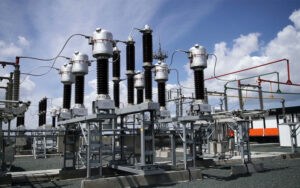

Of the about 11 DisCos that got operational areas zoned to them, the Benin Electricity Distribution Company (BEDC) represents the worst of the lot.
Electricity Distribution Companies (DisCos) have largely failed in the expectations that came with the handing over of the final stage of delivering electricity to homes, offices, and industries in 2013 under the 2013 privatization of Nigeria’s power sector. Of the about 11 DisCos that got operational areas zoned to them, the Benin Electricity Distribution Company (BEDC) represents the worst of the lot.
The intended roles of the DisCos included
investing private capital into local distribution networks, replacing old cables, fixing overloaded transformers, and reducing technical and commercial losses. They were also expected to roll out prepaid and smart meters to all consumers to stop estimated billing, ensure accurate energy accounting, and track power consumption. Efficient collection of revenue from customers, paying Generation Companies (GenCos) and the Transmission Company of Nigeria (TCN) for power delivered, and making the entire value chain bankable and self-sustaining from them were supposed to signpost a new era in energy independence driven by innovation and sustained investment through private sector collaboration in the power chain.
Many of the distribution companies failed, having started on faulty foundations whereby many of them relied heavily on bank loans to acquire the assets farmed to them rather than injecting fresh equity, using incoming revenue to service debt instead of upgrading infrastructure. DisCos argued they could not attract capital or upgrade networks because government-regulated tariffs were not cost-reflective, while consumers resisted paying more due to poor, epileptic supply. At every turn since they took over power distribution, the federal government has always acceded to their blackmail to pander to their demands.
First, access fees were introduced to be paid monthly by consumers as a basic charge before actual consumption is determined and paid for. The arrangement became a bazaar for the DisCos with a guaranteed monthly income of N700 from private homes alone. It did not matter if electricity was not supplied for weeks on end as was often the case.
Then came a nebulous ‘subsidy’ on tariff whereby the distribution companies were paid subsidies by government under an arrangement that blatantly enriched the DisCos but left consumers still living in darkness. The most unimaginative and opaque tariff arrangement is the multiple tariff bands introduced by former Power Minister, Chief Adebayo Adelabu. Categorised from Band A to E, the complete failure to supply electricity to consumers was normalized.
However, some of the distribution companies have been making efforts to improve their services. That does not include the BEDC. Its areas of operations cover four states – Delta, Edo, Ekiti, Ondo – serving over 18 million people, including roughly 7,500 Maximum Demand (MD) customers and over 1.68 million non-MD customers. Providing prompt responses to faults, complaints, and service drop-offs within their assigned coverage areas is supposed to be one of the core functions of Discos. It’s not in BEDC’s log.
While others are progressively boosting the provision of pre-paid meters, BEDC puts obstacles on the path to procuring one. In many towns and villages, it implements community billing where communities are grouped together and made to pay a determined amount as tariff. When communities engage BEDC to explore options to providing pre-paid meters to individual consumers, it makes the process convoluted and frustrating.
Godwin Obaseki as governor of Edo State was so exasperated by the nonchalance of BEDC and its management that in November 2018, he walked the Managing Director of BEDC, Mrs. Funke Osibodu, out of his office. Governor Obaseki had expressed deep frustration with BEDC for failing to meet its obligations, keeping the state in darkness for weeks, and actively blocking alternative power-purchase agreements initiated by the state government. He declared that the state had completely lost confidence in the utility provider.
The BEDC management had not been formally invited to a meeting the governor had scheduled with federal lawmakers. Instead, the chief executive joined a visiting delegation from the House of Representatives Committee on Power to gain access to the governor. Upon noticing her, Obaseki refused to engage and ordered her to leave the premises.
A similar strategy was employed in Delta State when the Ifeanyi Okowa administration weaned the state secretariat, Government House and some state institutions from BEDC’s dark practices, cleverly using a power plant with less than 10kva capacity, well within the capacity that shielded it from being subjected to absorption to the national grid.
In the past six months, BEDC has practically run Delta State aground. How can small and micro businesses be successfully run with no electricity supply? And in the ongoing season of extraordinarily high temperatures, it has been unmitigated nightmare for homes. Operating generators is no longer an alternative with the exorbitant price of petrol.
BEDC Power is fleecing consumers in Asaba in active collusion with Nigerian Electricity Regulatory Commission , which feigns ignorance to complaints about the DisCo’s fraudulent charges.
BEDC bills Band B tariff of N68.56/kWh for 16-20hrs supply but delivers 0-5hrs daily.
FCCPC Nigeria.
With the liberalization of the power sector, residents of Delta State cannot wait for the exorcism of the spirit of BEDC from the state.