Tinubu

For a long time, Nigeria’s rules around digital currencies have been messy and confusing. Instead of having a clear plan, the government kept changing its mind, sometimes banning crypto completely and other times giving out careful approvals.
This made things very unpredictable for one of the biggest crypto markets in the world, but that officially ended this week.
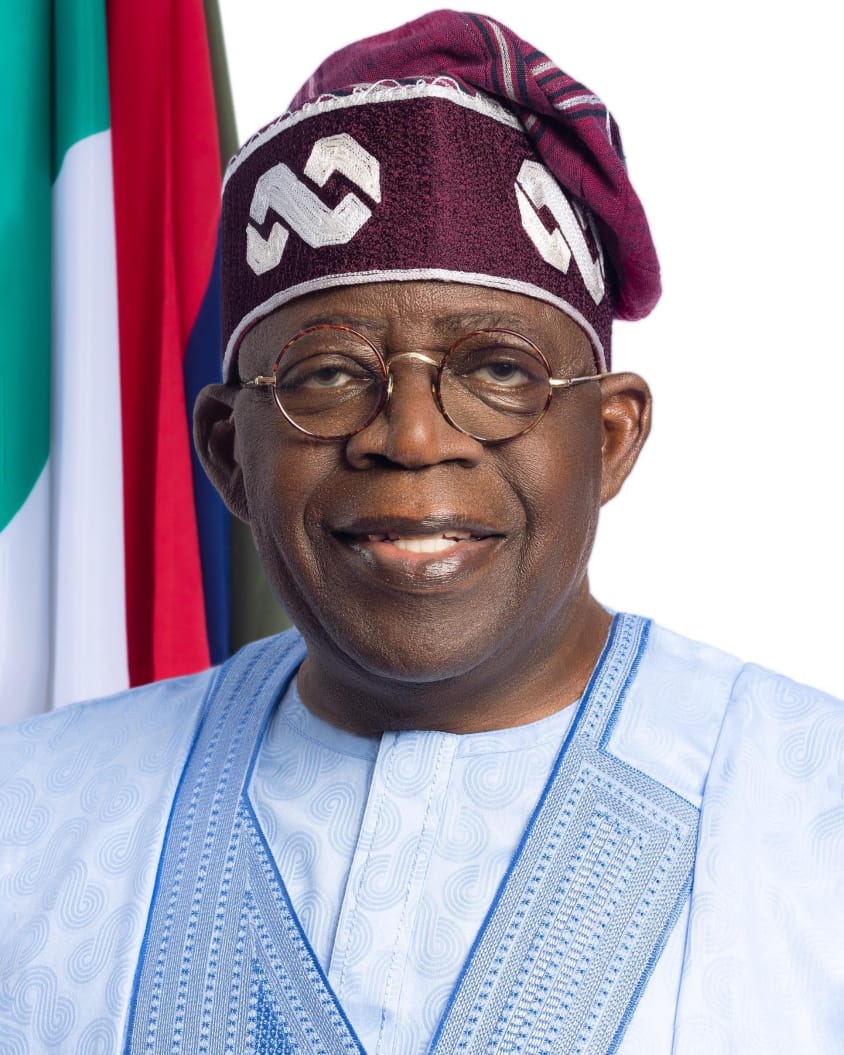
President Bola Tinubu signed a major new law called the Presidential Executive Order on Virtual Assets Coordination, 2026, to bring everyone onto the same page.
Rather than clamping down on innovation or creating yet another layer of expensive bureaucracy, this directive aims to bring order to the chaos by forcing Nigeria’s powerful financial regulators to finally speak the same language.
What this means for investors, startups, and the broader economy
The Core Problem: A Regulatory Gray Area
The rapid evolution of blockchain technology has blurred the lines between different financial instruments. Is a digital token a currency, a commodity, a security, or simply a piece of software?
Previously, this ambiguity created friction. An operator might be cleared by the Securities and Exchange Commission (SEC) but blocked by the Central Bank of Nigeria (CBN).
This lack of harmony created loopholes that bad actors exploited, leading to high-profile cases of fraud, money laundering, and tax evasion, while leaving legitimate tech founders stranded in regulatory limbo.
The 2026 Executive Order tackles this by establishing clear jurisdictional boundaries based on what the asset actually does:
Virtual Assets as Securities: Regulated strictly by the SEC. If a token behaves like a stock or a bond, it falls here.
Non-Security Virtual Assets: Regulated by the CBN. This covers payments, settlements, custody, and stablecoins.
The Gray Zones: If an asset’s classification is unclear, a newly formed Virtual Assets Council will step in to assign jurisdiction, effectively closing the loopholes previously used by unregistered operators.
How the New Regulatory Architecture is Setup
Instead of creating a new agency, the Executive Order builds a collaborative bridge between existing ones. The architecture relies on two newly minted bodies:
| Regulatory Body | Core Composition | Primary Responsibility |
|
Virtual Assets Council
(The Boardroom) |
• Chair: Central Bank of Nigeria (CBN)
• Vice-Chairs: Nigeria Revenue Service (NRS) & Securities and Exchange Commission (SEC)
• Members: NFIU & ONSA |
• Sets high-level policy direction.
• Resolves jurisdictional gray areas.
• Collaborates with the Attorney-General on harmonized laws. |
|
Virtual Assets Office
(The Engine Room) |
• Domiciled physically at the CBN.
• Utilizes an integrated supervisory technology platform. |
• Coordinates real-time information sharing.
• Manages unified operator reporting.
• Streamlines inter-agency applications. |
1. The Virtual Assets Council
Chaired by the CBN, with the SEC and the newly minted Nigeria Revenue Service (NRS) as vice-chairmen, this council functions as the boardroom. Alongside the Nigerian Financial Intelligence Unit (NFIU) and the Office of the National Security Adviser (ONSA), this high-level team is tasked with aligning national security, tax collection, and financial stability.
2. The Virtual Assets Office
Domiciled physically within the CBN, this serves as the engine room. It will deploy an “integrated supervisory technology platform”, essentially a unified digital dashboard where the CBN, SEC, and tax authorities can share real-time data on crypto transactions and operator applications.
Four Major Implications for Nigeria’s Crypto Ecosystem
1. De-risking via the “Regulatory Sandbox”
Perhaps the most exciting news for tech founders is the mandate for the CBN to establish a regulatory sandbox. This is a controlled, live environment where startups can test innovative blockchain solutions and virtual asset products under direct regulatory supervision.
The Big Picture: Instead of building a product only to have it banned, founders can now co-develop and test their technology alongside regulators. This protects consumer safety while ensuring Nigeria does not choke off domestic tech innovation.
2. Crypto Tax is Coming, but with Certainty
The inclusion of the Nigeria Revenue Service (NRS) as a Vice-Chair signals a major shift toward fiscal oversight. The NRS is slated to release a definitive tax policy for virtual assets. While the idea of crypto taxation may not thrill every trader, it brings legal certainty. Clear tax rules mean institutional investors can finally enter the Nigerian market without fearing retrospective tax penalties.
3. A Massive Blow to Crypto Fraud
By looping in ONSA and the NFIU into a unified data-sharing platform, the government is creating an environment hostile to bad actors. Rogue platforms operating without registration will find it much harder to access the Nigerian banking gateway, shielding everyday citizens from rug-pulls and fraudulent get-rich-quick schemes.
4. A Shift from Reactive to Proactive Policy
The government is not just looking at the immediate future. Along with the order, a comprehensive Virtual Assets White Paper is being finalised to outline Nigeria’s long-term digital asset strategy. The Council has just 30 days to deliver a Harmonised Implementation Framework, signaling that the administration is moving with unusual speed.
The Road Ahead
Nigeria is already a global leader in crypto adoption volumes. With this Executive Order, the country is attempting to match that grassroots energy with world-class regulatory sophistication.
By prioritising inter-agency teamwork over turf wars, the federal government might just achieve the delicate balance every modern economy is chasing: keeping the financial system safe without driving the future of finance underground.
Reporting by: Theresa Igata