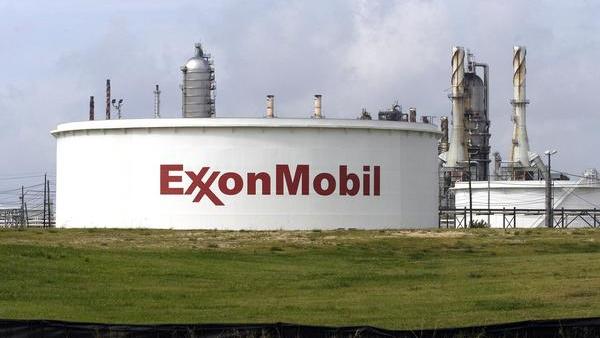
ExxonMobil
For nearly a decade, Nigeria’s deepwater oil sector was largely dormant.
Global oil giants steadily held back in launching new drilling projects, deterred by unpredictable regulations, widespread onshore oil theft, and changing global investment trends.
That decade-long stagnation in investment came to an official close in Abuja during the 2026 Nigeria Oil & Gas (NOG) Energy Week.

In a joint announcement that sent shockwaves of optimism through Africa’s largest energy market, ExxonMobil affiliate Esso Exploration and Production Nigeria, alongside the Nigerian Upstream Petroleum Regulatory Commission (NUPRC), declared the final investment decision (FID) for a $1 billion Usan Infill Project.
The move marks ExxonMobil’s first major drilling campaign in Nigerian waters since 2016. Operated under a production-sharing contract with NNPC Ltd., the project brings together heavy-hitting co-venturers Chevron, TotalEnergies, and Nexen (a subsidiary of China’s CNOOC) to squeeze fresh life out of Oil Mining Lease (OML) 138.
Fast-Tracking the Offshore Recovery
What makes the Usan Infill Project a critical case study for the industry is its structural design: it is built for speed and capital efficiency.
Unlike conventional “greenfield” projects that require multi-year timelines to build entirely new floating production vessels from scratch, this is a short-cycle infill project.
By utilising advanced 3D seismic data processed in mid-2024, engineers identified untapped pockets of oil sitting directly around existing infrastructure. New subsea hardware will hook straight back into the existing Usan Floating Production, Storage, and Offloading (FPSO) facility.
According to ExxonMobil Nigeria Managing Director Jagir Baxi, the impact will be near-instantaneous. A world-class deepwater drilling rig is scheduled to arrive on-block next month. First oil is expected within just six months of execution, scaling up to a peak capacity of 40,000 barrels per day (bpd) within 18 months.
“$1 billion invested to unlock 40,000 barrels of oil from one single company. This initiative carries immense importance as it aligns with our objective to completely revitalize Nigeria’s deepwater assets, ” Oritsemyiwa Eyesan, Chief Executive of the NUPRC said.
What This Means for the Nigerian Economy
Nigeria has been battling severe macroeconomic headwinds, characterized by foreign exchange shortages, volatile oil revenues, and the persistent challenge of meeting its OPEC+ production quotas. ExxonMobil’s billion-dollar bet acts as an economic shot in the arm across three major fronts:
Direct Boost to Federal Revenue
The fiscal design of the infill strategy means the project will transition into its “profit-oil” sharing phase much quicker than a standard project. Because development costs are dramatically reduced by using the existing FPSO, the government will begin reaping financial rewards early.
The project is projected to pump an additional $1.2 billion in direct government revenue into national coffers over the next four years, with the first trickles of revenue expected before the end of 2026.
Strengthening the Naira and Foreign Reserves
At its peak, an extra 40,000 bpd injected into Nigeria’s export streams translates to a robust influx of foreign currency. For a Central Bank striving to stabilize the Naira and build up foreign exchange reserves, this consistent deepwater production offers a crucial macroeconomic cushion against external shocks.
The “Flywheel Effect” on FDI
Perhaps the most significant economic victory is psychological. For years, the global narrative surrounding Nigeria’s oil sector focused heavily on IOCs (International Oil Companies) divesting and pulling out of onshore blocks. ExxonMobil’s aggressive return signals to the global market that Nigeria’s deepwater territory, safeguarded by the regulatory clarity of the Petroleum Industry Act (PIA), is highly competitive and open for business.
A Broader Upstream Renaissance
The NUPRC is capitalizing heavily on this momentum. Concurrent with the ExxonMobil announcement, the regulator issued 19 new Petroleum Prospecting Licences (PPLs) across deepwater, shallow-water, and continental shelf blocks to successful bidders from its recent mini-bid and licensing rounds.
By strategically shifting focus to secure offshore zones and deploying aggressive fiscal incentives, Nigeria is engineering a quiet upstream turnaround.
The arrival of ExxonMobil’s deepwater rig next month won’t just unlock new barrels of oil, it may well unlock the next chapter of Nigeria’s economic stability.
Reporting by Theresa Igata