Bayo Onanuga

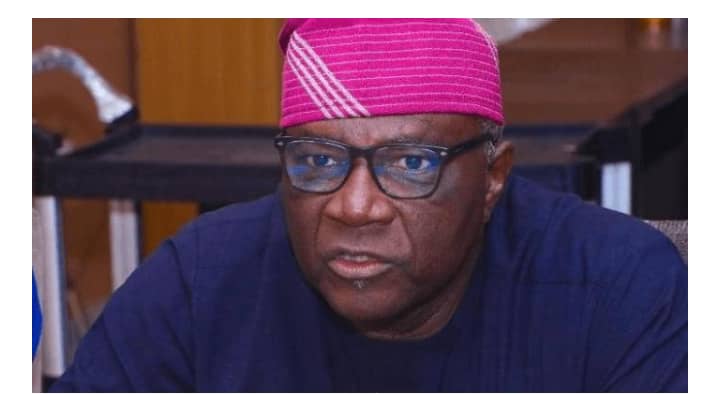
There is a particular kind of blindness that afflicts those who ascend too high into the sanctums of power. And, it is a blindness not born of darkness, but of light. It is the blinding glare of privilege, the distorting comfort of official convoys, manicured briefings, and personal staff whose suffering, if it exists at all, dare not trouble the ears of those who employ them. It is in this light, or the absence of it, that one must examine the remarkable statement made by Bayo Onanuga, Special Adviser to President Bola Ahmed Tinubu on Information and Strategy, when he declared on Arise Television on June 23, 2026, that he does not see the level of hunger Nigerians are complaining about.
Speaking during the interview, Onanuga maintained that his personal observations and interactions do not reflect the scale of hardship often portrayed in public discussions. “I am a Nigerian,” he said. “I have people working for me privately. I don’t see the level of hunger people are talking about because I see them, and I keep asking them questions: how are things, how are they adjusting, what are the problems?” These are the words of a man who has confused proximity with comprehension, and domestic help with a representative sample of more than 220 million citizens. They are, at best, a monument to epistemic limitation. At worst, they represent an act of official falsification and a deliberate erasure of documented, measurable, catastrophic mass suffering.
The cruelty of Onanuga’s statement lies not merely in its condescension but in its direct contradiction of the positions held by the very principal that he serves, and by some of the most credible international development institutions on the planet. For Onanuga to deny the existence of the hunger, which solutions he was appointed to help communicate, is not merely a personal failure of imagination. It is an institutional contradiction of the highest order.
Let me begin with President Tinubu himself. In his own words, the President admitted that the reforms he introduced had triggered a sharp rise in the cost of living and placed enormous pressure on households and businesses across the country. “These decisions came with sacrifice,” he said. “The rising cost of living triggered by our measures placed enormous pressure on families, workers, and businesses. I remain deeply conscious of those sacrifices.” These are not the words of a man who believes hunger is a fabrication of opposition mischief or social media manipulation. They are the words of a President who has, on multiple occasions, publicly acknowledged the pain his own policies have inflicted on the Nigerian people.
On Nigeria’s 64th Independence Day, Tinubu said: “I am deeply aware of the struggles many of you face in these challenging times. Our administration knows that many of you struggle with rising costs and the search for meaningful employment. I want to assure you that your voices are heard.” Similarly, when nationwide protests erupted in August 2024, Tinubu addressed the nation. In that address, he said: “My dear Nigerians, especially our youth, I have heard you loud and clear. I understand the pain and frustration that drive these protests.” Taken together, these are not the pronouncements of a government that denies the existence of suffering. They are admissions. They say that no matter how carefully managed or denied, the suffering is real, acute, and widespread.
So, when Onanuga steps before a national television audience and announces that he personally does not see the hunger, he does not merely embarrass himself but also contradicts and faults his principal. He undermines the consistency of the government’s communications. He tells Nigerians, in effect, that whatever their president acknowledged as real pain was perhaps overstated.
He also suggests that a narrative shaped by a viral video in which a voice-over superimposed the Yoruba phrase “Ebi n pa wa”, meaning “we are hungry”, over footage of President Tinubu, was social media manipulation which significantly shaped public perception. “I think the President went to Lagos, he was coming from the Central Mosque, and somebody now did a voice-over saying ‘Ebi n pawa o,’ and that means we are hungry. Since then, people have been saying that,” he stated. Onanuga’s interpretation that the viral video is the engine driving Nigeria’s hunger narrative is not just dismissive but a rewriting of documented history with a breathtaking disregard for evidence.
That evidence comes, however, with devastating precision, from the World Bank. According to the World Bank’s Nigeria Development Update released in April 2026, the share of Nigerians living below the poverty line increased from 56 per cent in 2023 to 61 per cent in 2024, before rising further to 63 per cent in 2025. That suggests an equivalent of approximately 140 million people. This increase occurred even as inflation began to ease. This means that there is a disconnect between moderating prices and real income growth. Nigeria’s poverty crisis, in other words, is not a perception problem. It is a data problem, which worsens with each successive year.
Beyond monetary poverty, the picture painted by multidimensional poverty measures is even more harrowing. The National Bureau of Statistics (NBS) recorded that 63 per cent of Nigerians are multidimensionally poor. This encompasses deprivations not just in income but in sanitation, healthcare access, food security, and housing. Over half the population cook with dung, wood, or charcoal rather than cleaner energy, as indicated by the NBS. The World Bank has further warned that this multidimensional poverty directly threatens Nigeria’s economic potential, as moderate GDP growth in 2026 has failed to translate into improved living standards for most citizens, with wage growth lagging behind inflation and leaving real incomes under sustained pressure.
Besides, children aged between zero and fourteen years face a poverty rate of 72.5 per cent, while 63.9 per cent of females are classified as poor at the lower-middle-income poverty line. Adults without a formal education record a poverty rate of 79.5 per cent, and even those with secondary education see a 50 per cent poverty rate. These are not the outputs of propaganda. They are the outputs of surveys and rigorous economic analysis conducted by independent institutions with no partisan stake in Nigeria’s political fortunes.
Nigerians have also been quick to note that the 100 per cent minimum wage increase from N30,000 to N70,000, which Onanuga cited as evidence of the absence of poverty and suffering, has yet to be fully implemented across all states, and that even where it has been implemented, it has been gutted by inflation, which stood at over 30 per cent in early 2026, making the real value of the new minimum wage significantly less than its nominal figure.
The coastal road that shortened Onanuga’s travel from Ajah to Lagos Island and the Google Maps travel time that now reads one hour and seven minutes instead of two hours and thirty minutes are, no doubt, genuine infrastructure achievements. But they are achievements measured in minutes saved by those who own cars. They are invisible to the millions who cannot afford transport fares at all. To these, it makes no sense as it cannot shorten trekking time.
The African Democratic Congress (ADC) captured the essential problem with precision. In a statement condemning Onanuga’s remarks, the party said: “When over 80 per cent of Nigerians are struggling to feed their families, pay school fees, afford transportation and keep their businesses alive, it is extraordinary that a senior presidential spokesman can publicly suggest that the hardship is somehow overstated or even contrived. A sensible government does not measure the effects of its policies by merely looking at the people within its immediate circle or driving through paved roads. It must listen to the people in the markets, on the farms, in the classrooms, in the workshops and on the streets.”
That is precisely the point. The measurement of national suffering cannot be conducted from a private car on a newly paved road, or through conversations with domestic staff who, conscious of their economic vulnerability, may answer questions about their welfare in ways calibrated to please rather than to inform. Onanuga, our president’s spokesman, has, in effect, constructed a methodology for assessing poverty that is guaranteed to find none, and he presented his findings as a rebuttal of global development data.
What makes Onanuga’s denial especially troubling is that it arrives at a moment when the Nigerian state most needs honest internal communication. President Tinubu has repeatedly acknowledged the hardships caused by his economic and structural policies. The task of a capable communications adviser in such a moment is not to contradict his principal’s acknowledgement with personal anecdotes, but to help articulate the government’s plan to alleviate the very suffering the President has admitted exists. Instead, Onanuga has chosen to dispute the premises and gaslight the patients.
Nigeria’s hunger is not a rumour. It is not a viral video. It is not an opposition talking point. It is 140 million human beings documented by the World Bank, measured by the National Bureau of Statistics, acknowledged by the President himself, as suffering and poor, who cannot reliably afford food, shelter, clean water, or medicine. That a senior presidential spokesman cannot see them is not a reflection of their absence. It is a reflection of his distance. And in a democracy, that distance is the most dangerous crisis of all.