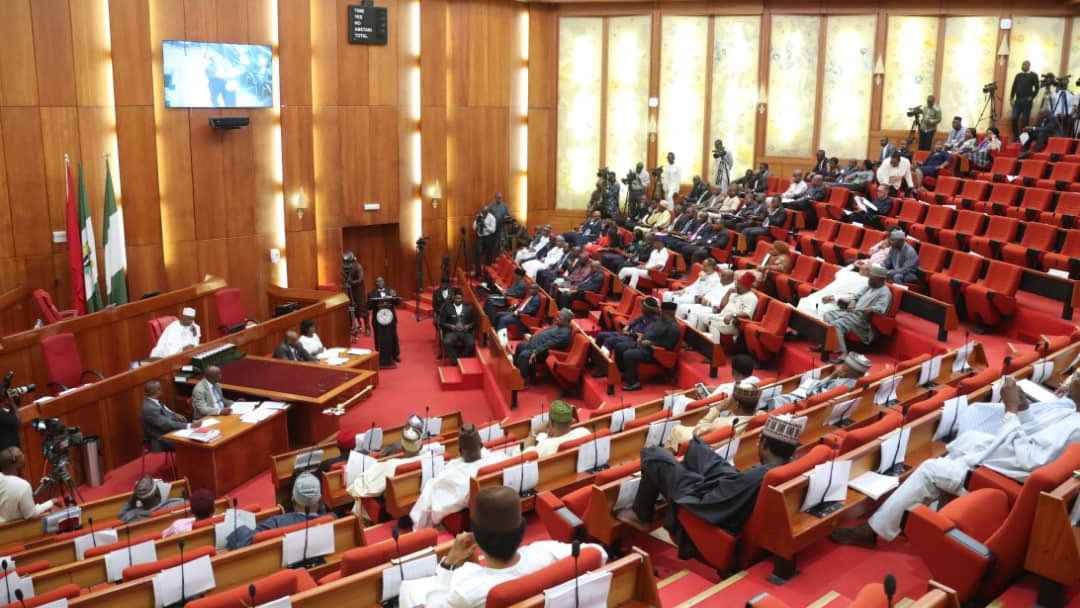
Senators in session
President Bola Tinubu has formally written to the Senate requesting approval for a ₦10.79 trillion (approximately $7.7 billion) external borrowing plan to finance a portion of the ₦31.4 trillion budget deficit outlined in the 2026 Appropriation Act.
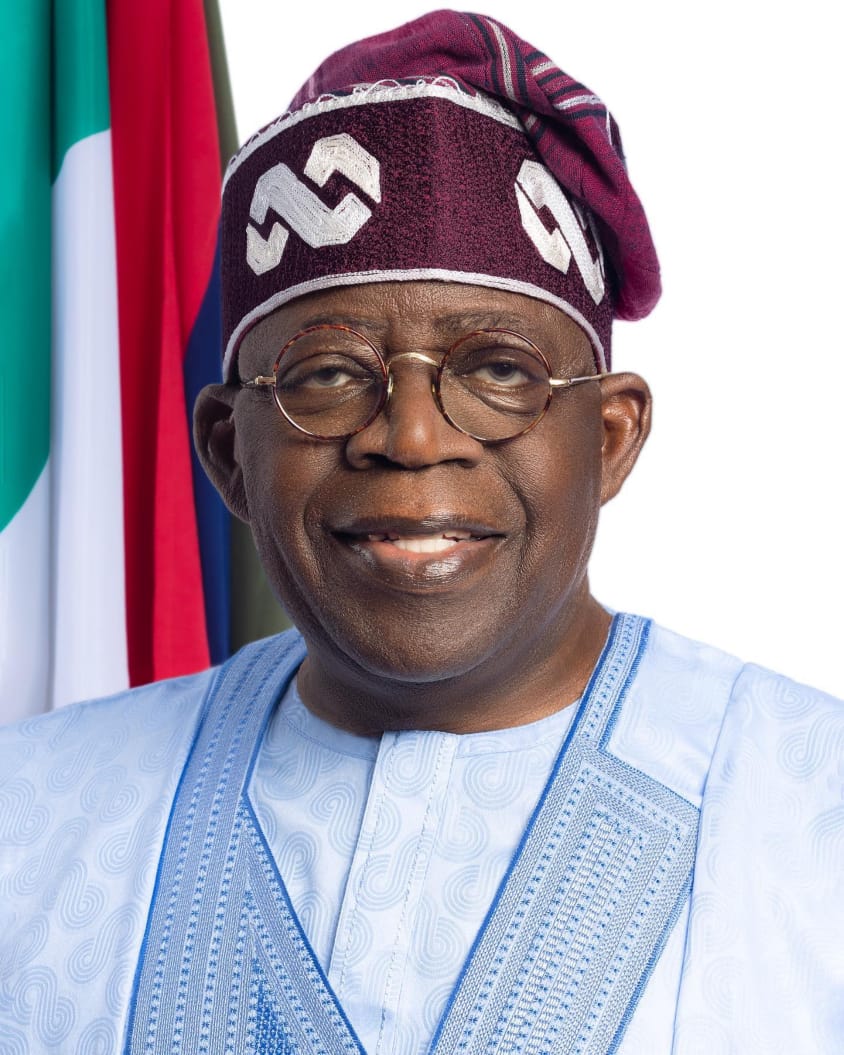
The president’s request was presented on the floor of the Senate during plenary by Senate President Godswill Akpabio, who cited Sections 21(1) and 27(1) of the Debt Management Office (DMO) Establishment Act, 2003, as the statutory basis for the executive submission.
In his correspondence, President Tinubu recalled that the 2026 Appropriation Act authorized a total of ₦29.2 trillion in new borrowings, comprising ₦18.4 trillion in domestic borrowing and ₦10.79 trillion in external financing.
The Federal Government plans to raise the required $7.7 billion—calculated at the official budget benchmark exchange rate of ₦1,409 to $1—through a mix of multilateral, bilateral, and international capital market instruments.
Total Budget Deficit: ₦31.4 Trillion
Domestic Borrowing: ₦18.4 Trillion
Requested External Borrowing: ₦10.79 Trillion ($7.7 Billion)
Proposed Funding Options:
International Capital Markets: Eurobond issuances (designated as the primary focus due to speed and market capacity).
Multilateral and Bilateral Institutions: Concessional and commercial loan facilities.
International Financial Institutions: Direct borrowing structures and International Monetary Fund (IMF) options.
President Tinubu stressed that while all financing avenues will be explored simultaneously to optimize cost and tenure, management will place primary emphasis on Eurobonds, noting that debt capital markets offer faster execution and larger liquidity pools at competitive pricing.
“The final terms and conditions, including interest rates and tenures, will depend on market dynamics at the time of pricing. The Federal Ministry of Finance and the Debt Management Office will ensure Nigeria secures the best possible terms.” President Tinubu said.
The executive branch outlined several strategic objectives for the foreign currency inflows:
Critical Infrastructure & Priority Sectors: Funding targeted capital investments in security, transportation networks, agricultural productivity, power infrastructure, education, and healthcare.
External Reserve Cushioning: Inflows will be received directly by the Central Bank of Nigeria (CBN), providing liquidity support for foreign currency reserves and exchange rate stability.
Commenting on the correspondence, Senate President Akpabio clarified that this submission supersedes a previous $20.3 billion borrowing request, describing the new letter as a far more explicit and restructured proposal based on willing-seller, willing-buyer market principles.
The request grants authority to the Minister of Finance and Coordinating Minister of the Economy, alongside the DMO, to execute the transactions upon approval.
Akpabio subsequently referred the executive request to the Senate Committee on Local and Foreign Debt, directing the panel to conduct its legislative review and report back to plenary as soon as practicable.