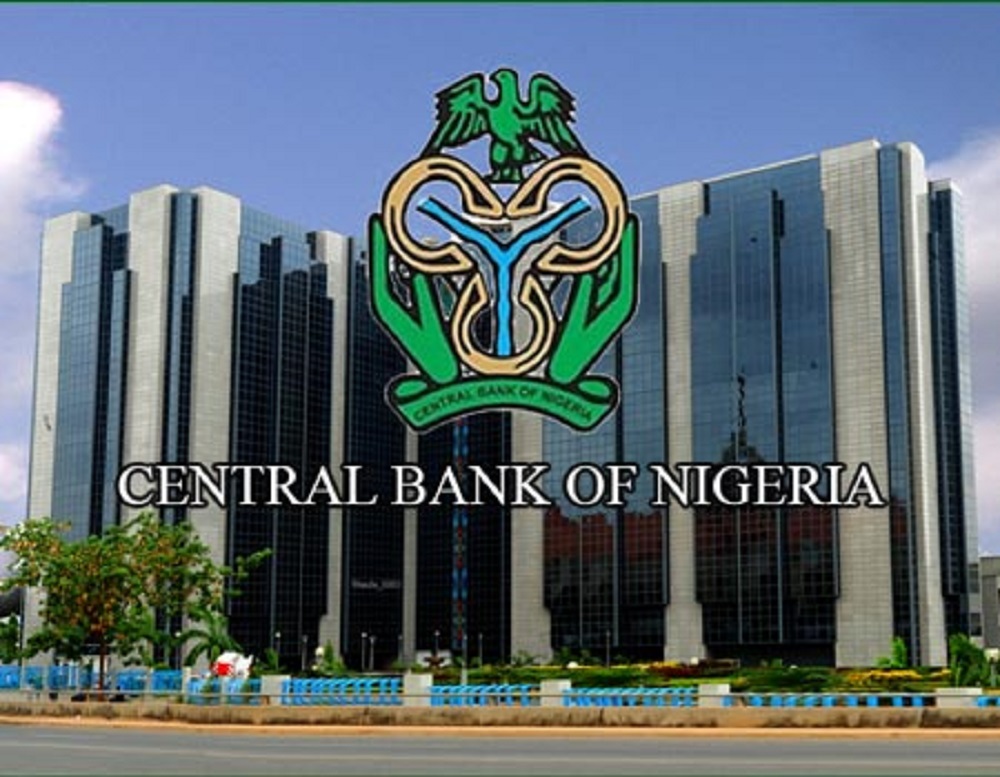
CBN head office

On assumption of office by President Bola Ahmed Tinubu, both the fiscal authority and monetary authority embarked on creative disruptions towards reconstructing essential economic variables for stability going forward.
Creative disruption is an economic concept by Joseph Schumpeter, the chief exponent of entrepreneurship and innovations.
It entails breaking free from existing or traditional approaches and embracing new ideas and methods to create opportunities for growth and progress.
Creative disruptions can have disbenefits and create pain in the short to medium term, but the benefits or gains often manifest in the medium to long term. As it is said, no pain, no gain.
Fuel subsidy removal is a major creative disruption which was necessary though it may have created some discomforting consequences on citizens and businesses.
It was necessary because hitherto fuel subsidy constituted a financial burden and a huge drain in government resources and which often led to large deficits.
It also led to fuel smuggling and scarcity, corruption and rent- seeking behaviour as some people exploited the system for personal gain.
In addition, fuel subsidy also diverted funds away from other critical sectors of the economy such as education, health care and infrastructure development.
Fuel subsidy removal was necessary though it triggered hardship in the economy and led to increase in fuel price, increase in inflation, increase in poverty and crime, layoffs and unemployment and the concomitant socio-psychological effects.
The federal government tried to cushion the inflationary impact of fuel subsidy removal by granting a N97 billion waiver on staple food imports such as rice, maize, sorghum and others, and the waiver was to last from 2024 to the first quarter( Q1) of 2025.
The Nigerian Custom Service( NCS) reported that the Q1 2025 waiver on rice, N751.6million free-on- board(fob) value, maize, N45.3 bn and sorghum, N2.3bn contributed to lower prices by 12- 18 per cent.
Overall, the federal government should avoid fiscal rascality and ensure fiscal responsibility and maximise the accruals from fuel subsidy removal to translate the pain it has inflicted on citizens and businesses into actual gain
Greater capital should be channelled into the economy for production and not state consumption. As noted by Dimirigue- Kunt and Levine, “mobilisation of resources for economic growth is the primary target of development.”
Strategic alignment of fiscal policies and monetary policies will create synergy and stability and growth in the economy, all things being equal.
Major parameters that determine stability or instability in the economy include exchange rate, interest rate, inflation rate, unemployment rate and imports and exports. Others include consumer confidence, political stability, Insecurity and global imbalances.
Exchange rate is very crucial in determining the health of an economy because it affects trade surplus or deficits. Low exchange rate supports experts and foreign exchange inflows and high exchange rate hamper exports.
Experts have noted that an economy is also considered to be healthy when imports and exports are growing and the economic growth rate would be between 2.0 per cent to 3.0 per cent.
Also when the target inflation rate and unemployment are in balance; with target inflation at 2.0 percent and unemployment rate at between 4.7 per cent to 5.8 per cent.
The Central Bank of Nigeria( CBN) also embarked on creative disruption by substituting the former multiple exchange rate regime with the unified and free floating exchange rate.
The Bank also evolved other major strategic policies which aim to alter the dynamics and create the necessary balance especially in the foreign exchange market and on inflation and the positive results are manifesting.
Exchange rate volatility is giving place to exchange rate stability as a result of the unified exchange rate by CBN and the development flags a positive signal to investors and generally in the economy.
Economist and Chief Executive Officer, Financial Derivatives, Mr Bismarck Rewane, noted in a press report that Nigeria’s currency had stabilised and credited it to CBN’s monetary framework and transparency in the foreign exchange market.
CBN’s policies have also triggered a surge in foreign portfolio inflows which increased by 133.6 percent month on month to USD2.73 billion, and which is said to be the highest level in 29 months and signals confident in the foreign exchange market.
The International Monetary Fund( IMF) commended CBN’s policies and noted that the tight monetary policy was appropriate and had “incentivised foreign exchange inflows and supported stability in the foreign exchange market.”
The tight monetary policy is also gradually deescalating inflation which dropped from 22.97 percent in May 2025 to 22.22 percent in June 2025 for third consecutive month, according to the National Bureau of Statistics.
In a report, IMF noted that CBN had appropriately tightened monetary policy and should maintain a tight stance going forward considering that inflation is still relatively high and amidst external pressures.
CBN has continued to demonstrate strategic sensitivity in its policy formulations and going forward, and depending on the variables, the Bank may relax the tight monetary policy to drive further growth. Time will tell.
The next Monetary Policy Committee( MPC) meeting where the Monetary Policy Rate( MPR) will be determined will hold on Monday, July 21 and Tuesday 22, 2025.
Nwobu, a Chartered Stockbroker and Business Journalist wrote via arizenwobu@yahoo.com Tel: 08033021230.