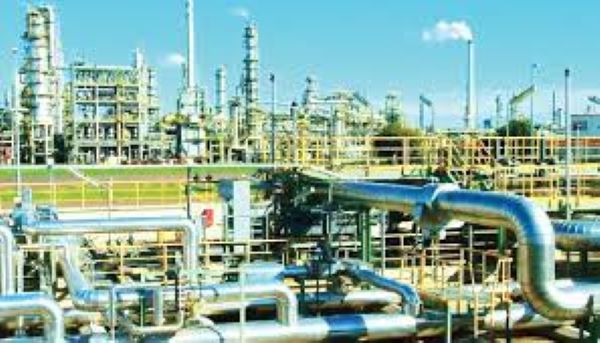
Dangote Refinery
Nigeria’s Dangote oil refinery has emerged as a key supplier of fuel to Europe following disruptions to Middle East exports, highlighting its growing influence on global fuel markets and generating record profits ahead of its stock market debut.
Ramping up fuel exports this year during the crisis has enabled the Lagos-based refinery to deliver a net profit of $1.82 billion in the first half of 2026 on revenue of more than $13 billion, according to its prospectus, compared with a loss of $476 million in all of 2025, as conflict-related disruptions lifted refining margins and increased demand for its exports.
Built to end Nigeria’s dependence on imported fuel, Dangote’s refinery is increasingly influencing global fuel flows at a time of market stress. This trend is set to continue as disruptions to Middle East supply persist and the refinery expands capacity.
“Dangote’s role is likely to increase materially in coming years”, Janiv Shah of Rystad Energy told Reuters.
“The largest structural impact will be on gasoline. Jet fuel and diesel also becoming increasingly important”.
After Iran closed the Strait of Hormuz in response to U.S.-Israeli attacks at the end of February, Europe lost a quarter of its supply of diesel and jet fuel. The resulting drop in Middle East exports has helped send fuel inventories in Northwest Europe’s oil trading hub to their lowest in 12 years.
Europe imported about 80,000 barrels per day of jet fuel from Dangote during the second quarter, equivalent to roughly 13% of the resulting supply shortfall and making the refinery the continent’s largest supplier of the fuel, according to Kpler data. Only the U.S. provided more of Europe’s imports than Nigeria in that time on a country level, the data show.
“Without Dangote, Europe would still have sourced fuel but at a higher clearing price. There might have also been deeper inventory draws”, Rystad’s Shah highlighted.
REFINERY HELPS TO EASE TIGHT MARKET
Dangote also boosted exports of diesel and gasoil, which like jet fuel are among a group of fuels known as middle distillates.
Dangote’s diesel and gasoil exports rose by 23% to 48,000 bpd in 2026 to date, according to Kpler.
“These barrels have increasingly supplied West Africa and Europe, where they have helped ease an otherwise tight middle-distillate market”, Kpler analyst Sumit Ritolia said.
The refinery’s impact on middle distillates adds to the significant influence Dangote has had on gasoline flows since it started operating in 2024.
Dangote produced roughly 270,000 to 300,000 bpd of gasoline in 2026 to date, according to Kpler. As a result, Nigeria’s imports of the fuel have tumbled from around 400,000 bpd in 2024 to just 83,000 bpd this year.
Europe traditionally supplied most of that volume, in a trade that was once worth $17 billion a year.
Dangote is seeking to double capacity to 1.4 million bpd by 2029, which would make it the joint-largest refinery in the world alongside Reliance’s Jamnagar facility in India.
Asked about the refinery’s expansion plans, Chief Executive David Bird told Reuters that a new diesel hydrotreater would allow Dangote to produce a wider range of diesel specifications for export.
“We need to make sure we can land our product in any market, anywhere in the world, at any time of year,” he said.
REUTERS