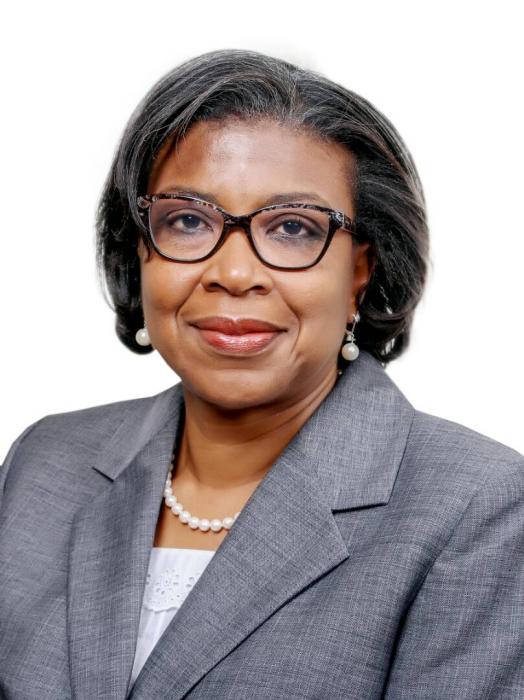
DMO Chief...China cannot take over our assets
March 24, 2022
The Debt Management Office (DMO), says borrowings by countries to finance budget deficits and critical infrastructure is not necessarily bad.
Patience Oniha, the Director-General of DMO said this in an interview with the News Agency of Nigeria (NAN) on Thursday in Lagos.
She spoke on the sideline of an awareness programme on security issuance organised by her office.
Oniha said that government borrowings were done by all countries across the world, mostly to finance critical infrastructure.
According to her, the multiplier effects of quality infrastructure on a country’s economy cannot be quantified.
She said that successive Nigerian governments have had to recourse to borrowing to fund budget deficits, adding that annual budgets would be affected if funds were not raised to support them.
“The issue of debt has become topical in Nigeria that sometimes it almost looks as if borrowing is an offence or a crime.
“The first thing we must understand is that countries across the world borrow, be it poor countries, advanced countries , developed countries, emerging markets. They all borrow.
“We usually hear complaints that debt levels are rising in Nigeria. Globally, debt levels are rising, not just in Nigeria, ” she said.
The director-general said that the advent of COVID-19 had also made borrowing imperative for some countries.
“What has happened with COVID-19 is that countries needed to spend more, not only on health needs but on social needs as well, because we need to take care of people who are losing their jobs.
“We need to create incentives for the private sector to continue operating in order to avoid a big recession because most countries experienced recession.
“We did as well, but we came out of it after two quarters. Government spending is one of the tools you can use properly to exit recession.
“In Nigeria, we borrow to finance budget deficits, sometimes we borrow to finance specific projects and services like railways and airports. Financing infrastructure is an economy itself. It creates jobs across all sectors.
“We also borrow to finance maturing loan obligations like the Federal Government of Nigeria (FGN) bonds and Nigeria Treasury Bills,” she said.
According to her, there are statutory laws that regulate borrowings by governments at the various levels, and also prevent abuse of the process.
“The Fiscal Responsibility Act states that borrowing should be for capital purposes and for human capital development. The DMO Act is also clear, especially on external borrowings.
“No arm of government can borrow on its own. It has to conform with those provisions and pass through the Federal Executive Council and the National Assembly.
“There is also a fiscal responsibility for the state governments to ensure that the reforms at the centre also happen in the states, ” she said.
Some stakeholders in Nigeria have been complaining about the country’s rising debt stock.
The DMO had recently said that the country’s total debt stock as at December, 2021 was N39.55 trillion.
It also said that the debt stock was likely to hit N45 trillion in 2022, as the government planned to borrow additional N6.39 trillion to finance the 2022 budget deficit.
She said that the budget deficit was to be financed mainly by borrowings from both domestic and foreign sources, as well as privatisation proceeds.
“About N2.57 trillion will come from domestic sources, N2.57 trilllion from foreign sources, N1.16 trillion from multilateral and bilateral loan drawdowns and N90.7 billion from privatisation proceeds,’’ she said. (NAN)