










February 24, 2022
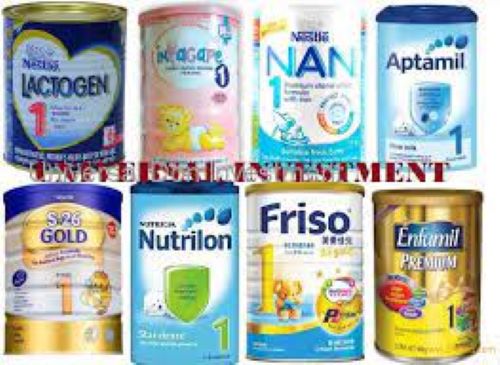
Aggressive marketing of infant milk formula has become more widespread and insidious in the digital era despite a decades-long campaign to eradicate the practice, according to a new study. Public health experts are calling for tougher regulation on the industry.

More than half of parents and pregnant women are exposed to unethical and misleading marketing, according to a study published on Wednesday by the Geneva-based World Health Organization (WHO) and the United Nations Children’s Fund, UNICEF. This finding is based on an international survey of around 8,500 parents and mothers and 300 healthcare workers carried out by global communications firm M&C Saatchi.
It’s not just the amount of marketing that is a problem, says Nigel Rollins, a WHO scientist and lead author of the report, during a press conference. Equally alarming is how marketing tries to “exploit emotions, the fears and the ambitions of women and families at a time they’re potentially most vulnerable”.
The WHO recommends exclusive breastfeeding for the first six months of life and continued breastfeeding for up to two years. Breastmilk substitutes like formula should be available when needed or desired but, the WHO argues, it is their aggressive and unethical marketing that undermines breastfeeding, which is the best nutrition for babies.
Marketing techniques such as television advertisements, free samples, unsubstantiated scientific claims, and sponsorship of “mum influencers” on social media are banned under the International Code of Marketing of Breastmilk Substitutes, adopted by the World Health Assembly in 1981. The Code took shape in the wake of scandals in the 1970s, in which Swiss company Nestlé was singled out for its aggressive marketing that led women to abandon breastfeeding in favour of formula. The Swiss company endured a widespread boycott over the issue.
The report didn’t name and shame any company. But the scale of the problem is giving new impetus to WHO and UNICEF calls for binding regulation and tougher sanctions for the entire industry. Only 25 countries have legislation that covers the Code in its entirety. Switzerland is not among them, neither are the two largest markets – China and the United States.
Relentless messaging
Modern-day marketing with social media and digital tools has amplified the problem. According to the study, companies are using data algorithms to tailor and target their messaging to mothers via helplines, baby clubs and phone apps as well as via social media. “Women may be directed to these sites and come without even knowing who the sponsor is, jeopardising their access to impartial information on infant feeding,” said Grainne Moloney, a Nutrition Advisor at UNICEF.
Conducted in eight countries across five continents, the M&C Saatchi survey found about 51% of parents and pregnant women had been targeted with marketing from formula milk companies. Women in urban China had the highest exposure to messages promoting formula milk (97%). Women in Vietnam and the United Kingdom were not far behind (92% and 84% respectively). Such relentless messaging undermines women’s confidence, according to the report.
The report also takes aim at the misleading nature of marketing messages. Because infant formula is regulated as a food product rather than as a medicine or pharmaceutical, bodies like the US Food and Drug Administration don’t require the same level of scientific data to make claims about the health and brain development effects of certain ingredients.
“Formula milks are positioned as close to, equivalent and sometimes superior to breast-milk” the report noted, stressing this is often based on “incomplete scientific evidence”.
Such marketing practices, according to Rollins, disrupt objective, truthful information that enables women to make the best decision for themselves when considering breastmilk versus formula. “There are many factors that go into these decisions but that shouldn’t be driven by commercial interests,” he says.
A study published in the Lancet in 2021 found exclusive breastfeeding rates have increased in most regions over the past two decades but remain at 44%, which is below the global target of 50% by 2025. Infant formula sales have increased alongside this. One study found global sales more than doubled between 2005 and 2019.
Bending the code
A crucial problem remains the inconsistent interpretation and application of the Code. In 2020, the WHO partnered up with several NGOs to urge companies to fall in line with the Code within a decade. Only two companies, KraftHeinz and Meiji, which represent only 1% of the market, have agreed to do so.
“[The companies] all claim to align with the parts of the Code that are convenient for them to say so, and then they build an information package around that specific area of alignment,” Rollins told SWI. “Our research and that of others shows that none of the companies fully align with the Code.”
According to the 2021 from the Access to Nutrition Initiative compliance varies. Of the seven companies, Danone’s policy ranks the highest, which is 68% in line with the rules, followed by Nestlé at 57%. The three Chinese companies on the list – Feihe, Mengniu and Yili – don’t publish any marketing policy.
The key divergences are on how the Code applies to children over 12 months, specific countries or product types. The marketing policy of Nestlé, which is the largest infant formula manufacturer with 21% of the market, is “guided” by the Code but is not a one-for-one match. The Swiss company did commit to stop promoting infant formula in all countries for babies 0-6 months by the end of 2022.
Change the legal landscape
Patti Rundall has been the policy director at the NGO Baby Milk Action since the 1980s. She is convinced that without laws aligned with the Code companies will continue to be selective in how and where they apply these standards. “You are dealing with transnational companies that are massive. You need to make sure that your legislation closes off avenues for parents and mothers. It’s their health at stake,” she told SWI.
The infant formula industry is estimated to be worth around $55 billion. In countries like India, which has one of the toughest laws and enforcement on formula marketing, formula sales have stayed steady. But in China infant formula sales have skyrocketed and now account for about half ($28 billion) of the total market. China has had few restrictions on marketing, but in 2021 proposed a ban on marketing of infant formula in health facilities.
The United States, the second largest market, is among 58 countries that have no regulation on marketing at all. “You have a few multinationals – including Nestlé – that have adopted much stricter voluntary marketing practices than what is required by law,” Marie Chantal Messier, head of food and industry affairs at Nestlé, told SWI. “To change the game, regulations need to be passed in all countries without national laws.”
- Swissinfo.ch