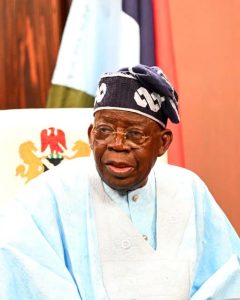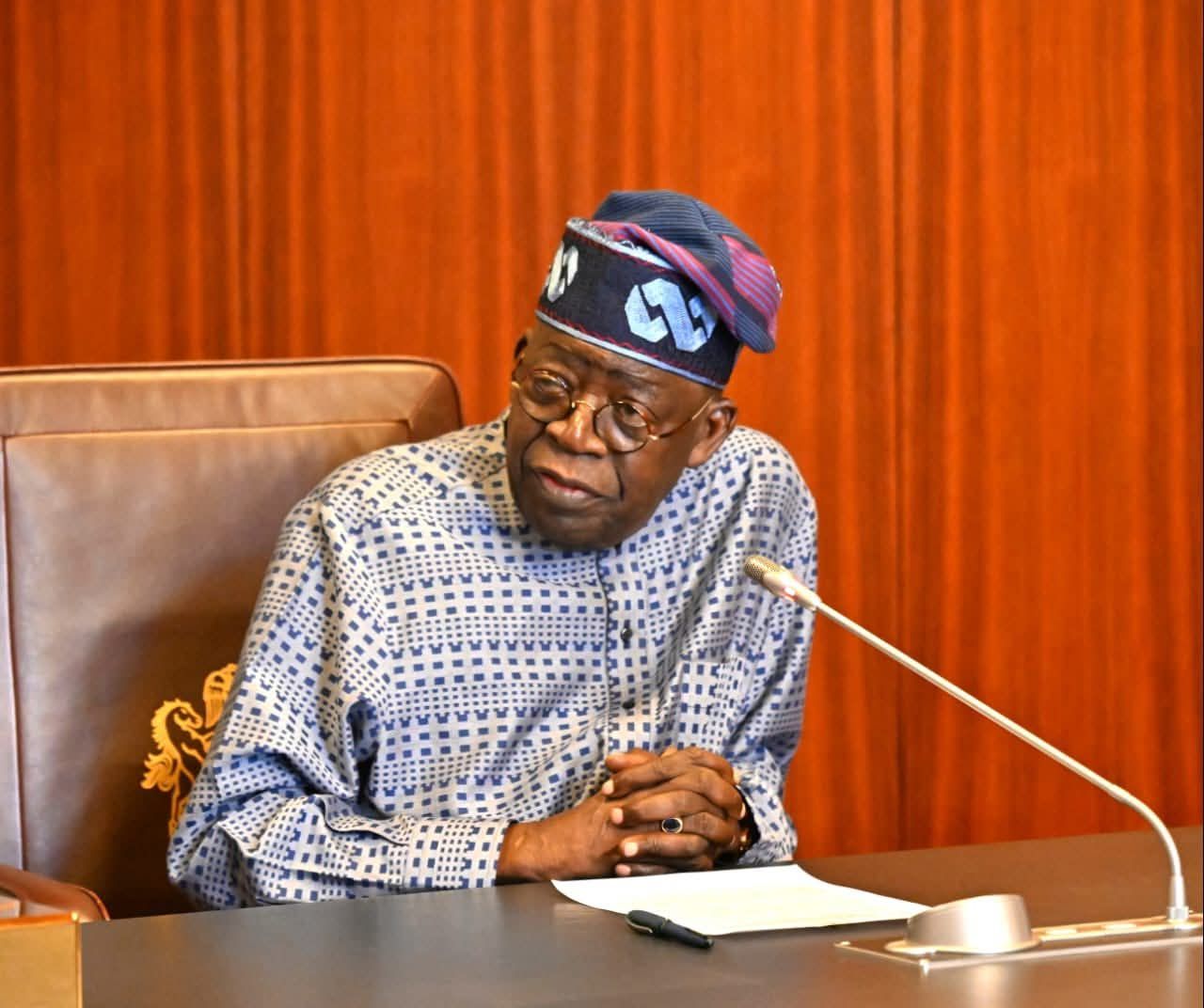
President Bola Tinubu

I have read the widely circulated statement attributed to Emir Muhammadu Sanusi II in which he disputes President Bola Ahmed Tinubu’s assertion that he inherited a severely distressed Nigerian economy. While every Nigerian has a right to hold and express an opinion, public discourse must remain anchored on facts, historical context, and intellectual honesty.
The first question is simple: What exactly constitutes a dilapidated economy?
Is it an economy where fuel subsidy payments had become a black hole consuming trillions of naira annually? Is it an economy where the Central Bank maintained multiple exchange rates that encouraged arbitrage, corruption, and uncertainty? Is it an economy burdened by unsustainable debt servicing obligations, dwindling foreign exchange reserves, rising inflationary pressures, and a national treasury increasingly dependent on borrowing to meet routine obligations?
If these conditions do not qualify as signs of economic distress, then one wonders what would.
The truth is that President Tinubu inherited an economy facing profound structural challenges accumulated over many years. This is not a partisan observation. International financial institutions, economists, and policy analysts across ideological divides acknowledged these distortions long before May 2023.
What distinguished previous administrations was not necessarily the absence of problems but the reluctance to confront some of them decisively. The fuel subsidy regime had become politically convenient but economically destructive. Multiple exchange rate windows created opportunities for a privileged few while discouraging productive investment. Successive governments understood the dangers, yet many lacked the political will to act.
Leadership is often tested not by the popularity of decisions but by the courage to make necessary ones.
President Tinubu chose to confront these long-standing distortions from his first day in office. Predictably, the immediate consequences were painful. Subsidy removal increased transportation and energy costs. Exchange-rate unification exposed weaknesses that had previously been hidden behind administrative controls. Inflation surged, and many citizens experienced genuine hardship.
These realities should not be denied or minimised.
However, history teaches us that nations rarely emerge from deep economic distortions without passing through a difficult adjustment phase. Countries that postponed necessary reforms often paid a far greater price later. The physician who treats a severe infection may cause temporary discomfort, but neglecting treatment can be fatal. Economic reforms operate on a similar principle.
Those criticising today’s reforms must answer an equally important question: What was the alternative?
Should Nigeria have continued spending trillions on subsidies benefiting smugglers, middlemen, and neighbouring countries? Should the nation have maintained artificial exchange rates that discouraged investment and encouraged rent-seeking? Should future generations have been burdened with even greater debts merely to postpone difficult decisions?
It is easy to criticise reform. It is far harder to implement it.
Regarding the various expenditure figures frequently circulated on social media, Nigerians should always distinguish between approved budgetary provisions, actual expenditure, inherited commitments, statutory allocations, and politically amplified claims. Serious national debate requires evidence, context, and verification rather than sensational figures repeated without scrutiny.
No administration is beyond criticism. Government spending should always be subjected to rigorous public examination. Fiscal discipline must remain a priority. Nigerians are entitled to demand accountability from every public official.
Yet accountability also requires intellectual consistency.
One cannot simultaneously acknowledge that Nigeria faced severe structural economic challenges and then condemn every attempt to address those challenges simply because the remedies are uncomfortable.
The deeper issue confronting Nigeria today is not merely economic. It is the accumulated consequence of decades of postponed reforms. Every administration inherited problems from its predecessor and, in turn, left some unresolved for its successor. The difference lies in whether leaders choose to confront those problems or merely manage them.
President Tinubu’s approach may not be universally popular. Reasonable people may disagree on aspects of implementation. However, it is difficult to argue that the administration has avoided difficult decisions. On the contrary, it has confronted some of the very issues that many critics previously identified but were unwilling to tackle when they had the opportunity.
Nigeria’s story has never been one of quick fixes.
Our elders remind us that the farmer who uproots weeds does not beautify the farm on the first day. For a season, the field may even appear rougher than before. Yet it is only by removing the weeds that a better harvest becomes possible.
Another proverb teaches that the doctor who tells the truth about an illness is often disliked more than the one who offers comforting falsehoods. But in the end, recovery comes through treatment, not denial.
And as our people wisely say, the canoe that must cross the river cannot fear every wave. Nations, like travellers, sometimes endure rough waters before reaching calmer shores.
The challenge before Nigeria is therefore not whether reforms are painful. They are. The real question is whether we possess the courage to endure temporary discomfort in pursuit of long-term prosperity.
History will judge today’s leaders not by how loudly they were applauded in the moment, but by whether the difficult choices they made laid the foundation for a stronger, more prosperous Nigeria.
That is the debate Nigerians should be having.
Dr. Festus Goziem Okubor writes from Asaba