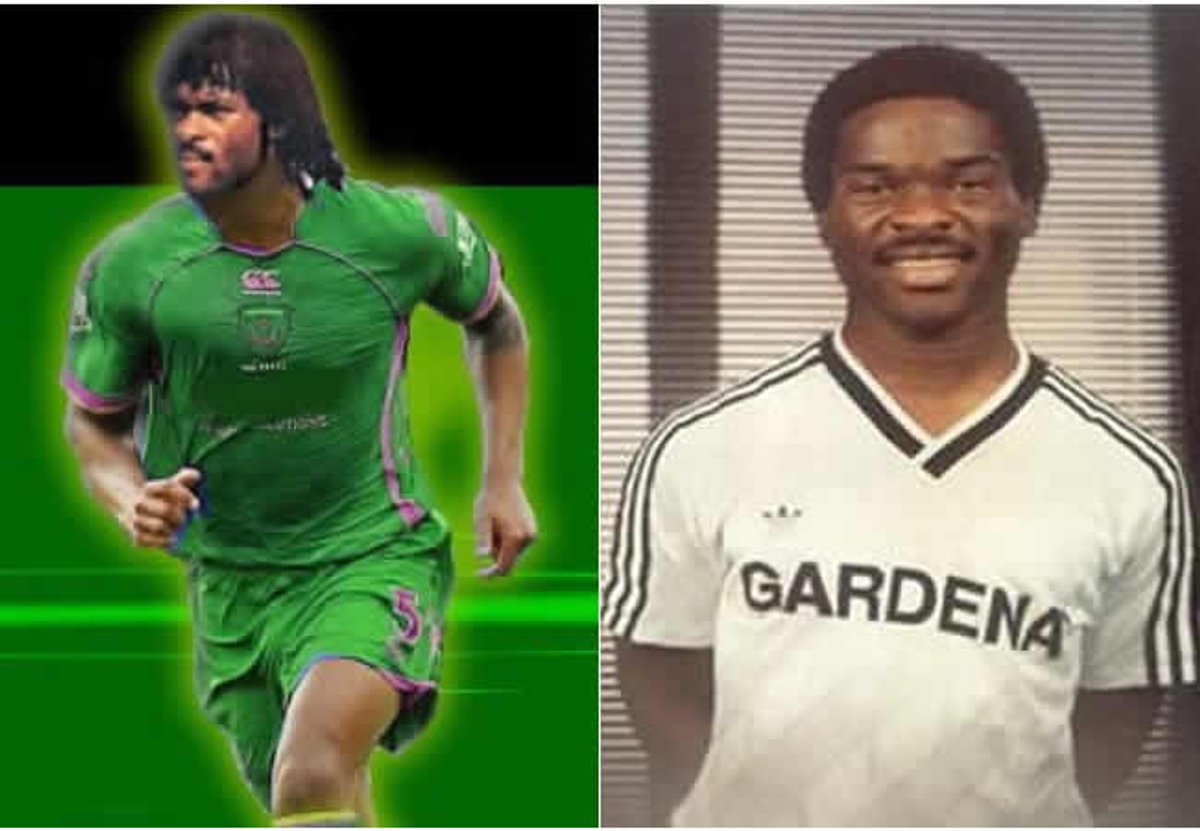
Thirty-seven years after Samuel Sochukwuma Okwaraji collapsed and died on the National Stadium pitch, Lagos, his legacy continues to echo across Nigeria.
On August 12, 1989, during a high-stakes “Italia 1990” World Cup qualifier against Angola, the dreadlocked midfielder slumped in the 77th minute due to congestive heart failure.
While Nigeria eventually won that match 1–0, the tragic day cost the nation one of its finest footballing icons, a scholar-athlete whose ultimate sacrifice remains a stark reminder of unalloyed patriotism.
As football enthusiasts gathered in Ebonyi State to mark the 37th anniversary of his passing, the commemoration served as more than just a trip down memory lane.
It sparked a haunting question among fans and stakeholders: Where is the spirit of Samuel Okwaraji in modern Nigerian football?
A Golden Standard of Selflessness
In an era where international call-ups are frequently shadowed by bonus disputes, logistics failures, and administrative friction, Okwaraji stands out as a colossal anomaly.
A holder of a master’s degree in Law from the University of Rome, Okwaraji famously paid for his own flight tickets from Europe to represent Nigeria, routinely refused match allowances, and once personally threatened legal action against his Belgian club, Berchem FC, when they attempted to block his availability for national service.
Recalling that fateful afternoon under the blistering Lagos sun, football historian Jerome Ezeoba remembered a midfield commander who poured his heart onto the pitch:
“Okwaraji’s slumping was so sudden as he had been running rings around opponents in the midfield from the onset of the match. The medics at the stadium tried resuscitating him to no avail… he was rushed to the hospital where the grim news of his death was eventually broken to a dumbfounded nation.”
For fans like Peter Afamefuna, former chairman of the Chelsea Football Club Fans Club in Abakaliki, Okwaraji’s rare blend of intellect and selflessness remains an enduring inspiration:
“I grew up to learn that he was arguably the most patriotic footballer Nigeria ever produced. The stories of how he paid for his airfares to national assignments and rejected match bonuses seemed like fairy tales, but they have been confirmed to be true.”
A Midfield Jewel Cut Short
Beyond his legendary patriotism, Okwaraji was a supreme entertainer on the pitch. Long before Jay-Jay Okocha cast his spell on Nigerian football, Okwaraji mesmerized fans with supreme ball-juggling skills, vision, and long-range shooting.
His iconic thunderbolt strike against Cameroon during a group game at the 1988 Africa Cup of Nations (AFCON) remains enshrined in African football lore as one of the greatest goals ever scored in the tournament’s history.
Chief Benneth Okolo, a businessman and football enthusiast, reflected on his brilliance:
On-field Command: “Okwaraji commanded the Super Eagles midfield with eye-catching football and ball-juggling skills before the likes of Augustine Okocha took centre stage.”
Clinical Execution: “He was also a scintillating goal scorer, and his thunderbolt against Cameroon in 1988 still ranks among the tournament’s all-time goals.”
Broken Promises and a Struggling Football Ecosystem
Despite his priceless sacrifice, the aftermath of Okwaraji’s death leaves a bitter taste. Decades later, family members and hometown supporters feel forgotten by a nation quick to celebrate victory but slow to honor its pledges.
Judith Amadi, a teacher from Okwaraji’s hometown of Umudioka in Orlu, Imo State, voiced deep concern over the neglect of his memory:
“Sam laid down his life for the nation, yet several promises made to his family by various quarters remain unfulfilled. We are pained that no one talks about this football legend anymore, as this was the man who brought Umudioka to the national and global map.”
This sense of neglect mirrors the broader structural decay currently confronting Nigerian sports. Modern Nigerian football finds itself navigating turbulent waters:
World Cup Misfortunes: The Super Eagles missed out on back-to-back FIFA World Cups (2022 in Qatar and 2026 in North America), leaving millions of passionate fans disillusioned.
Administrative Strife: Deep-seated structural deficiencies, administrative controversies, and recurring bonus payment conflicts continue to plague national team preparations across both male and female setups.
Eroded Ideals: The pure, unvarnished devotion displayed by Okwaraji’s generation has increasingly given way to institutional incompetence and systemic dysfunction.
Reclaiming the Okwaraji Spirit
Honoring Okwaraji requires more than annual tributes or forgotten monuments. It demands a fundamental overhaul of Nigerian sports administration, fulfilling long-standing promises to the families of fallen heroes, and reinstilling a culture where patriotic sacrifice is matched by structural excellence and integrity.