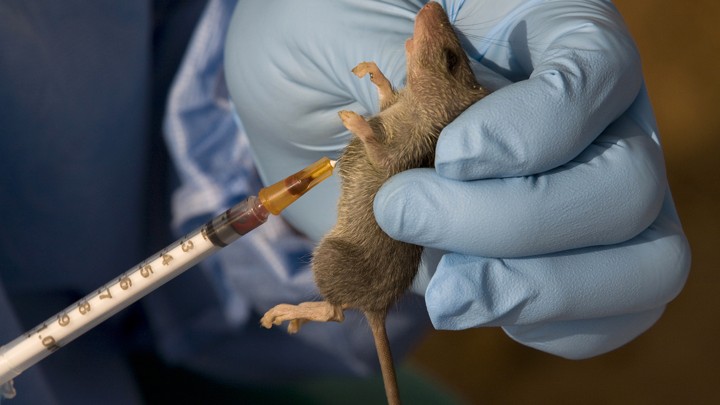
An ecologist extracts a sample of blood from a Mastomys Natalensis rodent in the village of Jormu in southeastern Sierra Leone February 8, 2011. Lassa fever, named after the Nigerian town where it was first identified in 1969, is among a U.S. list of "category A" diseases -- deemed to have the potential for major public health impact -- alongside anthrax and botulism. The disease is carried by the Mastomys Natalensis rodent, found across sub-Saharan Africa and often eaten as a source of protein. It infects an estimated 300,000-500,000 people each year, and kills about 5,000. Picture taken February 8, 2011. To match Reuters-Feature BIOTERROR-AFRICA/ REUTERS/Simon Akam (SIERRA LEONE - Tags: HEALTH SOCIETY ANIMALS) - GM1E72F07HC01
The Plateau Commissioner of Health, Dr Nimkong Ndam, has on Friday confirmed five cases of Lassa fever in the state.
Ndam told News Agency of Nigeria (NAN) in Jos that the patients of the ailment had been admitted in two hospitals in the state, adding that three of them were undergoing treatment; one had completed treatment, while the fifth one had been discharged.
He said Lassa fever was not new in the state because the area had experienced the disease before.
“However, the health personnel are on ground to handle the situation and they have the required protective kits to wear while treating such cases”.
“We are in contact with the hospitals in the state to address such cases promptly and to curtail spread of the disease.We also have the protective kits required of health workers to wear when treating such cases,” he said.
Lassa fever is transmitted to humans through contact with food or household items contaminated by infected Mastomy rats who are hosts of the Lassa virus.
Storing grains and other foodstuff in rodent-free containers and general hygiene is a preventive measure.