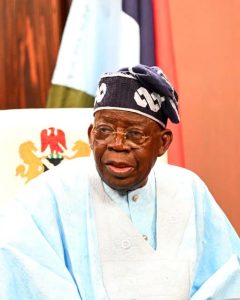
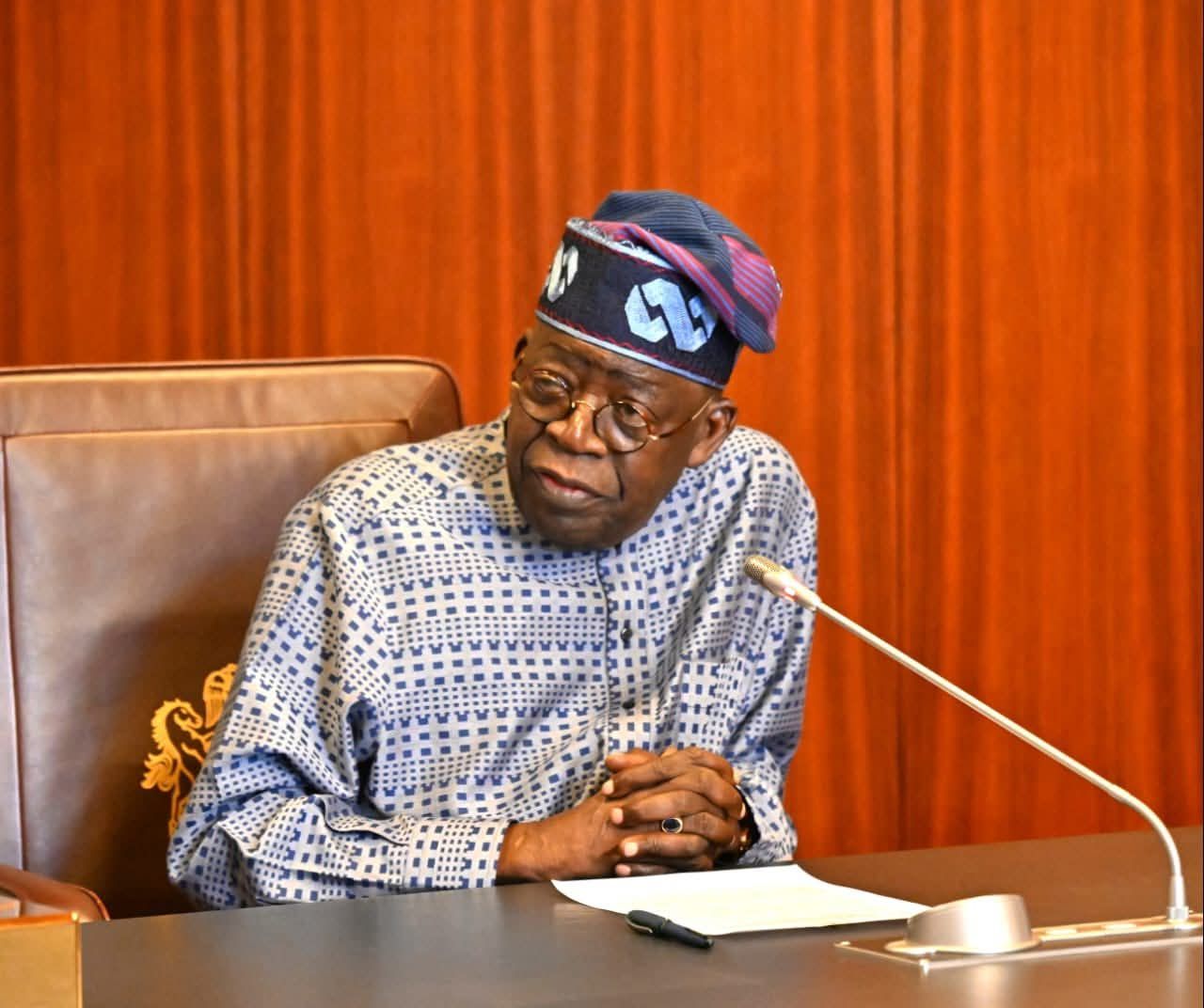
President Bola Tinubu

Until April 14, 2014, when the militant group, Boko Haram, abducted 276 girls from the Government Girls Secondary School in Chibok, Borno State, insecurity remained a localised, albeit, regular decimal in the Nigeria’s north. The international dimension taken by the audacious attack ultimately led to the ouster of President Goodluck Jonathan in the election of the following year. But before he left office, Jonathan went to extraordinary lengths to secure the release of the girls and liberate the areas that had been taken over by the group.
More remarkably, the Chibok incident flagged off the mega allocations to the military and other security agencies to combat insecurity. Between 2015 and 2025, Nigeria significantly increased its budgetary allocation to security and defence, with total annual allocations rising from N969 billion in 2015 to over N5.41 trillion by 2025. Between 2021 and 2025 alone, over N17 trillion was earmarked for security, according to a report by BudgIT.
Besides that, in April 2018, former President Muhammadu Buhari approved the withdrawal of $1 billion from the Excess Crude Account (ECA), a component of the Federation Account, for the procurement of security equipment to fight insurgency and insecurity across Nigeria. The withdrawal was approved by the National Economic Council (NEC), which includes state governors, rather than through a direct appropriation act from the National Assembly, leading to controversy over its legality.
The humongous allocation of funds in annual budgets to the military was such that security became an industry of its own. Ironically, as more money was allocated to securing the country, the state of insecurity deteriorated. For the umpteenth time, the US Department of State on April 8, 2026 issued another travel advisory on Nigeria, retaining the country’s classification on the number of states listed on Level 3 which translates to ‘Reconsider Travel’ while increasing the number of states on Level 4 which says Do not Travel to 23 of the country’s 36 states. The advisory update cites crime, kidnapping, terrorism, and civil unrest as key concerns, shutting down its Abuja embassy and authorising non-essential staff to evaluate U.S. government personnel from Abuja, signalling heightened caution around the country’s broader security environment. While the business community is mourning the impact of the advisory on the drive for investors at a time governance has taken the backstage in favour of the 2027 elections, there is concern that the prevailing economic challenges may not abate.
But who can blame America for the alarm she raised to her citizens on their safety? The frequency of kidnaps and mass abduction were so much that the Presidency’s media handlers could as well have produced various versions of condolence messages and only alter some sections to reflect the name of affected communities, number of casualties and date of attacks. The travel advisory by embassies indicates they see our military as compromised or incapable of fighting the insurgency.
The Nigerian Military has had a sterling record in all the missions they engaged in under the United Nations. But for a local engagement, they have not been able to win the trust and confidence of the diplomatic community. The problem is not from the military as an institution. Rather, the pronouncements of top administration officials holding the levers of power on security issues are thought to have elicited the scepticism.
Speaking on strategies for peace, Nuhu Ribadu, Tinubu’s National Security Adviser, made the controversial statement that some armed groups and militants are willing to engage, stating, “Whether we like it or not, there are terrorists in Nigeria who want peace. They are our brothers. We must seek dialogue and understanding”.
Elsewhere, governors in some states paid greater attention to suppressing news of attacks on communities in their states rather than seek respite for their people. But the one development that stood out is the decision of Aso Rock to engage the services of a media firm to burnish the narrative of overwhelming insecurity which was anchored on what President Donald Trump labelled Christian genocide. At a princely $9 million contract sum for an initial six months, it was enough to raise eyebrows within the diplomatic community apart from the furore it ignited among political leaders in the country.
From only the northeast that was under threat during Jonathan’s presidency, the northwest, including Kaduna, Zamfara and Kebbi states have been caught in the loop, while Niger, Plateau and Benue states have sunk deeper and are in danger of becoming too volatile for elections to hold in 2027.
Talks of calling insurgents prodigal sons and our brothers send the signal that the main theatre of the military campaign is not in synch with the political military. Invariably, there is a disconnect between the command at the main theatre and the political class.
There does not seem to be paucity of reliable intelligence as it turned out in the recent bombing of a community in Bornu State on their market day. Cases of predictions of attacks on a particular date, time and location that turned out out true abound. Is it a case of inflexible command or failure to apply the right military strategy or outright sabotage by fifth columnists within the security architecture? Why are the communities exposed to attacks not equipped with weapons to protect themselves given that military personnel are not readily on ground? There are instances where community vigilante armed with dane guns were disarmed while the terrorists are left on rampage with their sophisticated military grade assault weapons. With the amount devoted to the military and other security agencies over the years, the deepening insecurity is illogical.