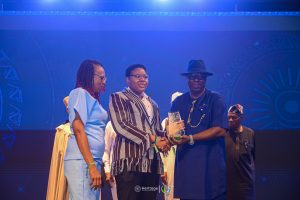
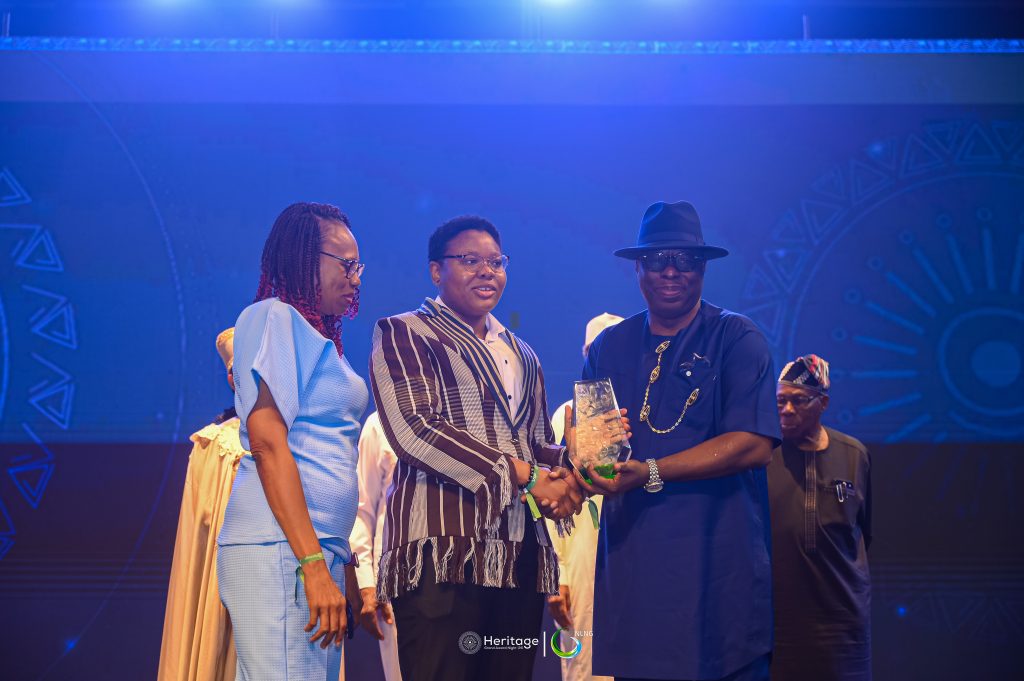
Mary-Brenda Akoda (center), winner of The Nigeria Prize for Science & Innovation, receives her award from Adeleye Falade, NLNG’s MD/CEO, with her mother, Mrs Akoda, by her side.
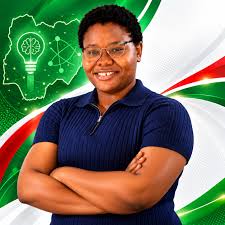
Mary-Brenda Akoda, winner of the 2026 Nigeria Prize for Science and Innovation, has unveiled a groundbreaking Artificial Intelligence (AI) technology capable of reducing Magnetic Resonance Imaging (MRI) scan duration by up to 90 per cent.
Akoda, an AI Research Scientist, former Microsoft Engineer, and Founder of Genscan AI, showcased the invention dubbed GenMRI, during the public presentation of the 2026 prize winner organised by Nigeria LNG Ltd. (NLNG) in Lagos on Tuesday.
The innovation addresses critical bottlenecks in modern healthcare, including long scanning procedures, equipment shortages, and high operational costs that often delay urgent medical diagnoses.
Akoda revealed that the breakthrough was inspired by a personal tragedy, the death of an elderly relative who suffered a stroke but faced severe delays securing an urgent scan.
“Sadly, his story isn’t unique. Worldwide, someone suffers a stroke every two seconds, and it kills over 6.5 million people annually, while cancer kills over 10 million,” Akoda said.
Standard MRI procedures typically take anywhere between 15 minutes to an hour and a half, while acquiring high-quality scanners requires capital investments ranging between $1.5 million and $3.5 million.
GenMRI overcomes these hurdles by utilizing advanced algorithms to reconstruct diagnostic-quality images from significantly fewer scan data points. Under the new technology, a 20-minute scan is reduced to roughly two minutes, while an hour-long procedure takes approximately six minutes.
The technology has undergone retrospective validation using over 8,800 MRI images, with the research published in peer-reviewed scientific journals. Additionally, a blinded evaluation by a consultant radiologist at Buckinghamshire NHS Hospital in the United Kingdom confirmed that GenMRI scans are diagnostically equivalent to conventional MRI outputs across all assessed cases.
“The most significant challenge was ensuring that we weren’t just building an AI system that could create any MRI image, but that it was anchored in the patient’s data,” Akoda explained.
Looking ahead, Genscan AI is partnering with clinical institutions across Nigeria, Kenya, the UK, and the United States to complete broader clinical validations, secure regulatory approvals, and begin pilot deployments, with target commercial deployment slated for the second half of 2027. Akoda also called on additional clinical partners and health innovation investors to join the initiative.
Delivering her welcome address, Dr. Sophia Horsfall, General Manager of External Relations and Sustainable Development at NLNG, reaffirmed the gas company’s dedication to fostering local scientific talent and driving impactful healthcare solutions.
She emphasised that celebrating such achievements highlights how practical innovation and timely diagnosis directly improve patient survival rates.
The presentation concluded with goodwill messages from key industry leaders and healthcare stakeholders, praising Akoda’s scientific milestone and commending NLNG for its sustained commitment to scientific excellence in Nigeria.