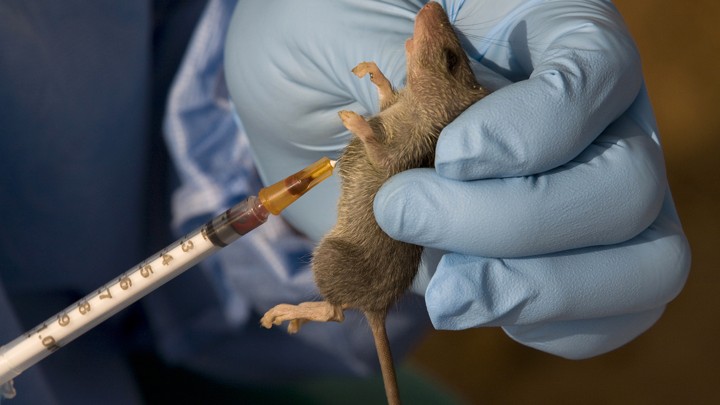
An ecologist extracts a sample of blood from a Mastomys Natalensis rodent in the village of Jormu in southeastern Sierra Leone February 8, 2011. Lassa fever, named after the Nigerian town where it was first identified in 1969, is among a U.S. list of "category A" diseases -- deemed to have the potential for major public health impact -- alongside anthrax and botulism. The disease is carried by the Mastomys Natalensis rodent, found across sub-Saharan Africa and often eaten as a source of protein. It infects an estimated 300,000-500,000 people each year, and kills about 5,000. Picture taken February 8, 2011. To match Reuters-Feature BIOTERROR-AFRICA/ REUTERS/Simon Akam (SIERRA LEONE - Tags: HEALTH SOCIETY ANIMALS) - GM1E72F07HC01
March 31, 2025
Lassa fever killed 118 people in Nigeria in the first three months of this year, the West African country’s Centre for Disease Control and Prevention (NCDC) said.
The virus, which is carried by rodents and was first recognised in 1969 in the northeastern state of Borno, has killed thousands of people over the years, especially in rural areas due to unsanitary handling of food.
Despite years of campaigning on how to prevent the disease, there have been no significant improvements in environmental hygiene of impoverished rural Nigerians that could prevent rats from accessing homes, food and utensils.
In the January-March period, a total of 645 Lassa fever cases were confirmed with 118 deaths, a fatality rate of 18.3%, NCDC director general Jide Idris said in a statement on Monday.
Nigeria has been recording around 100 deaths from Lassa fever every quarter recently.
Among the latest cases, Idris said, more than 20 health workers had been infected with Lassa fever in five of the 33 affected states of the country.
He said treatment centres were suffering staffing shortages while many patients were delaying seeking medical care in favour of self-medication and other unorthodox practices that were mostly ineffective.
REUTERS