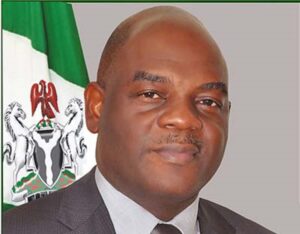
Dr Tunji Alausa
The Federal Government has clarified that King’s College, Lagos, has not been sold or privatised, saying it retains legal ownership of the 117-year-old institution.
The Minister of Education, Dr. Tunji Alausa, disclosed this in a statement in Abuja on Friday, to clarify the Public-Private Partnership (PPP) concession agreement with the King’s College Old Boys’ Association (KCOBA).
In the statement, signed by the Director of Press and Public Relations, Folasade Boriowo, the minister explained that the concession only transferred responsibility for financing, rehabilitating, modernising, operating and maintaining the school to KCOBA.
He stressed that the Federal Government retained its statutory, regulatory, monitoring, inspection and enforcement powers over the institution.
“Let me assure Nigerians, particularly the King’s College community, that this concession is not a sale of King’s College.
“The government has retained legal title to the institution and will continue to exercise its oversight responsibilities.
“The purpose of the arrangement is to mobilise the investment and management capacity required to strengthen this important national institution,” the minister said.
He said that the agreement was developed under the established PPP framework and subjected to technical, economic, financial, legal, environmental and social assessments.
He added that the arrangement also underwent value-for-money analysis, fiscal-impact assessment, risk allocation and commercial structuring before securing the required regulatory and Federal Executive Council approvals.
“Under the agreement, KCOBA is responsible for financing and implementing major rehabilitation and new development covering academic and administrative buildings, hostels, staff quarters, laboratories, libraries, dining facilities, health facilities, utilities, sports and recreational facilities, landscaping, drainage and environmental works,” he said.
Alausa said the agreement expressly protected the public character and national identity of King’s College and did not transfer ownership or create proprietary interests in favour of KCOBA.
According to him, admissions will continue to comply with applicable Unity College policies and principles of merit, transparency, fairness and national representation.
“These will include equitable representation from the 36 states and the Federal Capital Territory, subject to applicable merit requirements”.
The minister said admission into Junior Secondary School One (JSS1) would continue through testing and assessment, with the National Common Entrance Examination (NCEE) remaining central to the prescribed entry framework.
Alausa also clarified that the agreement did not prescribe an automatic increase in school fees, although it did not establish a permanent fee freeze.
He said the concession was principally designed to address the institution’s infrastructure and operational needs and secure its long-term sustainability.
The minister said KCOBA would finance and implement major rehabilitation and new development covering academic and administrative buildings, hostels and staff quarters.
On staff concerns, Alausa said the agreement contained a formal Staff Transition and Protection Framework to facilitate an orderly transition while protecting staff welfare.
He said existing employment obligations, liabilities, arrears, pensions, gratuities and other staff entitlements arising before the transition remained the responsibility of the Federal Government, unless expressly assumed by KCOBA.
The minister said KCOBA would assume responsibility for relevant operating expenditure after transition, including salaries, benefits and allowances of personnel engaged under the project.
Alausa emphasised that the concession did not diminish government oversight, noting that the agreement provided for measurable Key Performance Indicators (KPIs), infrastructure standards, academic and student-development measures.
He said the agreement also provided for reporting, audits, inspections and independent verification, while government retained corrective and step-in powers in cases of persistent underperformance or serious contractual default.
“King’s College is an institution with a remarkable history, but preserving that history requires us to invest in its future.
“The concession provides a framework for sustained infrastructure renewal, improved learning facilities and stronger operational capacity,” the minister said.
Alausa equally said that KCOBA was restricted from selling, transferring or disposing of concession assets without the required approvals, adding that asset stripping and deterioration beyond agreed standards were prohibited.
He explained that the agreement did not provide for a conventional monetary concession fee, but required KCOBA to undertake capital investment, operational funding and infrastructure modernisation.
He urged stakeholders to assess the concession based on its implementation, transparency and measurable outcomes, particularly infrastructure, academic performance, admissions and staff welfare.
He also said students’ safety and wellbeing, proper utilisation of project funds and compliance with agreed KPIs would remain important measures of the arrangement’s success.
The minister assured stakeholders that the Federal Government would continue to monitor implementation and hold all parties to their contractual obligations.
He called on the King’s College community and the public to engage with the substance of the concession agreement and assess it based on its safeguards, investment obligations, implementation and results.
Alausa said the objective was not merely to preserve King’s College’s heritage but to strengthen the institution for present and future generations.