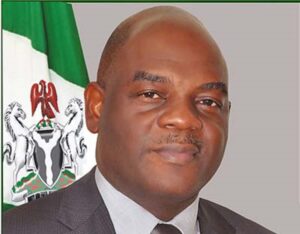

Diezani Alison-Madueke
A UK-based anti-corruption campaigner, Helen Taylor, says the acquittal of former Petroleum Minister, Diezani Alison-Madueke in the UK does not prevent Nigerian authorities from pursuing separate corruption allegations against her.
Taylor, from Spotlight on Corruption, said this at a webinar examining the implications of the UK court judgment on Alison-Madueke.
The event was organised by the African Network for Environment and Economic Justice (ANEEJ) and other Civil Society Organisations (CSOs).
A jury at London’s Southwark Crown Court On June 17, found Alison-Madueke not guilty on all five counts of accepting bribes and one count of conspiracy to commit bribery.
The Economic and Financial Crimes Commission (EFCC) also has a case against her regarding her time as Nigeria’s Minister of Petroleum Resources under President Goodluck Jonathan from 2010 to 2015.
Investigators alleged that up to 20 billion dollars left the country during her tenure, and questions about public accountability remain unanswered.
Reference was made to the recovery of the Galactica case, where 52.8 million dollars in seized assets was returned to Nigeria after a U.S. court affirmed that it was part of the proceeds of corruption relating to oil sector contract during Diezani’s tenure.
Taylor said the UK case was limited to the specific charges and evidence presented before the court and did not cover all allegations that Nigerian investigators might be examining.
“It will be wrong to interpret the UK judgment as ending every possible investigation or legal action relating to Alison-Madueke in Nigeria.”
Taylor said the UK court’s acquittal must, however, be respected and should not be reopened or portrayed as an incorrect judicial decision.
She explained that the verdict meant the jury was not satisfied that the prosecution had established guilt beyond reasonable doubt on the charges before it.
“It is not an all-or-nothing situation. Nigerian authorities can still pursue matters based on credible evidence that they may have.”
Taylor stressed that any future action by Nigerian authorities must be supported by credible and objective evidence capable of withstanding judicial scrutiny.
She also distinguished criminal prosecution from civil recovery or non-conviction-based asset forfeiture.
“Criminal prosecution concerns the guilt or innocence of an individual, while civil recovery focuses on whether particular assets are proceeds of crime.
“Assets could therefore be subject to recovery proceedings even where a criminal prosecution failed, depending on the applicable law and evidence,” she said.
Taylor said the distinction was important to avoid wrongly interpreting asset forfeiture proceedings as proof of an individual’s criminal guilt.
Also speaking, Mr. Auwal Rafsanjani, Executive Director, Civil Society Legislative Advocacy Centre (CISLAC), said the UK judgment should not be used to discontinue any legitimate investigation or prosecution in Nigeria.
Rafsanjani said the case before the UK court was separate from ongoing issues involving Alison-Madueke in Nigeria, adding that the evidence and charges in the two jurisdictions were not necessarily the same.
“The case for Alison-Madueke in the UK is not an evidence to discontinue whatever prosecution has to happen in Nigeria,” he said.
He urged Nigerian authorities to examine the UK judgment carefully and identify issues and allegations that were not covered by the UK proceedings.
Rafsanjani also called for greater attention to the recovery, management and utilisation of assets linked to corruption cases.
He said the ultimate objective of anti-corruption efforts should include restorative justice for citizens who were victims of corruption.
The executive director boss said the management of recovered assets remained a major concern, stressing the need for transparency and accountability.
He urged the media and civil society to continue monitoring the management of recovered assets and reporting how such resources were eventually used.
On his part, Rev. David Ugolor, the Executive Director of ANEEJ, and host of the webinar, said the UK judgment should not be interpreted as a blanket clearance on all allegations linked to Alison-Madueke.
He said that the ruling must not be used as a reason to halt legitimate corruption investigations within Nigeria.
Ugolor said Nigerian authorities must independently examine the evidence available to them and ensure that any prosecution or asset-recovery process was conducted transparently and in accordance with the law.
He called for stronger public accountability in the management of recovered assets, saying Nigerians should be able to track the recovery, custody and eventual use of funds and property linked to corruption cases.
The ANEEJ executive director said civil society organisations would continue to demand transparency and monitor the implementation of asset-recovery agreements, stressing that recovered resources should be applied to projects that directly benefit citizens.
A legal expert, Ilemona Onoja, also said the principle of double jeopardy would not necessarily prevent Nigeria from prosecuting separate offences that were not covered by the UK case.
He explained that where charges or elements of offences were different, Nigerian authorities could pursue them in accordance with Nigerian law.
The expert, however, said Nigerian authorities would need to carefully review the UK judgment and ensure that any further prosecution did not amount to trying an individual twice for the same offence.
Another participant, Prof. Simeon Igbinedion, of the Department of Jurisprudence & International Law, Faculty of Law, University of Lagos, said Nigeria should not rely solely on foreign jurisdictions to investigate corruption cases or recover assets allegedly taken out of the country.
Igbinedion urged Nigerian authorities to strengthen their own investigative and asset-recovery mechanisms and pursue assets located abroad through appropriate legal and international cooperation channels.
He said the fight against corruption was primarily Nigeria’s responsibility, although the country could continue to rely on international cooperation where necessary.
The participants urged Nigerian investigative agencies to improve evidence gathering and preservation, saying effective prosecution depended largely on credible investigation.
They also called on the media to sustain scrutiny of the Nigerian authorities’ handling of the case, including investigations, prosecutions and asset recovery.
The webinar was organised by ANEEJ, CISLAC and other Nigerian and UK-based civil society organisations, including Spotlight on Corruption and Corner House, to provide journalists with context on the UK judgment and its implications for Nigeria.(NAN)