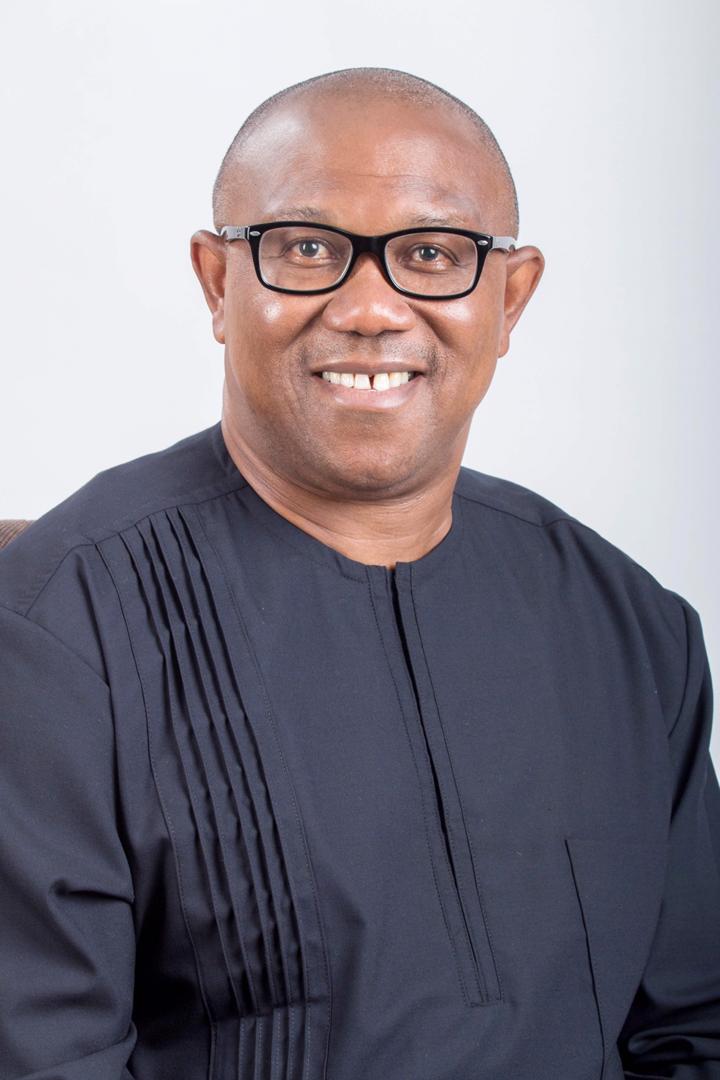
Peter Obi
*Nigeria has the lowest per capita wattage in the World
*Wants a Technical Task Force in Place

The Presidential Candidate of the Labour Party in the 2023 general election, Peter Obi has expressed deep concerns over the perennial power situation in the country recording 141 times of national grid collapse in 11 years and calls for urgent pragmatic solutions.
Obi noted that Nigeria has only 13,000mw while the demands are about 200,000mw.
He said that even with the 13,000mw, only about 3,500mw are available for homes and businesses noting that the situation puts Nigeria as the lowest per capita wattage in the World.
In an article, titled “The Collapsing Electricity Sector”, the LP standard’s bearer said “The Nigeria electricity supply industry faces real and present danger of collapse despite the efforts made in more than two decades to initiate a reform of the NESI.
“It is sad today that we suffer periodic and routinized system collapses that are attributed to such avoidable situations as fire outbreaks at critical transmission lines across our major cities. It is absolutely distressing and a story of a low level of managerial capability that the entire nation can be plunged into total darkness for a reasonable period because networks go out because of a lack of diligent attention.
“It should worry any Nigerian patriot that the total installed capacity for a country of more than 200 million people with an aspiration to become a global medium economy power is a mere 13,000. Worse still, only about 3,500mws are available for homes and businesses from the grid. Sometimes, it grinds to less than 2,500mws. This is unacceptable.
“We can contrast the available supply of electricity with competitor countries in Africa like Egypt and South Africa with respective populations of approximately 112m and 59.6m people supplying about 60,000mw and 58,000 respectively. This difference in energy wattage has massive implications for human development and economic growth. Nigeria today has the world’s lowest per capita wattage in the world, interesting lower than those of most of our West African neighbours. It is really sad that whereas our energy demand is above 200,000mws, we have only 13,000mw installed capacity and can only deliver regularly less than 4,000mw.
“After speaking with experts in the sector I have realized that the crisis of power supply in Nigeria relates to two major sectors: (1) generation, and (2) transmission and distribution. The major challenges of the generation sector are the lack of a regular supply of gas arising from the failure of the government in the last 8 years to provide adequate gas infrastructure facilities, weak commerciality of gas to power and failure to control the restiveness of angry youths leading to vandalism.
“It is shameful that for more than 8 years we cannot resolve the infrastructural bottlenecks that constrain the supply of gas to power plants despite billions from CBN for legacy gas debts.
“On the transmission and distribution side, the last 8 years have witnessed terrible failure to overcome the deterioration of networks and transmission and distribution networks and invest in modern technologies like SCADA leading to poor coverage, lack of effective coordination between TCN and discos leading to load rejection and inability to generate public trust for policy reform on tariff and leading to low private sector investments.
“If we had a good project manager, we would have massively increased generation, transmission and distribution capacity and enhanced policy coherence that would have crowded private sector investment in the degree to sustained rapid growth of the grid. The problem is that the government have exercised the required political will to appoint the right kind of leadership that understands the problems of the sector and has the singular dedication and competence to create quick wins in the short term and transformation in the medium to long term.
“I suggest that the Federal Government immediately constitute a technical task force of real professionals without political consideration to present a diagnosis of the crisis of the sector and to get to work to correct such simple slippage like incessant fire outbreaks that lead to perennial system collapse, drastically improve coordination and coherence between TCN and discos so there will be no load rejection, and breath down on all operators to deliver on their technical responsibilities. This will rapidly improve power availability in the short term while the government develop clarity to articulate an integrated national electricity policy and a practical implementation roadmap that harmonizes national and sub-national electricity reform efforts to ensure rapid and expansive delivery of reliable, adequate, and affordable electricity.
“We are too endowed to be a nation of generators and to be trapped in darkness. We cannot grow our economy in darkness.