March 24, 2022
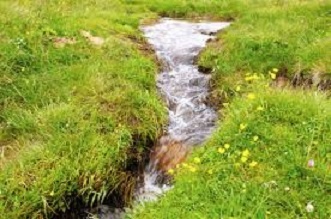
Groundwater is found underground in rocks, soils, and aquifers and makes up about 99% of all liquid freshwater on earth. And the good part? this abundance extends to much of Africa.
According to researchers, if groundwater resources in sub-Saharan Africa can be better managed, they are enough to transform agriculture in the region and provide inhabitants with sufficient safe water for their drinking and hygiene needs.
A study titled Groundwater: the world’s neglected defense against climate change by WaterAid in conjunction with the British Geological Survey, every sub-Saharan African country could supply 130 liters a day of drinking water per capita from groundwater without using more than a quarter of what can be renewed, and most using only about 10%.
They further revealed that most African countries could survive at least five years of drought, and some more than 50 years, on their groundwater reserves.
“Our findings debunk the myth that Africa is running out of water. But the tragedy is that millions of people on the continent still do not have enough clean water to drink. There are vast reserves of water right under people’s feet, many of which are replenished every year by rainfall and other surface water, but they can’t access it because services are chronically underfunded,” said Tim Wainwright, the chief executive of WaterAid UK.
In a separate report, the UN’s annual World Water Development Report found that although groundwater is often abundant in sub-Saharan Africa, only 3% of farmlands in the region were equipped for irrigation and only 5% of that area used groundwater.
However, despite the abundance of groundwater in the region, the resource continues to remain either poorly managed or vastly untapped due to a lack of investment, studies have revealed.
According to Richard Connor, the lead author and editor of the UN report for UNESCO, groundwater was not being used in Africa because of a lack of investment in equipment and infrastructure, coupled with a shortage of institutions, trained professionals, and knowledge of the resource.
In addition to that, there is also a danger that if used unsustainably, groundwater could be rapidly depleted or polluted. This is based on the fact that some are quickly replenished as rain falls while aquifers may not be easily replaceable across human timescales.
To elaborate, Connor cited examples around the world where groundwater has been used unsustainably. For instance, In India, over 30 years of incentives from the government to farmers to extract water without the development of accompanying governance structures to ensure the water was shared equitably and managed for the long term, has led to rampant over-use.
This has caused groundwater to deplete beyond its natural ability to recharge, leaving farmers fighting over a dwindling resource with falling and increasingly polluted water tables.
For African countries, however, an added danger is that other countries may sideline the continent to take advantage first.
According to a separate study published by the Oakland Institute, big agricultural commodity companies from overseas are seeing a major opportunity in Africa, with researchers having studied 15 cases of large-scale agricultural projects in 11 African countries where big companies were given rights to land and water extraction.
The report warned that in many cases, local people were often disadvantaged instead witnessing benefits from the development.
“People living in arid and semi-arid lands are severely impacted by large-scale irrigation projects that reduce available pastures, and prevent flood recession agriculture, while fences and canals cut through traditional routes of people and livestock.”
Connor said public participation was key, with local people being given rights and responsibilities over their resources, and the know-how to extract and use groundwater efficiently and sustainably.
He said this required investment: “It costs money to do it properly, and it can cost more money to manage sustainably than to mismanage, in the short term. But the returns from good management are huge. Proper management will allow the resource to be available for generations.”
Developing expertise in mapping and managing groundwater resources would be essential, he said.
Courtesy: Climateaction.africa