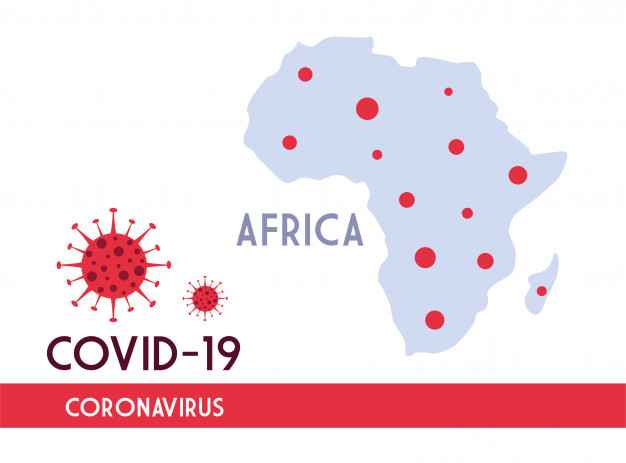
Africa map with propagation covid-19
June 19, 2021
In March 2020, Africa had its back to the wall, helpless in the face of the magnitude of a virus that appeared in Asia and quickly spread to the entire planet. Only two African countries were then able to test for the novel coronavirus: Senegal, with its Pasteur Institute, and South Africa, the most industrialized country on the continent.
But Africa is recovering. Countries have begun to develop testing laboratories. Strongly supported by the African Development Bank, they have achieved a logistical and scientific feat. As soon as the pandemic began, the Bank provided $2 million in emergency assistance to help the World Health Organization strengthen its capacity to support African countries.
Since March last year, the Bank has been helping countries cope with the health emergency and the socio-economic consequences of the pandemic, notably through its Covid-19 Response Facility of up to $10 billion.
As early as the summer of 2020, countries rehabilitated their unsuitable laboratories, or built them, in cases where they had none. By the end of the autumn, almost all African countries were able to test their populations. Some of them even had fairly efficient laboratories to tackle the genetic sequencing of the virus.
After a few months, African countries, which had very few diagnostic devices, set up two, ten or more laboratories, depending on their geographical and demographic characteristics. South Africa, Egypt, Morocco and Algeria quickly distinguished themselves on the number of daily tests, thanks to the growing number of laboratories made operational.
The African Development Bank’s Atsuko Toda said these developments gave the continent a major victory against the outbreak. “The challenge for African countries was to control contamination but also to relax restrictive measures to allow economies to reopen because the long-term extension of containment measures risked creating an economic and social crash,” said Toda, Acting Vice President for Agriculture, Human and Social Development.
Early detection has been instrumental in limiting the spread of the virus and has helped countries trace, isolate and treat confirmed cases.
When the first case of contamination was announced on 11 March 2020, Côte d’Ivoire had no laboratory for detecting the coronavirus; it now has about 10.
In Burkina Faso, which initially transported its samples to Dakar, the number of screening laboratories has increased from 7 to 18, thanks to the support of development partners, including the African Development Bank. Test results are now obtained in 48 hours.
In Kenya, machines initially intended to test for HIV, tuberculosis or avian influenza, were redirected to detect Covid-19, before the arrival of new machines acquired by the government.
According to statistics compiled in March 2021 by the African Development Bank’s Regional Development, Integration and Business Delivery Complex (RDVP), the number of analytical laboratories in Malawi has increased tenfold from 14 to 164 and 2.5 in Ethiopia to 66; in the Central African Republic, five new screening laboratories have been established.
The results have been enormous. South Africa increased the number of daily screenings by seven times from 5,000 to 35,000, Ethiopia (3,000 to 12,400) and Burkina Faso (268 to 1,160).
Nouridine Kane Dia, representative of the African Development Bank in Niger, recently praised the Bank’s support to this fragile Sahel country because, “the Bank’s support has helped to strengthen Niger’s capacities to respond more effectively to future pandemics and public health shocks.”
In total, according to the Bank’s RDVP, the support of the Bank and other partners has increased the daily testing capacity of African countries from 13,200 at the beginning of the epidemic to 105,000; 100,000 health workers have been trained and 314 intensive care units are now available for Covid-19 patients, compared to an average of 50 at the beginning of the disease.
“It’s a race against time, won hands down. Now we have to win the war against the coronavirus,” said Toda. “We started almost from scratch. When we look at the progress made in a few months, we realise that we have come a long way.”