NBC Nigeria
Nearly 24 years after the International Court of Justice (ICJ) delivered its landmark verdict on the Nigeria-Cameroon land and maritime boundary dispute, physical demarcation of the 2,100-kilometer border is entering its final stage.
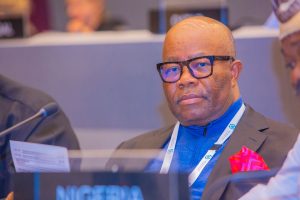
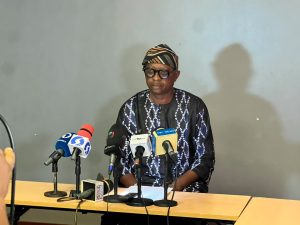
The Director-General of the National Boundary Commission (NBC), Mr. Adamu Adaji, made the disclosure during an exclusive interview with the News Agency of Nigeria (NAN) on Sunday in Abuja.
Adaji revealed that active work is currently concentrated in the Adamawa sector, where teams are installing more than 260 boundary pillars to clearly delineate the border.
“We are currently placing pillars to make the boundary visible in those sectors,” Adaji said. ”
As soon as that is completed, in about two or three months, we expect to finish the demarcation of the Nigeria-Cameroon international boundary. Hopefully, before the end of the year, we should be done.”
The ICJ ruling on October 10, 2002, awarded sovereignty of the disputed Bakassi Peninsula to Cameroon and established guidelines for the entire boundary stretch from the Lake Chad Basin down to the Gulf of Guinea.
Implementation began under the UN-backed Nigeria-Cameroon Mixed Commission, with both nations adopting a flexible “give-and-take” approach to prevent splitting homogeneous communities.
Citing practical adjustments made along the corridor, Adaji pointed to the Nigerian settlement of Koja, which the original ICJ line would have partitioned placing 90 percent of its territory in Cameroon.
Through bilateral negotiations, the entire Koja community was retained within Nigeria, while Cameroon gained concessions in areas such as Turu, where its population is predominant.
“It is not simply about defining a boundary; it is also about taking the interests of affected communities into account. That is something that can guarantee sustainable peace and lasting cooperation,” the NBC boss explained.
With physical demarcation nearing its end, Adaji stated that focus will shift toward cross-border management and socio-economic support for displaced or impacted populations. The NBC, in collaboration with the United Nations and international partners, plans to deploy infrastructure and basic amenities to border villages.
To support border security and legitimate trade, the NBC has also established the first ECOWAS platform for cross-border cooperation, alongside local joint committees designed to curb smuggling and irregular migration while respecting long-standing cultural and economic ties.
Addressing maritime security, Adaji added that Nigeria’s maritime boundary with Cameroon is fully resolved. Negotiations regarding remaining maritime limits in the Gulf of Guinea are also advancing, with only three nautical miles pending resolution with Equatorial Guinea and eight nautical miles with Ghana.