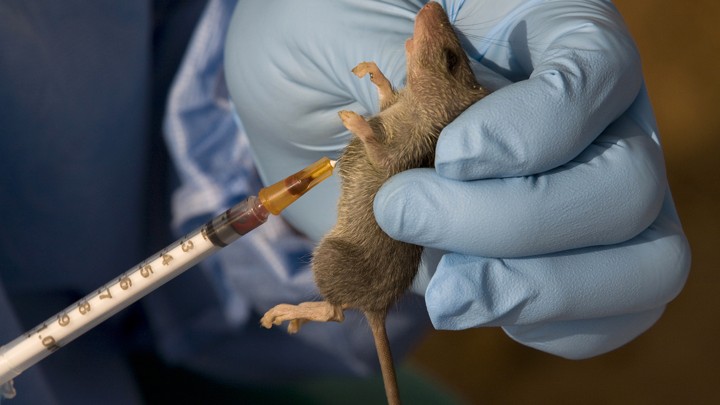
An ecologist extracts a sample of blood from a Mastomys Natalensis rodent in the village of Jormu in southeastern Sierra Leone February 8, 2011. Lassa fever, named after the Nigerian town where it was first identified in 1969, is among a U.S. list of "category A" diseases -- deemed to have the potential for major public health impact -- alongside anthrax and botulism. The disease is carried by the Mastomys Natalensis rodent, found across sub-Saharan Africa and often eaten as a source of protein. It infects an estimated 300,000-500,000 people each year, and kills about 5,000. Picture taken February 8, 2011. To match Reuters-Feature BIOTERROR-AFRICA/ REUTERS/Simon Akam (SIERRA LEONE - Tags: HEALTH SOCIETY ANIMALS) - GM1E72F07HC01
May 15, 2025
The Nigeria Centre for Disease Control and Prevention (NCDC), says Lassa fever has claimed 138 lives between January till date with a 19.3 per cent case fatality rate.
This is according to the NCDC latest situation report shared via its official website.
The report says the figure is a rise from the 18.0 per cent recorded within the same period in 2024.
The reports also said that a total of 717 confirmed cases have been recorded as of Epi Week 18, with four new states (Ondo, Edo, Bauchi, and Benue) reporting cases in the current week alone.
The public health agency said that while the number of new confirmed cases slightly decreased from 11 to 10 in the past week, the overall death toll remained alarming.
The report noted that 71 per cent of all confirmed cases originated from three states Ondo, 30 per cent, Bauchi, 25 per cent and Taraba, 16 per cent signaling persistent hotspots in spite of nationwide interventions.
It added that the most affected age group was 21–30 years, with the male gender appearing slightly more affected than the female with a male-to-female ratio of 1:0.8.
The agency however said that no healthcare worker was infected in the current week, though 22 healthcare workers have been affected so far this year.
The report disclosed that the NCDC had activated a multi-partner, multi-sectoral Incident Management System and deployed 10 Rapid Response Teams across affected states.
It said that the agency had also intensified contact tracing, community sensitisation, and distributed essential commodities like PPES, Ribavirin, body bags, and disinfectants.
This it said is in collaboration with international partners such as the WHO, MSF, CEPI, and Georgetown University.
The country has conducted multiple webinars, capacity-building trainings, and surveillance activities to combat the outbreak.
It also said that poor environmental sanitation contributed to disease spread.
The agency continues to urge Nigerians to maintain hygiene, report symptoms early, and avoid contact with rodents and their secretions.
”The public is also encouraged to follow NCDC advisories and utilise the toll-free line 6232 for inquiries,” it said.