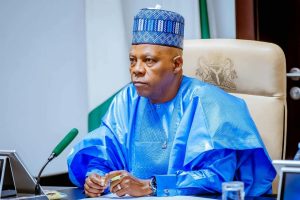

Nasir El-Rufai

The Nigerian political landscape has been plagued by constant defections among party members, with loyalty often shifting based on personal interests rather than ideological alignment.
The absence of a strong political ideology has led to a situation where politicians frequently move from one party to another in search of power, relevance, or personal gain. A notable example is the political journey of Mallam Nasir El-Rufai, former Governor of Kaduna State, whose recent defections from the All Progressive Congress (APC) to the Social Democratic Party (SDP) reflect the larger instability within Nigeria’s party system.
Nigeria’s political parties lack clear-cut ideological foundations, making them platforms for personal ambition rather than institutions that uphold specific principles. Unlike advanced democracies where parties are defined by conservative, liberal, or socialist ideologies, Nigerian parties operate more as vehicles for political survival. This has led to an endless cycle of defections whenever politicians feel sidelined or their ambitions threatened.
Mallam Nasir El-Rufai’s political history is a reflection of this trend. He started his political career under the People’s Democratic Party (PDP), where he served as Minister of the Federal Capital Territory (FCT) under President Olusegun Obasanjo. However, following internal party disputes and a period of self-exile, he defected to the Congress for Progressive Change (CPC), a party led by Muhammadu Buhari. Later, he joined the merger that formed the All Progressives Congress (APC), where he became the Governor of Kaduna State.
Despite his contributions to the APC, recent developments suggest tensions within the party, with speculation about his next political move. His recent defections to APC was not surprising, as such shifts have become a norm among Nigerian politicians.
There are factors for political defections in Nigeria:
1. Absence of Ideology: Since political parties do not operate based on principles or philosophies, politicians see them as mere platforms for contesting elections.
2. Personal Interests: Politicians defect when their ambitions are threatened, or they seek better opportunities elsewhere.
3. Godfatherism and Internal Party Struggles: Conflicts between powerful figures within parties often force members to leave in search of greener pastures.
4. Electoral Survival: When politicians sense that their party may lose an upcoming election, they jump ship to align with the expected winner.
5. Political Persecution: Some defections occur to evade investigations either from EFCC, ICPC,, or sanctions from ruling parties.
Consequences of Party Instability
The lack of political stability in Nigeria has several negative consequences:
Weak Democracy: The absence of ideological commitment weakens democracy, as parties fail to offer clear governance alternatives.
Lack of Policy Continuity: Frequent defections result in policy inconsistencies, as new administrations often abandon their predecessors’ projects.
Loss of Public Trust: The electorate becomes disillusioned when politicians prioritize personal gain over national development.
Political Confusion: Voters struggle to differentiate between parties, making informed electoral choices difficult.
The Way Forward
To address the problem of political defections, Nigeria must:
Enforce Party Discipline: Political parties must develop strong internal structures that discourage indiscriminate defections.
Promote Ideological Politics: Parties should be built on clear principles that guide policies and governance.
Strengthen Electoral Laws: Laws should be enacted to limit mid-term defections, ensuring political stability.
Encourage Political Awareness:
Citizens should demand accountability from politicians and vote based on ideology rather than personality.
Lastly, the constant wave of defections in Nigeria’s political space is a symptom of the lack of ideology among its political parties. El-Rufai’s journey through multiple parties highlights the fluidity of political loyalty in the country. Until parties define their core principles and politicians commit to them, the cycle of defections will continue, undermining Nigeria’s democracy and governance.