US Dollar

Peter Obi, a leading presidential candidate and former Governor of Anambra State, has expressed strong criticism of President Bola Ahmed Tinubu for his borrowing practices, which he believes are not being used for production or development purposes.
Obi’s remarks come in response to the President’s announcement that Nigeria will allocate approximately $11.6 billion for debt servicing. He argues that this trend under Tinubu is evolving from a temporary fiscal responsibility into a long-lasting structural burden that hampers development and increases economic vulnerability.
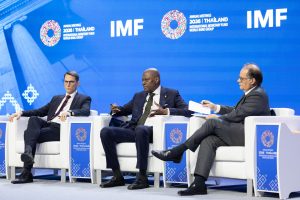
In a post on his X platform, Obi pointed out, “During a recent foreign visit, President Bola Ahmed Tinubu revealed that Nigeria would spend around $11.6 billion on debt servicing—a figure that should alarm anyone invested in the nation’s economic future and long-term growth.”
Obi emphasised that borrowing is not inherently negative if managed wisely and directed toward productive investments. He cited examples of countries like Japan, the UK, the US, the UAE, Singapore, and Indonesia, which, despite being heavily indebted, allocate their borrowed funds toward education, healthcare, infrastructure, and innovation—areas that yield long-term economic benefits and enhance repayment capabilities. Consequently, these countries manage their debt levels more effectively, as the obligations are connected to tangible productivity.
In contrast, Nigeria’s borrowing history has largely been geared toward consumption, with few sustainable developmental results that would validate the existing levels of debt.
It is also crucial to note that a significant portion of the debt currently being serviced was accrued during the Tinubu administration itself, which continues to engage in substantial borrowing. The administration’s recent external borrowing includes roughly $6 billion—$5 billion from First Abu Dhabi Bank in the UAE and $1 billion from UK Export Finance via Citibank London—along with an additional $1.25 billion being considered from the World Bank and $516 million arranged through Deutsche Bank. This raises the total known external loan commitments to about $7.8 billion. Additionally, domestic borrowing through monthly bond issuances continues to increase the overall debt.
In light of this, Nigeria’s 2026 budget allocates ₦2.46 trillion for health, ₦2.56 trillion for education, and ₦865 billion for poverty alleviation, totalling approximately ₦5.885 trillion for these essential sectors. In comparison, debt servicing—estimated at $11.6 billion (roughly ₦17–₦18 trillion based on exchange rate assumptions)—is nearly three times greater than the combined allocations for health, education, and social protection. This discrepancy underscores a concerning fiscal reality where debt obligations increasingly limit funding for human capital development and poverty alleviation.
Furthermore, even within the limited funding for these sectors, full release of the funds is not guaranteed, and a substantial portion may be subject to misallocation.
The primary concern, ultimately, lies not in the act of borrowing itself, but in whether the borrowed funds are being transformed into measurable productivity, inclusive growth, and enhanced living standards. Without such a conversion, debt servicing shifts from being a temporary fiscal obligation to a long-term structural burden that stifles development and exacerbates economic vulnerability.