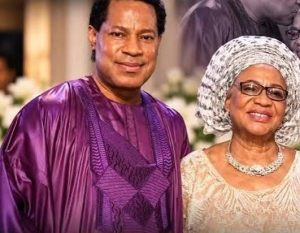
Obi Chukwuka Noah Akaeze 1, Obi of Ubulu Uku
February 4, 2022

It is widely believed that the parents of Ezemu, the famed founder of Ubulu-Uku, migrated from the Middle East because of the similitude of their hair to the middle easterners. They first settled in Ife, South west Nigeria. And later moved down south, settling in Onicha-Uku and in Kwale, Ndokwa L.G.A. Ezemu and his siblings were tender at that time, and as they grew older their parents advised them to set out and make their individual living, considering that they had come of age to cater for themselves.
They were five siblings, amongst them was a lady called Obodo who was also the eldest of Ezemu’s siblings. History has it that as they made ready to leave their parents, their father handed them a small pot of water called Ududu, and instructed them to tie and bear the Ududu carefully on their body, and that anywhere it fell should be their first place of settlement.
So as they got to a certain place, the Ududu fell, prompting them to name the place- Ubulu-Unor (translated as Ubulu-Home). Being the eldest of the siblings, they asked Obodo to settle in Ubulu-Unor. Next to Obodo was Ekelie, who later went on to found Ashama; which is today called- Ashama-Ekelie, a kingdom geographically located after Ubulu-Unor, both towns on the southern fringes of Ubulu Uku.

Aniga, another of Ezemu’s siblings founded Adonta, another town close to Ubulu-Unor and Ogwashi-Uku. The two remaining siblings, Omole and Ezemu (named after their father) then continued on their journey in their quest for a place of settlement. Omole soon found a place which is today called Ani-Omole in Isho community in Ubulu-Uku, close to Ubulu-Unor.
Ezemu who happened to be the hunter among his siblings was nomadic, travelling from place to place as demanded by his trade. In one of his hunting expeditions, as he wandered through the thickets, he arrived at a spot; the centre of the place that is today called-Ubulu-Uku, where he found a big tree that he named the Ubulu Tree; a gigantic tree with numerous plants under its canopy. The Ubulu tree was reputed for producing a kind of fruit/seed that was the favorite of sundry animals. When the canny hunter Ezemu discovered that lots of animals came there to feed, he made his settlement somewhere close to the tree.
While under the canopy of the supernatural Ubulu tree, he cut other tree trunks to sizes to construct a raft-like platform where he climbed and perched waiting for the animals to come feed so he could take his aim at them from this vantage point, unnoticed. On one occasion while he was perching on this make-shift raft, he sighted a thread of smoke rising afar off, and wafting into space down west, so he thought to himself- smoke is a consequence of fire, and human beings make fire, so he suspected the existence of human elements there, which he decided to go see for himself. When he got to the site, he met an old man and a young boy.
The old man’s name was Ekei, they exchanged pleasantries. And that was how they established first contact, and afterwards, at intervals Ezemu will take from his kill to share with his new neighbour. Then avail his sister Obodo some in Ubulu-Unor. So Ezemu continued to visit Ekei, and in one of his expeditions through the thickets in search of animals, he chanced upon a large and well-cultivated farmland and thought to himself, a farm? No wonder he always sighted a large expanse of land without trees, someone was actually responsible for clearing the trees there, he thought. Here he discovered a man with many children, according to accounts, this man took his roots from the Benin kingdom in present day Edo state, Nigeria, who was by name- Anigwe; who had done something evil in his native land and was banished by his people which prompted his migration from Benin till his eventual settlement at this site.
History has it that when Anigwe was banished, before leaving the Benin Kingdom, the Oba of Benin handed him a cutlass being a brave man, saying to him; although you are a brave man, because of your evil deed you are banished from this land, but go with this machete, any land you get to and cultivate will yield its strength to you.
So, Ezemu also established contact with Anigwe and made it a duty to visit both parties at intervals, that is; Ekei the blacksmith and Anigwe the farmer. By happenstance, he also turned out to settle just at the middle of both of them. It soon occurred to him that Anigwe had numerous children while Ekei had but one child, and himself- Ezemu, had none. So, he felt the need to find a way of convening a meeting of all three families as a community- fathers, mothers and children! To meet periodically, to discuss the welfare and wellbeing of all of them who had become close neighbours, sharing a common immediate geography. To this end he set out to visit Ekei, the first neighbour he met and shared the idea with him, but Ekei responded that he was too weak and well past in age to be considered their leader and advance that cause. The second man he met- Anigwe said he had no interest nor intention of taking on that responsibility either as he was more interested in his farm work; so they recommended that he, Ezemu, the initiator of the idea, took on the reins of leadership, to which he accepted.
At a later time however, trouble broke out as Anigwe soon observed that certain rights and privileges went with the responsibility. He began to covet it and strive with Ezemu. As Ezemu grew taller in popularity and influence, that cold war lingered for long and was only recently put to rest as the descendants of Anigwe were poignantly reminded that; he was first offered the position but he stoutly declined, and they expressed their surprise and dismay at his sudden interest to the point of entering into a cold war with Ezemu.
Now, what is the relationship between Ubulu-Unor, Ashama, Adonta, Ani-Omole and Ubulu-Uku? They were founded by five siblings from same parents, and that reflects in certain duties they owe to each other many centuries after. For instance, as of today, when they want to coronate a new Obi (Monarch) of Ubulu-Uku, he MUST go to Ubulu-Unor to first have his hair shaved. This practice takes its origin from an occurrence when Ezemu was first unanimously elected as the leader of the three aboriginal settlers of the Ubulu-Uku Kingdom, out of joy he left Ubulu-Uku for Ubulu-Unor to meet with his eldest sister and share the news with her. His sister- Obodo – greeted the development with joy as well, stating that it is a good thing that providence had bequeathed such honor, but she noticed that he was shabby and unkempt and offered to help him shave his hair so as to look the new role- a King! Ezemu gladly accepted and Obodo shaved his hair in Ubulu-Unor, making him look more presentable before returning to Ubulu-Uku. This precedence thus institutionalized the rite that whenever providence thrust the office of the Obi (King) of Ubulu-Uku upon a man, before his coronation he must expressly get a shave from Ubulu-Unor!
The Onicha-Okpe people are responsible for crowning the Obi; being Ezemu’s immediate lineage. Being the direct descent of Ezemu, they are reputed as a people with the most potent herbs in the Ubulu-Uku kingdom. Their herbalists are not trained, they are simply born into the practice, such that, as they grow it comes naturally to them what plants to use in their concoctions to heal their ailing patients. Many only know Ezemu as a prolific hunter, he was also a very proficient herbalist/shaman or Dibia (as it is called in local parlance). For instance, once he was invited to attend to a case in a royal household. On getting there they offered him a seat, he turned it down, then cleared the ground, pulled his two ears to his gluteal region and sat upon the stretched ears as though he sat upon a mat;
And till date, before the coronation of a supreme monarch of the Benin Kingdom in Edo state, called the “Oba of Benin,” the Onicha-Okpe people being the direct descendants of the great Ezemu must go to Benin to perform some rites for the royal house before the Oba’s coronation, this is in keeping with an antecedence set by Ezemu with the royal house of the Benin Kingdom in his time. Once upon a time in the Benin Kingdom, the Obas of Benin were not living long, consequently their kings were not lasting on the throne as they died untimely, king after king! After all efforts to forestall this mishap and unsavory pattern in the kingdom proved abortive, as herbalist after herbalist were invited to no avail, new was heard of the great Ezemu and his powers so they invited him, to their utter astonishment he was able to put an end to the spell of untimely death of monarchs in the Benin kingdom; to this end, amongst other benefits and rewards, the council of the Benin kingdom pronounced an irrevocable edict, that no Ubulu-Uku indigene’s blood should be spilled on the soil of the Benin kingdom!
During the Nigerian-Biafra civil war however, this pronouncement was violated with grave consequences, as many Ubulu-Uku indigenes had their lives cut short on the Benin soil. So, three years after the war, circa 1973, the Oba of Benin led a delegation to Ubulu-Uku for appeasement. At this visit, he was taken to Ezemu’s shrine where rituals were made mad etc…
NB:
This detailed account of the history of the Ubulu-Uku Kingdom, Aniocha South Local Government Area of Delta State, Nigeria, West of Africa was recorded by Mrs. Christy Chioma Ijedi, narrated by Mr. Christian Azuka Ugbechie, transcribed by Mr. Patrick “MacAbrahams” Ugbechie, and edited by Mr. Ken Ugbechie._