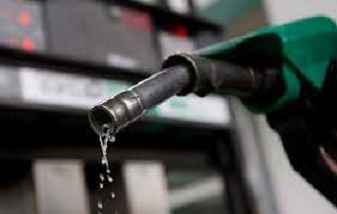
Petrol

The removal of fuel subsidy and the convergence of the foreign exchange markets, the two major policy objectives President Bola Tinubu has committed himself to since assuming office, inevitably came with economic cost to the people who have had to bear the pains of higher cost of living.
The jump in pump price of fuel and devaluation of naira in a bid to close the gap between the bank and parallel market rates meant higher transportation cost, higher food price and higher cost of doing business for small business owners.
There is no doubt that the people, most especially the poor, are hard pressed and seeking succour from a President who promised them a better life during his electioneering campaign.
The pain, albeit uncomfortable, is only temporary; but necessary. From the President’s most recent national broadcast, one thing stands out, our beloved country, Nigeria, is simply in a catch-22 situation. The President must find the most pragmatic way to deal with the two ugly elephants in the room that have distorted our economy for decades, promoted humongous corruption via rent seeking and has kept the poor, even poorer.
For over seven years, Nigeria has consistently held the appalling title of the poverty capital of the world, according to the World Bank, overtaking India with a population of about 1.5 billion people. Nigeria’s population is only a little over 200 million.
Nigeria has, in the last 40 years, progressively wasted trillions of naira that would have been better spent on social services, human capital development and critical economic infrastructure that should support productivity and growth to give citizens cheap fuel. The culmination of these has, no doubt, stunted the growth of the nation and its people.
We must deal with the albatross of continuously funding fuel subsidy, which only a small group of people benefit from at the expense of the larger populace, even when our country is teetering towards fiscal collapse. Rational and economic logic and equity dictate that those trillions of naira be put to better use in the service of the people. It is highly imperative to re-channel the funds into better investment in public infrastructure, education, health care and other productive ventures that will materially improve the lives of millions, as the President said in his inaugural speech.
Having seen the distortions fuel subsidy and preferential foreign exchange policy have caused for the country, I am persuaded that we must get out of this decades-long conundrum. From a fiscal standpoint, the consequences of retaining these policies longer than when it was finally removed by President are not pretty. The social and material condition of the poor masses that some ideologues pretend to be fighting against will get worse than it currently is if Nigeria sinks into a bottomless pit.
In pandering to popular sentiments, two major national newspapers in their recent editorial positions severely criticized President Tinubu for taking this less travelled road. Leaders before him only kicked the can around, in matters of fuel subsidy removal, without having the boldness and the courage to bite the bullet.
In a front page commentary on Monday, July 24, Daily Trust Newspaper called for the reversal of the subsidy removal because it is strangulating the poor masses.
The newspaper also accused the government of chaotic handling of the policy because all the issues around palliatives should have first been resolved. Daily Trust wants the Federal Government to keep the ruinous subsidy regime because of momentary inconvenience without regards to the fact that within two months of this removal, the country saved over ₦1 trillion which would now be better utilized to benefit the masses directly.
Toeing the same path with Daily Trust on same day, Punch Newspaper charged President Tinubu to change course before he “loses the plot” of his new administration. Punch Newspaper went further to berate him for executing the two policies on whims without undertaking “a critical assessment of the economy nor the implications of his hasty subsidy removal, and the unification of the naira exchange rates.”
What I found rather bizarre in the Punch Editorial was a quote credited to Mr. Francis Meshioye, President of Manufacturers Association of Nigeria, who reportedly said his members thought subsidy removal would only lead to a one-off price increase and not “a skyrocketing one.”
I am at a loss why a MAN President who was one of the strident advocates of free market economy and a major proponent of fuel subsidy removal and unification of multiple exchange rates think his prescriptions will only lead to one-off price increase. I am still struggling with that level of contradiction. It also didn’t matter to Daily Trust and The Punch Newspapers with their editorial stance that, in the past, they used their influential platforms to call for the removal of the subsidy, citing abuse and corruption.
The points of current pains on the people as canvassed by the two newspapers as a necessary fallout of the policy decisions of President are factual and can’t be argued against. However, the point must also be made that the benefits of these two decisions far outweigh the cost.
Fuel subsidy removal means that Nigeria will no longer lose over ₦4 billion daily on subsidised fuel that is smuggled to neigbouring countries. It does not make sense that a country that is struggling to provide universal basic education to her children and suffering from high maternal mortality rate spent ₦21 trillion subsidising fuel that added marginal value to the lives of millions of its poor inhabitants between 2005 and 2023.
A recent report by the Nigeria Extractive Industries Transparency Initiative (NEITI) shows that whereas ₦13.7 trillion was spent on subsidy between 2005 and 2021, ₦8 trillion was spent between 2022 and the first half of 2023 alone.
Nothing captures our sorry state of affairs more than the NEITI report which indicates the colossal sum that private individuals have taken away from our commonwealth on the back of payment for subsidy. The report shows that in 2005, starting year for the survey, ₦351 billion was spent on fuel subsidy payment while the figures for 2006-2010 were ₦257 billion, ₦272 billion, ₦631 billion, ₦469 billion and ₦667 billion. In 2011, which was an election year, spending spiked to a whopping ₦2.3 trillion.
For the years 2012-2017, spending on subsidy was ₦1.36 trillion; ₦1.32 trillion; ₦1.2 trillion, ₦654 billion, ₦240 billion and ₦154 billion. From 2018 to the first half of 2023 government spent ₦1.1 trillion; ₦508 billion; ₦864 billion ₦1.43 trillion, ₦4.4 trillion and ₦3.6 trillion. The NEITI report further reveals that spending on petroleum products by the five income groups in Nigeria, the richest 20 per cent consumes 75 percent of petrol in the country while the poorest 20 per cent consumes just one per cent of the product. From the figures, it is obvious our poorest people are not getting any real benefit.
Removing the drain pipe is the best way to stop the bleeding. Individuals should not become so filthily wealthy at the expense of a nation to the point of being in a position to compromise all the institutions of state while the majority wallow in extreme poverty. President Tinubu was right in his Monday evening broadcast when he pointed out the danger of having few people who have amassed so much money to the extent of becoming “a serious threat to the fairness of national economy and the integrity of our democratic governance.”
With his boldness and decisiveness, President Tinubu ushered in a regime of deregulation. This will foster competition and transparency in the downstream sector, eliminate NNPCL importation monopoly, encourage investments in local refining capacity and expansion of downstream infrastructure that will create thousands of jobs. From the Central Bank records, 30% of foreign exchange demand in the past decades was for fuel importation. The removal of fuel subsidy is a good silver lining that will catalyze more investments in local refining. Already Dangote Refinery will soon come on stream and BUA Group is making a bet of over $8billion on 200,000 barrel per day refinery in Akwa-Ibom that will be commissioned within the next 4 years. This is apart from existing modular refineries already in operation.
At the moment, our country is at the epoch where the citizens must exercise some patience and cooperate with the President and his team to turn around the fortunes of the country. We are all bearing the consequences of decades of distortions and mismanagement of the country and it certainly won’t be easy to turn the tides within few days and months for any government. The demand of this period is not needless posturing but that of concerted efforts and determination to revamp an economy that is tailspinning into a disaster.
As President Tinubu concluded in his speech, he is back at work to ensure that not only that a looming disaster will be averted but Nigerians will have cause to be happy with the new, inclusive economy based on prosperity for all that is his campaign promise.
Ajayi, is Senior Special Assistant to the President on Media & Publicity