Skip to content
July 16, 2026
  • Home
  • About us
  • Contact us
  • Newsletter
  • Privacy Policy
Political Economist

Political Economist

A liberal News reporting Politics, Sports, Business, Commentaries

  • Home
  • National News
    • Metro News
      • metro
    • Society
    • Crime and Justice
  • Special Reports
    • Investigation
    • Features
    • Interviews
  • Opinion
    • Commentaries
    • Perspectives
  • Press Releases
  • International News
  • Business & Economy
  • Politics
Watch Online
  • Home
  • International News
  • WHO says experts to determine if Monkeypox is an International Emergency June 23
  • International News

WHO says experts to determine if Monkeypox is an International Emergency June 23

Admin June 15, 2022

June 15, 2022

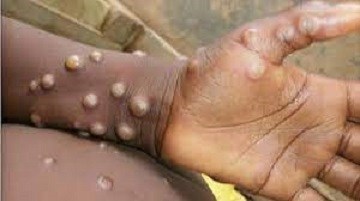
The World Health Organisation (WHO) on Tuesday announced that the International Health Regulations Emergency Committee will meet on June 23 to determine if Monkeypox should be declared ‘Emergency of International Concern’.

The WHO Director General, Dr. Tedros Ghebreyesus, said at a news conference at the agency’s headquarters in Geneva, that the Committee had been convened due to the spread of the Monkeypox virus to 32 non-endemic countries.

The experts will meet on June 23 to assess whether the continuing outbreak represents a Public Health Emergency of International Concern, the highest level of global alert, which currently applies only to the COVID-19 pandemic and polio.

So far this year, more than 1,600 confirmed cases and almost 1,500 suspected cases of Monkeypox have been reported to WHO, across 39 countries – including seven countries where monkeypox has been detected for years, and 32 newly-affected nations.

At least 72 deaths have been reported from previously affected countries.

No deaths have been registered so far from the newly affected countries, but the agency is seeking to verify news reports of a related death in Brazil.

“The global outbreak of Monkey pox is clearly unusual and concerning,” Ghebreyesus said, calling to step up the response and international coordination.

Ibrahima Socé Fall, WHO Deputy Director for Emergency Response, explained that the risk of spread in Europe is considered “high”, while in the rest of the world “moderate” and that there are still knowledge gaps regarding how the virus is being transmitted.

“We don’t want to wait until the situation is out of control,” he said.

WHO has published recommendations for governments regarding case detection and control.

WHO Smallpox expert, Dr. Rosamund Lewis, said it was crucial to raise awareness in the population about the level of risk and explain the recommendations to avoid infecting close contacts and family members.

Lewis explained that, although the disease sometimes only produces mild symptoms, such as skin lesions, it can be contagious for two to four weeks.

“We know that it is very difficult for people to isolate themselves for so long, but it is very important to protect others. In most cases, people can self-isolate at home and there is no need to be in the hospital,” she added.

Monkeypox is transmitted through close physical contact with someone who has symptoms.

The rash, fluids and scabs are especially infectious. Clothing, bedding, towels, or objects such as eating utensils or dishes that have been contaminated with the virus can also infect others.

However, it is not clear whether people who do not have symptoms can spread the disease, the expert reiterated. (NAN)

  • Facebook
  • Share on X
  • LinkedIn
  • WhatsApp
  • Email
  • Copy Link
Tags: Dr Rosamund Lewis Dr Tedros Ghebreyesus Ibrahima Socé Fall Monkey pox WHO

Post navigation

Previous N71.4m Fraud: Aisha Wakil (Mama Boko Haram), Two Others Jailed Five Years
Next ECOWAS pushes launch of single currency, ECO to 2027

Related Stories

50 migrants feared lost in Mediterranean, 10 survive after boat capsizes, security sources say Migrants
  • International News

50 migrants feared lost in Mediterranean, 10 survive after boat capsizes, security sources say

July 14, 2026
Oil jumps 4% as new military strikes threaten Hormuz shipments crude oil
  • Business & Economy
  • International News

Oil jumps 4% as new military strikes threaten Hormuz shipments

July 13, 2026
US-Iran escalation could threaten 2027 oil market surplus, IEA says reserves crude oil
  • International News

US-Iran escalation could threaten 2027 oil market surplus, IEA says

July 10, 2026
logo

Political Economist is a liberal news magazine with global affiliations.

At Political Economist, we promote free enterprise and act as a catalyst for the growth of knowledge economy. We are proudly pan-Nigeria yet richly spiced with African and global news. We offer a fair and balanced news reportage presented by our team of well-heeled professional journalists. <

About us

  • 5 Olutosin Ajayi Street, By CPM Church, Ajao Estate, Lagos State, Nigeria
  • +234 805 680 1124
  • info@politicaleconomistng.com

Follow

Subscribe to notifications

You may have missed

NPC inaugurates home-based online birth registration
  • National News

NPC inaugurates home-based online birth registration

July 15, 2026
Nigeria’s inflation rate drops to 15.91% in June- NBS total value of trade
  • Business & Economy

Nigeria’s inflation rate drops to 15.91% in June- NBS

July 15, 2026
Digital Shift: NPC Rolls Out ‘VitalReg’ Platform to Tackle Nigeria’s Birth and Death Registration Deficit
  • National News

Digital Shift: NPC Rolls Out ‘VitalReg’ Platform to Tackle Nigeria’s Birth and Death Registration Deficit

July 15, 2026
FCTA confirms 8 rabies cases, 2 deaths, issues alert
  • Breaking News

FCTA confirms 8 rabies cases, 2 deaths, issues alert

July 15, 2026
  • Home
  • About us
  • Contact us
  • Newsletter
  • Privacy Policy
Copyright © All rights reserved. | DarkNews by AF themes.