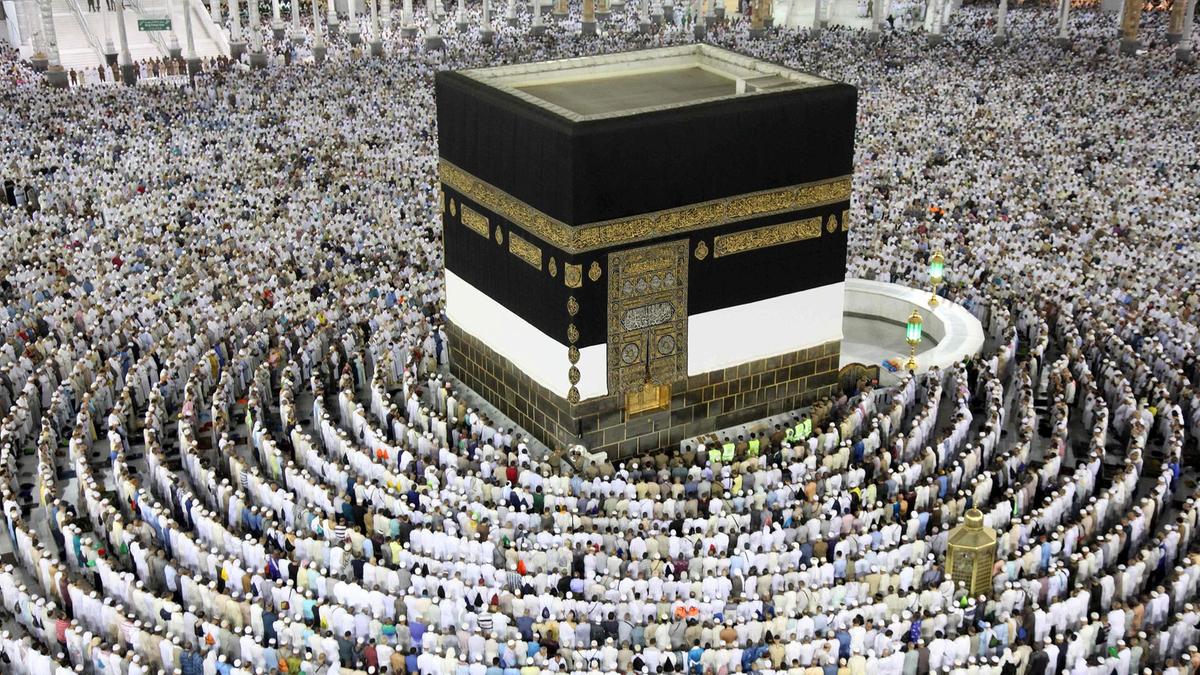
Kaaba in Mecca

My recent visit to the holy city was the second time I was there, courtesy of the benevolence of Honourable Mai Mala Buni, the governor of my state, Yobe. The first was when I was practically wheeled there as a result of a debilitating illness that required first-class medical treatment. The recent visit was for a follow-up treatment, and happily, my doctors attested to my improved health condition.

The governor has made it a state policy to provide free medical services to anyone who can come to Yobe State. To that end, he has upgraded the state health system to be among the best in the country and, most likely, the best in the North, as attested to by no less a person than the Katsina State Governor, Alhaji Umar Dikko Radda, in an interview with the BBC Hausa Service.
Where the medical solution for an indigene can only be found outside the country’s shores, Governor Buni’s administration has implemented a policy to facilitate that opportunity for those who apply and receive approval from a competent medical advisory committee. Yet, in both instances, I wept for Nigeria, my country. Yes, it is possible, desirable, and acceptable for a Muslim to shed tears, especially in the presence of the Ka’aba, driven by longing and love for Allah and the Prophet of Islam, Muhammad (SAW). However, my tears were for Nigeria and the feeling, or fear, that we were not getting it right. I found myself questioning whether we might have lost direction and are just groping in the dark with evil lurking at every turn. First and foremost, there is no fear of insecurity whatsoever in the place.
There was a time I was at the hospital until 1 a.m., sensing that I might have to stay the night due to various tests being carried out on me. So, I asked my son, who was with me, to return to the hotel, about 70 kilometres from the hospital, to bring some medication for me. I felt no fear or doubt in allowing him to return to the hotel alone in a taxi, Bolt, or Uber ride that late at night because I knew no evil was lurking about.
In this place, you can go to bed with your doors wide open. In Makkah, it is common to see a motorist park in front of a shop, leave the engine running with the air-conditioning on—which means the key is in the ignition—and go in to buy necessities, returning to drive off after loading their purchases in the boot. There is even a strong assurance that any person who stole the car, or anything for that matter, would be apprehended quickly. Not only does a criminal never remain free after a crime, but their justice system is a real definition of justice because it is meted out appropriately.
Everything works almost perfectly there. The hospital staff carry out their duties without expecting any appreciation from patients, and the patients themselves do not feel pressured to offer anything in return. Regardless of one’s ideological, religious, or political beliefs, one cannot deny that the welfare of citizens is paramount in their leaders’ policies.
A good example of this was when the Kingdom’s leadership responded to the global increase in oil prices, which particularly affected oil-producing nations and pushed up the cost of imported goods like food. Among many other far-reaching measures to ease citizens’ lives, the government imported essential items, stabilising prices. This stability extends to their currency as well: it holds its ground against the dollar or euro. Unlike the naira, which trembles before them, the value of the Saudi Riyal six months ago is the same as today.
I witnessed fully air-conditioned pedestrian crossings with lifts at both ends! I thought to myself that in Nigeria, such facilities would be turned into makeshift homes or places for selling wares and for beggars. That is if the lifts and air-conditioning units had not already been cannibalised!
Do we even have working air-conditioning units in key public offices and facilities, let alone for pedestrians? Only a benevolent leadership imbued with empathy would contemplate putting in place such facilities to make life easy for citizens. And so we ask, can such edifices be erected in Nigeria by its leaders in the first place? But then, one must ask, “Why?” And once you find the answer, you too will cry for the country as I did. This is because there is a significant difference between Nigeria’s and Saudi Arabia’s leadership styles. One is focused on deliberately withholding what makes life easier, while the other prioritises making life better for its citizens. When people understand that nothing that makes life worth living will be made available to them by those with authority over them, they lose their sense of self-worth. Anyone in this state can descend into moral depravity. Furthermore, they often scramble to meet their needs by any means necessary. This is why we see people, like locusts, descending upon warehouses, broken-down trucks carrying foodstuffs, and scooping petrol from fallen tankers, even though they know they are just a hair’s breadth from horrible death. What is the way out? Everything boils down to leadership. Our leaders must recognise that sauce for the goose is also sauce for the gander. No one will begrudge them their ₦160 million SUVs if ordinary citizens can easily and affordably move from point A to point B. No one would care about their salaries and allowances as long as putting food on our tables does not feel like a struggle. Most importantly, we must feel secure in our land and no crime should be overlooked or criminals allowed to roam the towns or forests freely.
Hassan Gimba, PhD, ANIPR, is the publisher and editor-in-chief of Neptune Prime