Skip to content
September 30, 2026
  • Home
  • About us
  • Contact us
  • Newsletter
  • Privacy Policy
Political Economist

Political Economist

A liberal News reporting Politics, Sports, Business, Commentaries

  • Home
  • National News
    • Metro News
      • metro
    • Society
    • Crime and Justice
  • Special Reports
    • Investigation
    • Features
    • Interviews
  • Opinion
    • Commentaries
    • Perspectives
  • Press Releases
  • International News
  • Business & Economy
  • Politics
Watch Online
  • Home
  • Special Reports
  • Rising consumption of frog legs in Europe triggers scarcity of frogs globally
  • Special Reports

Rising consumption of frog legs in Europe triggers scarcity of frogs globally

Admin February 15, 2023

Frogs

Frogs

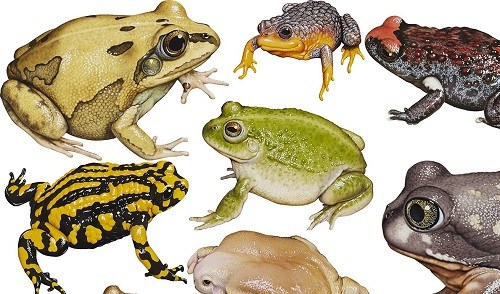
The consumption of frogs’ legs in Switzerland and the EU (Europe) has contributed to the decline of wild frog populations in an increasing number of supplier countries.

After India and Bangladesh, suppliers in Indonesia, Turkey and Albania have also been affected recently, according to a study in the journal Nature Conservation.

“We call upon those countries and their representative governments to assume responsibility for the sustainability of the trade,” the authors wrote. “The EU should take immediate action to channel all imports through a single centralised database and list sensitive species in the Annexes of the EU Wildlife Trade Regulation.”

The EU remains by far the largest importer of frogs’ legs worldwide, with most frogs still being caught in the wild, the study said. Between 2010 and 2019, a total of about 40,700 tonnes of frogs’ legs were imported. This corresponds to up to two billion frogs. Belgium is by far the main importer (28,430 tonnes), but it re-exports about three-quarters of this to France, where most frogs’ legs are eaten.

Switzerland imports about 65 tonnes of frogs’ legs and live frogs annually, mostly from Turkey, according to the study. Many of these are Pelophylax caralitanus, commonly known as the Anatolian frog or Beyşehir frog, the largest edible frog in Turkey.

“Commercial overexploitation [of this species] for the frogs’ legs trade in France, Italy and Switzerland has caused its rapid decline so that the species is now considered endangered,” the report said.

Although all native frogs are protected in Switzerland, the import of live frogs for consumption of frogs’ legs is legal.

In the 1970s and 1980s India and Bangladesh were the main suppliers to the EU, according to the study, which also involved species conservation organisations. After a drastic decline in frog populations, both countries stopped exporting.

Since then, the majority of frogs come from Indonesia. The population of wild large-limbed frogs has already declined significantly there, as it has in Turkey and Albania.

There is still a lack of data on certain aspects such as the impact of trade on the spread of amphibian diseases, the authors wrote.

@swissinfo.ch.

  • Facebook
  • Share on X
  • LinkedIn
  • WhatsApp
  • Email
  • Copy Link
Tags: EU Europe Frog legs India Switzerland Turkey

Post navigation

Previous Cash crunch: The position of the govt, CBN will be made known upon determination of the suit – Presidency
Next Rivers 2023: Wike’s Claim of Supporting Tinubu, a Mere Farce – Eze

Related Stories

Beyond Rescue: Why Nigeria’s Anti-Trafficking Framework Must Fund Mental Health and Long-Term Shelters irregular migration
  • Special Reports

Beyond Rescue: Why Nigeria’s Anti-Trafficking Framework Must Fund Mental Health and Long-Term Shelters

September 23, 2026
Beyond Coverage: Device Costs Emerge As Main Barrier to Nigeria’s Internet Growth, AI Adoption 
  • Special Reports

Beyond Coverage: Device Costs Emerge As Main Barrier to Nigeria’s Internet Growth, AI Adoption 

September 16, 2026
RUSSIA-UKRAINE WAR: How young Africans are tricked to fight and die for Russia
  • Special Reports

RUSSIA-UKRAINE WAR: How young Africans are tricked to fight and die for Russia

September 12, 2026
logo

Political Economist is a liberal news magazine with global affiliations.

At Political Economist, we promote free enterprise and act as a catalyst for the growth of knowledge economy. We are proudly pan-Nigeria yet richly spiced with African and global news. We offer a fair and balanced news reportage presented by our team of well-heeled professional journalists. <

About us

  • 5 Olutosin Ajayi Street, By CPM Church, Ajao Estate, Lagos State, Nigeria
  • +234 805 680 1124
  • info@politicaleconomistng.com

Follow

Subscribe to notifications

You may have missed

ILO Urges African Trade Unions to Expand Women’s Leadership, Address Workplace Inequality COVID-19
  • National News

ILO Urges African Trade Unions to Expand Women’s Leadership, Address Workplace Inequality

September 30, 2026
Nigeria’s Dangote breaks ground on $16 billion East African oil refinery in Kenya William Ruto
  • National News

Nigeria’s Dangote breaks ground on $16 billion East African oil refinery in Kenya

September 30, 2026
Honeywell to help build Dangote’s new Kenyan mega-refinery William Ruto
  • Business & Economy

Honeywell to help build Dangote’s new Kenyan mega-refinery

September 30, 2026
Nigeria ​‌‌‌⁠‍‍⁠⁠‌⁠⁠​‍⁠‌⁠​‌​rejects nuclear deterrence, demands total elimination of atomic weapons countries expand
  • National News

Nigeria ​‌‌‌⁠‍‍⁠⁠‌⁠⁠​‍⁠‌⁠​‌​rejects nuclear deterrence, demands total elimination of atomic weapons

September 30, 2026
  • Home
  • About us
  • Contact us
  • Newsletter
  • Privacy Policy
Copyright © All rights reserved. | DarkNews by AF themes.