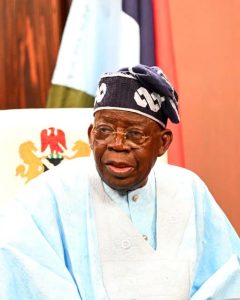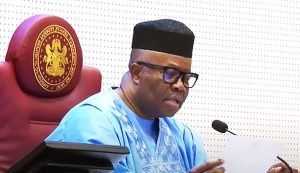
Yemi Cardoso CBN Governor

The Governor, Central Bank of Nigeria (CBN), Olayemi Cardoso and his team assumed office at a critical time when there was a crisis of confidence in CBN and the economy at large, because of the failed naira re-design policy implemented by his predecessor and other economic challenges.
Cardoso admitted that the challenges were large and complex and could not be solved overnight. He noted that CBN did not have the magic wand to wave at the challenges, but reassured that they would do the utmost best to ensure economic stability.
Thus far, Cardoso and his team have demonstrated a sense of understanding of the challenges, professionalism, clarity of purpose and determination to restore the health of the economy through the formulation of necessary policies.
Going forward, CBN had noted that the lines between monetary policy and fiscal intervention had become blurred, as a result of which the Bank refocused on its traditional and core mandates, which among others, also include providing economic and financial advice to the Federal Government and acting as a catalyst for the promotion of specialized institutions and financial products that support emerging sectors of the economy.
CBN abolished development financing and intervention programmes for agriculture and other sectors, mainly because of the collosal sums pumped into the programmes of which a large percentage have remained unrecovered. It also mandated the commercial banks which facilitated the distribution of the funds to ensure the recovery of the outstanding funds.
Some of the abolished programmes include the Anchor Borrower’s Programme (ABP), Nigeria Incentive –Based Risk Sharing System for Agriculture (NIRSAL), Agri-Business/Small and Medium Enterprises Scheme (AGSMES) and other.
The apex bank recalibrated its policy toolkits and formulated policies which aim at controlling the major challenges of inflation and exchange rate volatility. The foreign Exchange (FX) challenge has been recurrent because of the fundamentals of the economy and other associated aberrations, and until the challenges are addressed holistically, the FX challenges will continue to disrupt the dynamics of the economy.
In addressing the exchange rate challenge, CBN adopted a unified and free-floating exchange rate regime which is determined solely by market forces. It was applauded by the World Bank which noted that the new regime would restore macro-economic stability, but the development plunged the naira to an all-time low and crisis situation.
To stabilize the exchange rate, CBN introduced new FX guidelines to address the devaluation of the naira.
Some expert opinions noted that the choice of exchange rate regime was determined by the prevailing economic fundamentals, and that the floating exchange rate was more suitable for advanced economies because the majority of them have convertible currencies which were less exposed to the vagaries of currency fluctuation.
It was further argued that the free floating exchange rate may not be suitable for a country that faced economic challenges such as high unemployment, high inflation and low GDP because the country may not be able to recover if the currency continues to depreciate.
It has been suggested that a managed float which was neither entirely floating nor fixed would allow a nation’s central bank to intervene regularly in an FX market in order to determine the direction of the currency float and/or reduce the amount of currency volatility.
On inflation, CBN Governor noted that the excess liquidity in the system has complicated inflationary pressure. He linked inflation to the failed N10 trillion intervention funds and the N27 trillion Ways and Means. Experts have noted that incurring external and internal debts beyond the GDP leads to inflation and reduces confidence in the currency, thus we need to avoid a runaway debt. Countries are advised to maintain fiscal responsibility and effective money supply to avoid inflation which is presently at about 34.19 percent and biting hard on citizens.
CBN launched an aggressive fight against inflation and adopted an explicit inflation targeting framework to enhance the monetary policy. It started using regular Open Market Operations (OMO) and offering Treasuring Bills with three tenors to the investing public and the Monetary Policy Committee has consistently increases the Monetary Policy Rate (MPR), all calculated to mop up excess liquidity in the system.
As Cardoso noted, “the MPC made it very clear, that the major issue is inflation and has also made it very clear that they will do whatever is necessary to kill inflation”. And recently the CBN Governor assured business leaders in Lagos that the Bank would moderate the escalating inflation and expressed optimism that it would drop to 21.5 percent.
Nwobu, a Chartered Stockbroker and Business Journalist wrote via arizenwobu@yahoo.com. Tel: 08033021230