You’ll agree with us that when it comes to saving the planet, plastic recycling is one activity that most people turn to as it gives them this sense of playing their part for the greater good of all.
However, as with most things, plastics belong to a group of materials with different textures, qualities, and uses. In addition, there are several recycling symbols, many of which can become confusing if you’re new to the activity.
So, there’s a slight chance that you just might have been recycling wrongly even though you have good intentions because you’re inadequately informed about what can and can’t be recycled.
In this piece, we’ll be decoding the ASTM International Resin Identification Coding System (RIC) which is a set of symbols on plastic products that identify the plastic resins out of which the products are made.
We hope that, by understanding the meaning behind these symbols, you’ll become a better recycler and be better equipped to reduce plastic waste and save the environment.
Polyethylene Terephthalate (No. 1 PETE / PET)

Polyethylene terephthalate (PETE or PET) is the most common plastic in circulation. Whether you realize it or not, you probably consumed it some days ago (your favorite soda, we reckon!).
They are clear strong, and lightweight plastics that are commonly used for single-use food and drink packaging such as soda bottles, water bottles, etc. soda and water bottles, salad dressing bottles, and peanut butter containers.
Polyethylene terephthalate is fully recyclable and is widely accepted by most recycling programs. It can be recycled to create new plastic containers, carpet fibers, furniture, etc.
High-Density Polyethylene (No. 2 HDPE)

Another common plastic is HDPE and it can be found in most homes (we bet you have a couple of them in your fridge).
Products like milk, shampoo, etc., are packaged with HDPE plastics as they are lightweight but durable and therefore, suitable for such consumer products.
HDPE plastics are easy to recycle and are commonly accepted in most recycling programs. They can be recycled into items such as toys, traffic cones, pens, etc.
Polyvinyl Chloride (No. 3 PVC or V)

Polyvinyl chloride (also known as vinyl or PVC), is a strong, durable, and flexible plastic usually found in medical equipment, plastic gloves, building products, food packaging, etc.
However, polyvinyl chloride contains hazardous chemicals that are known to be poisonous to humans, making products made from it extremely difficult to recycle.
They are not commonly accepted in recycling programs. In the case that they are recycled, they are used to make binders, window frames, flooring, etc. You can also choose to reuse or repurpose them as they’re durable and last long.
Low-Density Polyethylene (No. 4 LDPE)

The flexibility and low-weight nature of LDPE make it convenient for frozen food packaging, shopping bags, squeezable bottles, etc. However, those attributes also make it extremely difficult to recycle at most facilities because it frequently jams or damages recycling equipment.
Some recycling centers accept them so you might want to check them out and drop them off there.
LDPE can be recycled to create compost bins, paneling, floor tiles, trash can liners, etc.
Polypropylene (No. 5 PP)

Polypropylene is commonly used for ketchup bottles, kitchen containers, straws, carpets, rope, and medicine bottles because it is rigid, tough, and resistant to moisture, grease, and chemicals.
The market for polypropylene is relatively small due to the low demand for it. It can be recycled to create trays, brooms, bins, etc.
Polystyrene (No. 6 PS)

Polystyrene or styrofoam are those common lightweight, single-use plastics used in making egg cartons, disposable cups, styrofoam packaging, etc.
Because they are cheap and easily produced, they are very popular for manufacturing. However, they are difficult and useless to recycle.
“Other” (No. 7)
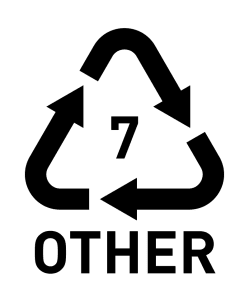
“Other” is a miscellaneous category for all the plastics like nylon and acrylics fabrics, fiberglass, polycarbonate, plexiglass, etc., that can’t be categorized into the other 6 categories above.
Common products that fall under this category include sunglasses, baby bottles, water cooler bottles, etc.
Because some plastics like polycarbonate often contain BPA and LEXAN which can be very harmful to human health if not properly disposed of, they are difficult to accept for recycling by most recycling programs.
When you pay attention to the small numbers within the symbols, you will better understand what type of plastic you are using and whether or not it is recyclable. This will go a long way to help waste management professionals ensure that the right materials end up in the right place.
Courtesy: Climateaction.africa