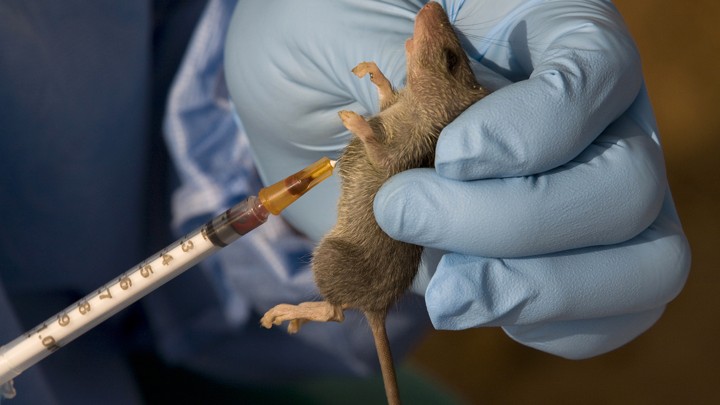
An ecologist extracts a sample of blood from a Mastomys Natalensis rodent in the village of Jormu in southeastern Sierra Leone February 8, 2011. Lassa fever, named after the Nigerian town where it was first identified in 1969, is among a U.S. list of "category A" diseases -- deemed to have the potential for major public health impact -- alongside anthrax and botulism. The disease is carried by the Mastomys Natalensis rodent, found across sub-Saharan Africa and often eaten as a source of protein. It infects an estimated 300,000-500,000 people each year, and kills about 5,000. Picture taken February 8, 2011. To match Reuters-Feature BIOTERROR-AFRICA/ REUTERS/Simon Akam (SIERRA LEONE - Tags: HEALTH SOCIETY ANIMALS) - GM1E72F07HC01
April 17, 2024
Kaduna State Primary Health Development Agency, (KPHDA) says there is no pending cases of Lassa fever in the state.
Director of public health, Ibrahim Hamza-Ikara, told the News Agency of Nigeria on Wednesday in Kaduna, that the state has not recorded any Lassa fever cases for the past few weeks.
He added that all suspected cases have been discharged from the hospitals.
“We have not recorded any Lassa fever cases for the past few weeks and all the remaining eight patients have been discharged.
On February 23, the state recorded four deaths of Lassa fever and three on admission from the 44 Nigerian Army Reference hospital in the state.
Others infected were identified and being closely monitored.
He urged residents to maintain proper food and environmental hygiene and immediately report any suspected cases of Lassa fever to the nearest health facility for prompt attention. (NAN)