Skip to content
August 1, 2026
  • Home
  • About us
  • Contact us
  • Newsletter
  • Privacy Policy
Political Economist

Political Economist

A liberal News reporting Politics, Sports, Business, Commentaries

  • Home
  • National News
    • Metro News
      • metro
    • Society
    • Crime and Justice
  • Special Reports
    • Investigation
    • Features
    • Interviews
  • Opinion
    • Commentaries
    • Perspectives
  • Press Releases
  • International News
  • Business & Economy
  • Politics
Watch Online
  • Home
  • Special Reports
  • Mainstreaming e-waste recycling for a safer planet
  • Special Reports

Mainstreaming e-waste recycling for a safer planet

Admin January 22, 2022
GEF

Jan. 22, 2022

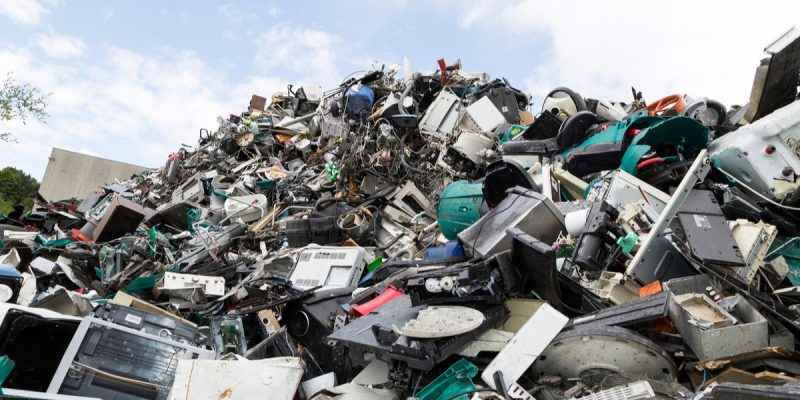
Every day, people buy phones, tablets, and laptops, discarding the old ones and adding to the growing e-waste stream. In 2019 alone, the amount of e-waste had increased by 21% from 2014 according to UN’s Global E-waste Monitor 2020.

Globally, technology is becoming the fastest growing solid waste stream in the world. However, only a very low percentage of all the e-waste that is being generated actually gets recycled. The rest of the waste either find their way to landfills or is exported to developing countries.

Hardly a day goes by without you seeing recycling bins for plastics but why isn’t e-waste getting the same recycling mainstreaming as other wastes when it poses an even greater threat to the environment?

You see, electronic waste consists of metals and chemicals like lead, lithium, mercury, and arsenic. When e-waste finds its way into landfills, these toxic substances seep into the ground.

Now, here’s the dangerous part. Unlike organic materials like food scraps, leaves and animals, e-waste does not decompose.

This means the earth is unable to naturally absorb the chemicals and metals in these electronic devices. Tragic.

How can we salvage the situation and get the world to adopt recycling? The thing is, beyond the hazardous effects of these metals and substances on our health and the ecosystem, these components are natural resources.

Glass, steel, copper, plastic, aluminum, gold, silver, and palladium are all finite resources which means we need to recycle more to make up for the depleted natural resources. This makes a strong case for a circular economy which is critical for driving sustainability.

Manufacturers can incentivize to make the repair, reuse, and recycling of hardware profitable. They can also put systems in place that ensure that their supply chains adhere to the concept so that there isn’t resources depletion.

To their credit, some manufacturers give discounts to people who trade in their old device to get a new phone while some offer money for second-hand devices. They can still do more.

Beyond the manufacturers, people need to start seeing e-waste as a form of hazardous waste so that it is properly disposed of and recycled for a safer planet.

Courtesy: Climateation.africa

  • Facebook
  • Share on X
  • LinkedIn
  • WhatsApp
  • Email
  • Copy Link
Tags: aluminum copper E-waste Glass Gold palladium plastic silver steel

Post navigation

Previous Kaduna: Excited Buhari scores El-Rufai High on Infrastructure, Transformation
Next Insurgency: Boko Haram Terrorists Raze Church, Abduct 15 Girls Near Chibok

Related Stories

Regulating the Crypto Frontier: Inside Tinubu’s 2026 Executive Order on Virtual Assets
  • Special Reports

Regulating the Crypto Frontier: Inside Tinubu’s 2026 Executive Order on Virtual Assets

July 17, 2026
DRIVING GRASSROOTS GOVERNANCE WITH PUBLIC-PRIVATE PARTNERSHIP: The Gains, the Pains, the Prospects, by Hon. Sunday Dare
  • Special Reports

DRIVING GRASSROOTS GOVERNANCE WITH PUBLIC-PRIVATE PARTNERSHIP: The Gains, the Pains, the Prospects, by Hon. Sunday Dare

July 15, 2026
The Frontline War on Nigeria’s ‘Blood Minerals’: Inside the Crackdown in Osun State
  • Special Reports

The Frontline War on Nigeria’s ‘Blood Minerals’: Inside the Crackdown in Osun State

July 13, 2026
logo

Political Economist is a liberal news magazine with global affiliations.

At Political Economist, we promote free enterprise and act as a catalyst for the growth of knowledge economy. We are proudly pan-Nigeria yet richly spiced with African and global news. We offer a fair and balanced news reportage presented by our team of well-heeled professional journalists. <

About us

  • 5 Olutosin Ajayi Street, By CPM Church, Ajao Estate, Lagos State, Nigeria
  • +234 805 680 1124
  • info@politicaleconomistng.com

Follow

Subscribe to notifications

You may have missed

FIFA falls apart over Infantino’s $20bn sell-off deal linked to Trump; adviser resigns
  • Sports

FIFA falls apart over Infantino’s $20bn sell-off deal linked to Trump; adviser resigns

August 1, 2026
How Tinubu’s aggressive infrastructure development is driving Nigeria to a $1trn economy – Yilwatda 
  • National News

How Tinubu’s aggressive infrastructure development is driving Nigeria to a $1trn economy – Yilwatda 

August 1, 2026
  • National News

July 31, 2026
Congo’s Ebola outbreak is second-largest on record, latest data shows ebola
  • International News

Congo’s Ebola outbreak is second-largest on record, latest data shows

July 31, 2026
  • Home
  • About us
  • Contact us
  • Newsletter
  • Privacy Policy
Copyright © All rights reserved. | DarkNews by AF themes.