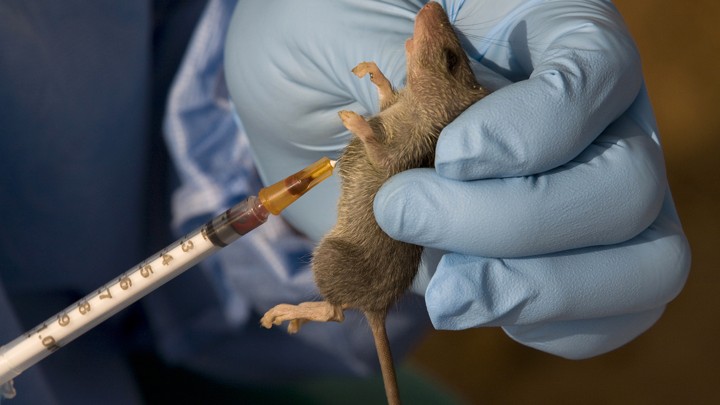
An ecologist extracts a sample of blood from a Mastomys Natalensis rodent in the village of Jormu in southeastern Sierra Leone February 8, 2011. Lassa fever, named after the Nigerian town where it was first identified in 1969, is among a U.S. list of "category A" diseases -- deemed to have the potential for major public health impact -- alongside anthrax and botulism. The disease is carried by the Mastomys Natalensis rodent, found across sub-Saharan Africa and often eaten as a source of protein. It infects an estimated 300,000-500,000 people each year, and kills about 5,000. Picture taken February 8, 2011. To match Reuters-Feature BIOTERROR-AFRICA/ REUTERS/Simon Akam (SIERRA LEONE - Tags: HEALTH SOCIETY ANIMALS) - GM1E72F07HC01
March 5, 2025
The Nigeria Centre for Disease Control and Prevention (NCDC) has reported that delayed hospital visits, high treatment costs, and poor environmental sanitation are exacerbating the ongoing Lassa fever outbreak in the country.
The public health agency attributed many of these fatalities to late presentation at healthcare facilities, which significantly reduced the chances of survival.
“Lassa fever, a viral hemorrhagic illness transmitted through contact with infected rodent excreta or direct human-to-human transmission, continues to spread across Nigeria.
“The disease has been confirmed in 12 states and 70 Local Government Areas (LGAs), with Ondo, Bauchi, and Edo accounting for 73 per cent of all reported cases.
“In spite of ongoing awareness campaigns, many Nigerians remain unaware of early symptoms, leading to delayed diagnosis and treatment.
“Early symptoms of Lassa fever, such as fever, weakness, and body pain, are often mistaken for malaria or typhoid, prompting individuals to self-medicate instead of seeking medical attention.
“By the time many patients arrive at treatment centres, they are already experiencing severe complications such as organ failure, bleeding, or shock, which significantly reduces their chances of survival,” it highlighted.
The NCDC report also pointed out poor environmental sanitation as a key driver of Lassa fever transmission.
“Many communities, particularly in high-burden states, have inadequate waste management systems, making them more prone to rodent infestations.”
The agency urged Nigerians to adopt preventive measures such as storing food in rodent-proof containers, keeping homes clean, and avoiding bush burning, which drives rodents into residential areas.
The government, through the NCDC and partner organisations, had intensified response efforts by deploying rapid response teams to affected states and increasing surveillance.