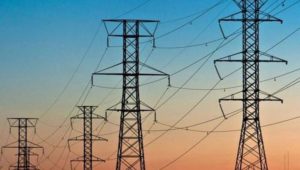

Power line
Nigerian manufacturers spent an estimated N1.35 trillion on alternative power generation in 2025, underscoring the severe burden of erratic electricity supply and high energy costs on industrial productivity and national growth.
The figure was disclosed by the Chemical and Non-Metallic Products Employers Federation (CANMPEF) during its 47th Annual General Meeting (AGM) held on Wednesday in Lagos, where industry leaders gathered to address the challenges and prospects for sustainable manufacturing growth in Nigeria.
Presenting the President’s Report for the 2025 Annual Report and Financial Statements, CANMPEF President, Chief Devakumar Edwin, revealed that spending on alternative energy jumped by 23 per cent compared to the previous year.
He noted that the huge capital outlay diverted critical funds that could have otherwise been channeled into factory expansion, machinery acquisition, research and development, workforce training, and job creation.
While Nigeria recorded an overall real Gross Domestic Product (GDP) growth of 3.87 per cent in 2025, up from 3.38 per cent in 2024 the manufacturing sector severely lagged behind, growing by just 1.41 per cent. Consequently, the sector’s contribution to real GDP shrank from 8.24 per cent to 8.05 per cent.
Chief Edwin stressed that ongoing economic stabilization efforts must yield tangible results in industrial competitiveness, sustainable jobs, and expanded local production and exports.
Beyond energy costs, the report highlighted several persistent bottlenecks hindering manufacturers, including expensive credit, foreign exchange volatility, inadequate infrastructure, multiple taxation, and complex regulatory environments.
To mitigate these challenges, CANMPEF urged governments and electricity regulators to guarantee predictable tariffs, overhaul distribution infrastructure, improve gas supplies to industries, and incentivize captive, embedded, and renewable energy generation within industrial clusters.
On financial constraints, CANMPEF noted that while the Central Bank of Nigeria lowered the Monetary Policy Rate (MPR) from 27.5 per cent to 27 per cent in September 2025, borrowing costs remain prohibitively high. The federation called for sustained monetary easing and longer-tenured funding options, particularly for small and medium-sized enterprises (SMEs).
Regarding foreign exchange, the federation acknowledged that ongoing market reforms have improved transparency and narrowed the gap between official and parallel rates.
However, high import costs for raw materials continue to weigh on operations. CANMPEF urged the government to boost domestic production of vital industrial inputs like chemicals, resins, and additives, while streamlining customs clearance and port processes.
Welcoming recent tax law harmonization efforts, the federation cautioned authorities against introducing discretionary fees, multiple levies, or overlapping regulations without prior consultation with industry stakeholders.
Delivering the keynote address, the Managing Director of Daraju Industries, Mr. Emmanuel Macaulay, emphasized that manufacturing remains the backbone of job creation, skill development, and local value chain expansion.
Acknowledging National Bureau of Statistics (NBS) data showing manufacturing growth of 3.29 per cent in Q1 2026 and 3.24 per cent in Q2 2026, Macaulay argued that top-line growth alone is meaningless without higher capacity utilization, reduced production costs, and sustainable employment.
He urged manufacturers to adopt modern technologies, including automation, artificial intelligence, energy-efficient systems, and enhanced research and development.
In his remarks, CANMPEF Executive Secretary, Mr. Femi Oke, outlined the federation’s regulatory and labor engagements over the past year. Notably, CANMPEF successfully concluded a two-year wage agreement with the National Union of Chemical Footwear Rubber Leather and Non-Metallic Products Employees.
Effective April 1, 2025, through March 31, 2027, the agreement establishes a monthly package of N114,500 covering basic salary, housing, and transport allowances.
Oke also cited positive developments in domestic petrochemical production, particularly the 2025 rollout of polypropylene production at the Dangote Petroleum Refinery and Petrochemicals, which holds strong potential to deepen local sourcing of raw materials.
Looking ahead for the remainder of 2026, CANMPEF reaffirmed that affordable energy, accessible industrial financing, targeted relief on key raw materials, regulatory harmony, and improved security remain its primary.