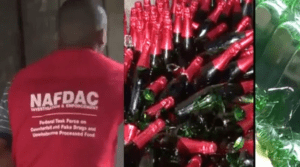

The Federal Government on Thursday in Abuja unveiled the Nigeria Alcohol Policy and its Multisectoral Implementation Plan 2026-2030 to regulate alcohol production, distribution, marketing and consumption.
Performing the unveiling, the Minister of Health and Social Welfare, Prof. Muhammad Pate, said the policy sought to balance legitimate economic opportunities from alcohol production with the responsibility to protect public health and social wellbeing.
Pate, represented by the ministry’s Permanent Secretary, Ms. Daju Kachollom, said legitimate industries producing alcohol contributed to economic activities, employment and livelihoods across several sectors.
He said harmful alcohol use and the proliferation of illicit and unregulated products could impose significant burdens on individuals, families, communities and the nation.
According to him, the consequences included non-communicable diseases, road traffic injuries, interpersonal and gender-based violence, mental health challenges, loss of household income and reduced productivity.
He said the Nigeria Alcohol Policy represented an integrated national response aimed at maximising legitimate economic benefits while systematically reducing alcohol-related harm.
“This approach is firmly aligned with the overarching goal of the Federal Ministry of Health and Social Welfare: to save lives, protect Nigerians from both physical and financial hardship, and produce health.
“The significance of the Nigeria Alcohol Policy lies precisely in its capacity to advance these objectives. Every preventable alcohol-related injury or death is a life that must be protected.
“Every household pushed into financial difficulty because of illness or injury is a burden we must seek to prevent,” Pate said.
He said the policy was built around four strategic pillars: harm reduction and health promotion; industrial and economic development; multisectoral coordination and governance; and monitoring, evaluation, accountability, research and learning.
According to him, the pillars provided a framework for prevention and public education, responsible industry practices, effective regulation and enforcement, as well as improved access to screening, treatment and rehabilitation.
He said they also provided for the generation and use of reliable evidence to guide implementation and recognised the need to address social and economic circumstances affecting people’s wellbeing.
Pate said public health protection must remain at the centre of implementation, adding that public education should be strengthened through community engagement, responsible marketing and enforcement of age and access restrictions.
He said appropriate alcohol screening, treatment and rehabilitation should also be integrated into the national health system.
Pate said the policy aligned with Nigeria’s national response to Agenda 2063 and the Sustainable Development Goals, particularly Goals 3, 8, 9 and 11.
He added that it was also consistent with relevant World Health Organization (WHO) global and regional frameworks on alcohol control.
On her part, the Director-General of the National Agency for Food and Drug Administration and Control (NAFDAC), Prof. Mojisola Adeyeye, said the policy was anchored on Nigeria’s broader health and socioeconomic reform agenda.
She said it reinforced Nigeria’s commitment to the Sustainable Development Goals, particularly those relating to good health and wellbeing, sustainable industry, and safe and resilient communities.
“The Nigerian Alcohol Policy presents a role of national strength needed to balance between the protection of public health, including societal well-being.
“It establishes the required guidance for the production, distribution, marketing, and consumption of alcohol within a regulated environment.
“It prioritises harm reduction, especially among young people in Nigeria, consumer safety and the interests of the relevant industry,” Adeyeye said.
She said NAFDAC remained committed to contributing to a healthier, safer and more productive Nigeria through science-based regulation, effective monitoring and surveillance, strengthened food control systems and stakeholder engagement.
“NAFDAC is already doing that. We signed an undertaking with manufacturers two weeks ago that there will no longer be alcohol in 200 Milligram or less than that.
“On this note, I wish to congratulate all stakeholders who played various significant roles in building the Nigerian Alcohol Policy and its multisectoral implementation plan, which is being launched today,” Adeyeye said.(NAN)