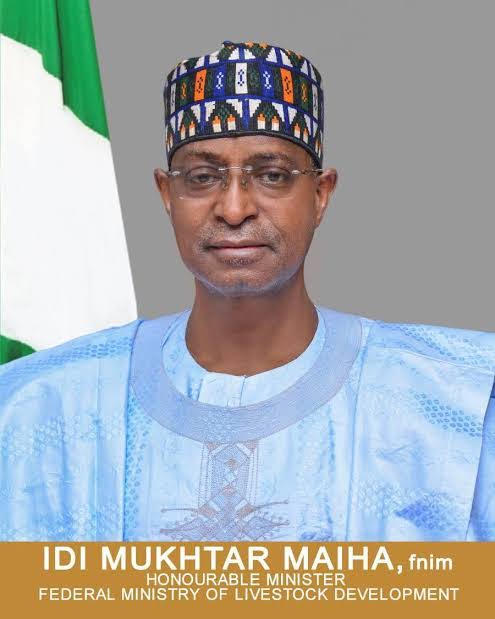
The Federal Government on Tuesday inaugurated a strategic, solar-powered veterinary vaccine cold storage facility with a capacity to hold approximately 40 million doses in Agege, Lagos State.
The Minister of Livestock Development, Idi Maiha, who performed the official inauguration, stated that the facility would significantly strengthen Nigeria’s animal health security, enhance vaccine availability, and minimise batch wastage.
According to Maiha, prevalent animal diseases such as Peste des Petits Ruminants (PPR), Contagious Bovine Pleuropneumonia (CBPP), and Foot-and-Mouth Disease (FMD) remain severe constraints to livestock productivity, rural livelihoods, and national food security.
“The solar-powered facility will strengthen disease-control campaigns by ensuring proper preservation of vaccines and improving access to them,” the minister noted.
The project forms a critical component of the Federal Government’s livestock transformation agenda under the Livestock Productivity and Resilience Support Project (L-PRES), implemented in partnership with the World Bank.
Maiha revealed that similar vaccine cold hubs have already been established in Sokoto State, Abuja, Yola (Adamawa State), Edo State, and Imo State to build an interconnected national vaccine storage and distribution network.
He further announced that ongoing infrastructure upgrades at the National Veterinary Research Institute (NVRI) in Vom, Plateau State, are projected to boost Nigeria’s annual local vaccine production capacity from around 120 million doses to over 850 million doses.
“Our ambition is clear; Nigeria must progressively attain veterinary vaccine self-sufficiency and position itself as a major vaccine production and supply hub for West Africa and the African continent,” Maiha emphasized.
He added that the strategic investment would translate directly into healthier livestock herds, higher agricultural yields, and enhanced economic opportunities for pastoralists and commercial farmers nationwide.
The minister commended the Lagos State Government, the World Bank, the L-PRES project team, and key sector stakeholders for their joint collaboration in realising the project, which concluded with a formal tour and commissioning of the facility for immediate operational use. (NAN)