
Skip to content
July 21, 2026
  • Home
  • About us
  • Contact us
  • Newsletter
  • Privacy Policy
Political Economist

Political Economist

A liberal News reporting Politics, Sports, Business, Commentaries

  • Home
  • National News
    • Metro News
      • metro
    • Society
    • Crime and Justice
  • Special Reports
    • Investigation
    • Features
    • Interviews
  • Opinion
    • Commentaries
    • Perspectives
  • Press Releases
  • International News
  • Business & Economy
  • Politics
Watch Online
  • Home
  • Special Reports
  • Child labour: Over 24m children engaged in Nigeria in 2022- NBS
  • Special Reports

Child labour: Over 24m children engaged in Nigeria in 2022- NBS

Admin April 19, 2024
total value of trade

NBS logo

April 19, 2024

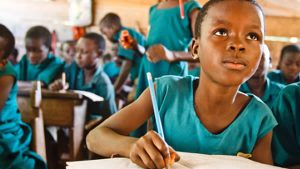
The National Bureau of Statistics (NBS), says that 24,673,485 children, accounting for 39.2 per cent of all children aged five to 17 years old in Nigeria are in child labour.

According to the NBS in its Nigeria Child Labour and Forced Labour Survey Report for 2022 released on Thursday, in May 2021, Nigeria committed to ending child labour by 2025 and forced labour and trafficking in persons by 2030. To assess the prevalence of forced labour and understand the characteristics of forced labour victims in the country, in 2022, a national child labour and forced labour survey was conducted in Nigeria.

The Bureau said child labour referred to the work for which children are either too young or that may be physically or psychologically injurious to their health and wellbeing.

The report said 31,756,302 children, accounting for 50.5 per cent of all children aged five to 17 years old in Nigeria were engaged in economic activities.

It said 14,390,353 children accounting for 22.9 per cent of children were involved in hazardous work.

The NBS said the North-West zone had the highest number of children in child labour at 6,407,102 and in hazardous work at 3,266,728.

“However, in terms of the percentage of children in child labour and hazardous work, the South-East region has the highest prevalence of children involved in child labour at 49.9 per cent.”

The report showed that in the five to 14 age group, 77.6 per cent of children attended school, 46.5 per cent were working and 11.2 per cent were exclusively working.

“Children in urban areas are substantially less likely to be working only and more likely to attend school only than their rural counterparts. There are few differences between boys and girls.”

It said in the 15-17 age group, more than two-thirds of children were working and 21.9 per cent were exclusively working.

“Children living in rural areas are 12 percentage points more likely to be working and 17 percentage points less likely to attend school than children living in urban areas.”

The report said children from households with more educated household heads were less likely to be in child labour.

It showed that 43.2 per cent of children from households where the head had reached primary or lower education were in child labour.

“Whereas only 28.4 per cent of children from households where the head has a tertiary education are in child labour.”

The report said children from female-headed households were more likely to be in child labour than children living in male-headed households.

“About 42.5 per cent of children from female-headed households are in child labour compared to 38.7 per cent of children from male-headed households,” the NBS said.
  • Facebook
  • Share on X
  • LinkedIn
  • WhatsApp
  • Email
  • Copy Link
Tags: NBS

Post navigation

Previous Troops repel IPOB/ESN terrorists attack in Anambra, neutralise several fighters
Next Our merger plans with Dangote Sugar/Rice suspended over comments, recommendation of SEC – NASCON

Related Stories

Regulating the Crypto Frontier: Inside Tinubu’s 2026 Executive Order on Virtual Assets
  • Special Reports

Regulating the Crypto Frontier: Inside Tinubu’s 2026 Executive Order on Virtual Assets

July 17, 2026
DRIVING GRASSROOTS GOVERNANCE WITH PUBLIC-PRIVATE PARTNERSHIP: The Gains, the Pains, the Prospects, by Hon. Sunday Dare
  • Special Reports

DRIVING GRASSROOTS GOVERNANCE WITH PUBLIC-PRIVATE PARTNERSHIP: The Gains, the Pains, the Prospects, by Hon. Sunday Dare

July 15, 2026
The Frontline War on Nigeria’s ‘Blood Minerals’: Inside the Crackdown in Osun State
  • Special Reports

The Frontline War on Nigeria’s ‘Blood Minerals’: Inside the Crackdown in Osun State

July 13, 2026
logo

Political Economist is a liberal news magazine with global affiliations.

At Political Economist, we promote free enterprise and act as a catalyst for the growth of knowledge economy. We are proudly pan-Nigeria yet richly spiced with African and global news. We offer a fair and balanced news reportage presented by our team of well-heeled professional journalists. <

About us

  • 5 Olutosin Ajayi Street, By CPM Church, Ajao Estate, Lagos State, Nigeria
  • +234 805 680 1124
  • info@politicaleconomistng.com

Follow

Subscribe to notifications

You may have missed

NUPRC unveils 143 bidders for 37 oil assets in licensing round, targeting 300,000bpd PIA
  • Business & Economy

NUPRC unveils 143 bidders for 37 oil assets in licensing round, targeting 300,000bpd

July 21, 2026
Father Sues 27-Year-Old Daughter Over Marriage Delay Ecommerce
  • Metro News

Father Sues 27-Year-Old Daughter Over Marriage Delay

July 21, 2026
Fire destroys 17 shops in Lagos market
  • Metro News

Fire destroys 17 shops in Lagos market

July 21, 2026
World Cup: 10 African nations receive a base $100m from FIFA’s $15bn earnings
  • Sports

World Cup: 10 African nations receive a base $100m from FIFA’s $15bn earnings

July 21, 2026
  • Home
  • About us
  • Contact us
  • Newsletter
  • Privacy Policy
Copyright © All rights reserved. | DarkNews by AF themes.