Feb. 22, 2022
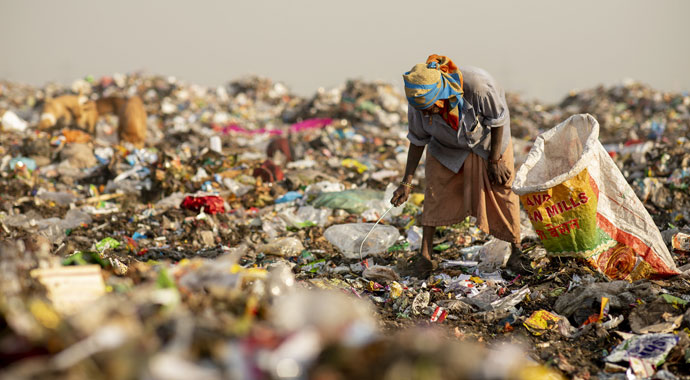
Africa’s rapid urbanization has led to a population explosion and as globalization continues, so also is the production of municipal waste – causing health and environmental problems for the continent as a result of waste mismanagement.
Similarly, electricity access is a fundamental issue in the continent because, despite being endowed with abundant energy resources, the region has the lowest electricity access rates in the world as installed capacity remains far below levels required to meet demand.
This bears a significant cost on the economies of the countries on the continent, hinders development prospects on the continent, and negatively impacts the well-being of the population – disrupting education, communication, and quality health care.
Already, energy demand in the continent is predicted to rise by 127% by 2040 with electricity demand almost tripling and the share of renewables in Africa’s fuel mix growing from 1% today, to 16% over the same period according to BP’s Energy Outlook – 2019.
It is for that reason that we will be exploring waste-to-energy as an effective means of simultaneously dealing with waste management and electricity access.
Waste-to-energy (WtE) or energy-from-waste (EfW) is the process of generating energy from the primary treatment of waste. It is a form of energy recovery via the processing of waste into a fuel source.
To generate energy, waste-to-energy plants burn municipal solid waste (MSW) to produce steam in a boiler that is used to generate electricity.
Waste-to-energy covers any process that produces energy from waste, including collecting methane from peat, anaerobic digestion, gasification, as well as incineration.
There are various energy recovery techniques used, some of which have evolved over the years. They include:
● Anaerobic Digestion — a biochemical conversion of organic material that goes through a fermentation process where enzymes break down and decompose organic materials.
● Landfill Gas Recovery — various techniques that capture gases that are released from the slow decomposition of landfills.
● Gasification — is a process of chemical decomposition of various types of waste material, also known as feedstock, such as municipal solid waste, oil residue, petroleum coke, biomass, and coal waste by exposing it to heat and reduced oxygen.
Of all the techniques, gasification has the most potential to make a lasting positive impact on our environment and is generating much enthusiasm, especially in regions such as Africa where coal waste is abundant and energy provisioning challenges abound.
This could be due to a number of reasons, one of which is the unsystematic collection of waste in the continent, a problem for WtE technologies that rely on the consistent supply of quality feedstock. Even where there is a systematic waste collection, consumers would still need to be trained to sort and dispose of waste in ways that support Waste-to-energy fuel collection.
Another hindrance to developing WtE in Africa is inadequate financing as there aren’t usually resources to build the infrastructure nor are their incentives to encourage it.
The successful implementation of WtE depends upon forming key collaborations to obtain the necessary public and private sector investments. This is something that key stakeholders should consider if they truly hope to address energy poverty on the continent.
Courtesy: Climateaction.africa