



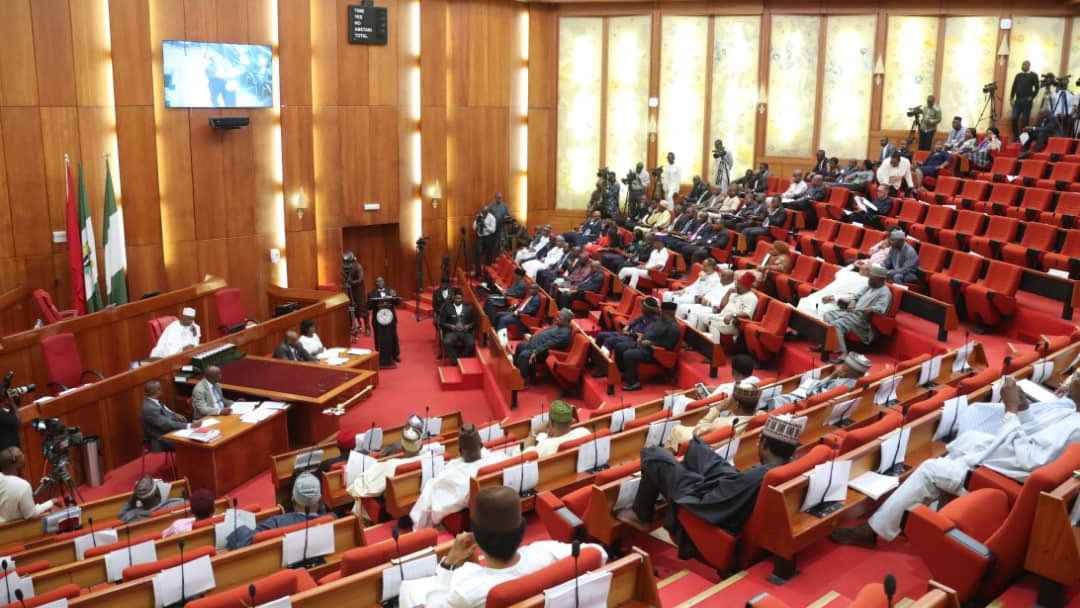





As Nigeria marks Democracy Day, the true purpose of self-rule and governance deserves reflection. Beyond elections and political transitions, what about development, peace, and making communities genuinely livable?
How many governments at the local, state, and federal levels truly prioritise these goals?
When the Governor of Anambra State, Prof. Chukwuma Charles Soludo, says his administration seeks to make Anambra a “livable homeland”, he offers Nigerians an opportunity to reconsider the real essence of democracy and governance.
May 29 and June 12 remain defining dates in Nigeria’s democratic journey.
On May 29, 1999, the military administration of General Abdulsalami Abubakar handed over power to the civilian government of Chief Olusegun Obasanjo, ushering in the Fourth Republic. Since then, Nigeria has sustained its longest uninterrupted democratic dispensation since independence.
June 12, 1993, marks what is widely regarded as Nigeria’s freest and fairest presidential election. Chief Moshood Kashimawo Olawale (M.K.O.) Abiola of the Social Democratic Party (SDP) contested against Alhaji Bashir Tofa of the National Republican Convention (NRC). However, despite Abiola clearly leading, the election was annulled while results were still being collated. The decision plunged Nigeria into political turmoil, aborted the Third Republic, and prolonged military rule until the return to civilian government in 1999.
That is why both May 29 and June 12 occupy symbolic places in Nigeria’s democratic history.
Today, after 27 uninterrupted years of civilian rule, many Nigerians still question the true dividends of democracy and the level of cohesion it has produced in the society.
The Democracy Day celebrations come at a time when partisan politics has once again intensified ahead of the 2027 general elections. Political manoeuvring, alignments, and internal party rivalries already dominate national discourse.
This raises an important question: beyond elections and power contests, what else should define civilian rule in Nigeria? What about development, peace, and stability? Only a few governments in this era can confidently point to substantial achievements beyond playing politics itself.
Democracy remains the world’s most acceptable form of government, yet in practice it is often weakened by excessive partisanship. Contemporary democracy increasingly appears driven less by outcomes than by spectacle — dramatic rhetoric, populist grandstanding, media performance, and endless political confrontation. Substance is displaced by showmanship, while governance becomes secondary to political rivalry.
Nigeria’s current political climate reflects this pattern. Ahead of 2027, political camps appear more interested in defeating opponents than solving national problems.
This tendency is not new. As Joseph Schumpeter observed in ‘Capitalism, Socialism and Democracy,’ democracy is fundamentally “that institutional arrangement… in which individuals acquire the power to decide by means of a competitive struggle for the people’s vote.” The danger is that competition for power can overshadow the more important task of governance.
Alexis de Tocqueville similarly warned in ‘Democracy in America’ about the “tyranny of the majority”, where dominant opinion suppresses dissent and innovation. In such an atmosphere, valuable ideas are rejected simply because they come from opposing political camps.
The consequences are serious. Nations lose opportunities, governance weakens, and citizens suffer while partisan conflicts consume public attention.
There is therefore an uncomfortable but necessary argument to confront: periods less dominated by partisan democratic practice, despite their flaws, sometimes delivered swifter development and more decisive governance. Many of Nigeria’s major infrastructural projects and institutional foundations, for instance, were established outside democratic rule.
This is not an endorsement of authoritarianism or military government. The abuses of autocrats and dictators remain well documented. Yet such systems were often less constrained by partisan paralysis, allowing quicker policy implementation and stronger public compliance.
Samuel P. Huntington made a similar point in ‘Political Order in Changing Societies,’ arguing that “the most important political distinction among countries concerns not their form of government but their degree of government.” Where institutions are weak, democracy can deepen disorder rather than resolve it.
This thinking also found expression in the philosophy of Lee Kuan Yew, who argued that “what a country needs to develop is discipline more than democracy.” Under his leadership, Singapore pursued order, cohesion, and long-term planning above adversarial politics, achieving remarkable transformation within decades.
If the reasoning of deep-thinking leaders like Gov. Soludo are followed, we would note that democracy is not the problem. The challenge, therefore, is not to abandon democracy, but to rescue it from destructive partisanship.
In Nigeria, democracy must rise above narrow political interests and return to its higher purpose: serving the people. Like Governor Soludo’s vision of a “livable homeland”, governance should focus on peace, development, stability, and dignity for citizens. Political parties should exist not merely as platforms for power contests, but as institutions committed to the common good.
Without such renewal, democracy risks becoming rich in form but poor in function — eloquent in promise, yet weak in delivery.
Nnabuife, FNGE, FSNA, author and journalist writes from Awka, Anambra State via chukafornaija@gmail.com. 08026472357