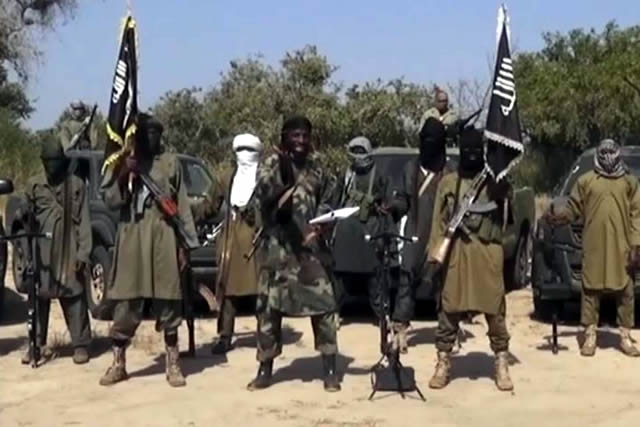












Armed groups operating across Nigeria’s northern and western corridors have adapted faster than the structures designed to contain them. They attack within Nigerian territory, withdraw across borders, and return with renewed capacity.
This pattern persists because enforcement has often stopped where the threat does not. President Bola Ahmed Tinubu’s administration is establishing a different standard. Nigeria will not accept cross-border sanctuary as a condition of its security environment.
This position is best described as the “No Sanctuary Doctrine”. It holds that any territory used to stage or sustain attacks against Nigeria falls within Nigeria’s operational security concern, subject to existing legal frameworks.
Sovereignty is exercised through the protection of citizens and the denial of operational space to hostile actors. Where the threat is transnational, the response must be equally so.
Nigeria already operates within a lawful structure that enables this approach. The Multinational Joint Task Force, established by the Lake Chad Basin Commission and supported by the African Union, provides for coordinated military operations against terrorist groups across Nigeria, Niger, Chad, and Cameroon. Its operational design permits cross-border action under agreed command and rules of engagement. Nigeria has maintained a central leadership role within this force since its reconstitution in 2015. The issue is not the absence of authority, but the need for consistent application and clarity about what that authority covers.
Since 2023, disruptions in regional political order have weakened coordination. Coups in parts of the Sahel have affected intelligence sharing and joint patrol structures. Armed groups have used these gaps to expand movement across the tri-border areas. Nigeria has absorbed the consequences through increased pressure on border communities and critical trade routes. The response cannot depend on the restoration of ideal political conditions. It must proceed within the frameworks that remain in force.
The Tinubu administration has reinforced this framework through targeted bilateral arrangements. In August 2024, Nigeria and Niger concluded a memorandum of understanding on defence cooperation to reinforce joint responses to security threats. This reflects a standing recognition across the region that insecurity in border areas is shared and must be addressed through coordinated action. These mechanisms are active instruments of defence and will be used as such.
President Tinubu’s engagement with ECOWAS reflects this position. Nigeria has supported the development of a regional standby force for counter-terrorism and restored financial commitments to the bloc, including over N169 billion in community levy payments between January 2023 and July 2024. A functioning regional mechanism requires both authority and funding. Nigeria has acted on both. This leadership has also been evident in moments of political tension within the sub-region, including its response to the attempted coup in the Benin Republic, where Nigeria’s diplomatic and security engagement contributed to stabilising the situation without escalation. This approach reinforces Nigeria’s role as a responsible security anchor in West Africa.
At the continental level, Nigeria has aligned diplomacy with operational capacity. At the African Union summit in February 2025, Nigeria supported the renewal of the Multinational Joint Task Force mandate and the upgrade of the National Counter Terrorism Centre to a Regional Counter Terrorism Centre. Nigeria also entered into a Strategic Sea Lift Services agreement with the African Union to support peace operations, disaster response, and humanitarian logistics. Within this broader continental architecture, there is also scope for deeper South-South collaboration within the region. ECOWAS can further improve its counter-terrorism ecosystem by facilitating cooperation among member states with advanced capabilities, including countries such as Côte d’Ivoire, whose counter-terrorism infrastructure offers practical models for intelligence coordination and response.
This regional approach is reinforced by a set of international partnerships aligned with the same objective. Engagement with the United States through the Joint Working Group supports intelligence sharing, training, and defence coordination. Cooperation with the United Kingdom includes defence collaboration and the development of customs data exchange systems between the Nigeria Customs Service and HM Revenue and Customs to strengthen border monitoring. The Strategic Dialogue Mechanism with Brazil, concluded in June 2025, adds further capacity through defence cooperation in training and intelligence. Together, these partnerships expand Nigeria’s capacity to detect, track, and respond to threats before they materialise within its territory, while complementing regional efforts.
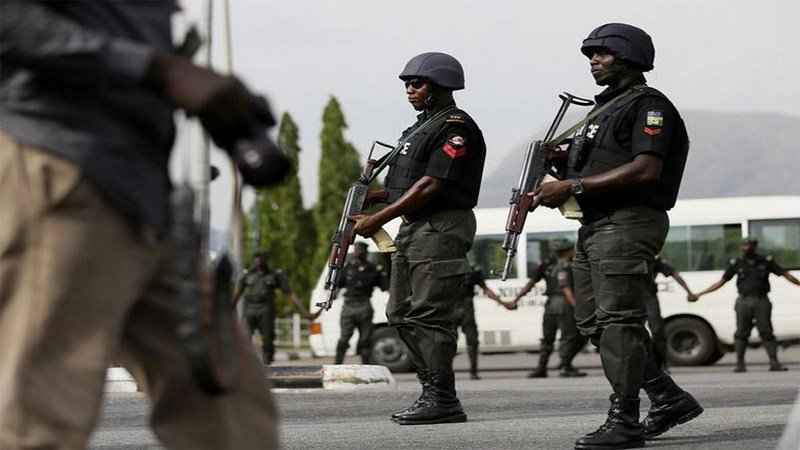
These engagements support a defined operational objective: to deny armed groups sanctuary around Nigeria’s borders. Nigeria will act through the Multinational Joint Task Force, bilateral agreements, and regional mechanisms to ensure that border proximity does not provide protection for armed groups. Cross-border action will be coordinated, intelligence-led, and executed within agreed legal frameworks, supported by deeper intelligence integration with neighbouring states. As this approach develops, there is a growing case within ECOWAS for more integrated data systems across member states. A coordinated framework linking national identity databases, border control systems, and security agencies would enable early identification of persons of interest across jurisdictions and strengthen collective response capacity.
Ultimately, this doctrine does not seek conflict with neighbouring states, but alignment against a shared threat environment. Where cooperation is available, it will be deepened. Where political conditions limit coordination, Nigeria will continue to act within existing agreements to protect its territory and its citizens. Delay in the face of active threats carries measurable costs in lives, displacement, and economic disruption.
The “No Sanctuary Doctrine” establishes a measurable standard for policy execution. It removes ambiguity from Nigeria’s response to cross-border insecurity. It affirms that territorial defence includes the denial of external staging grounds for attacks. It places Nigeria in its established role as the principal security actor within its immediate region.
This posture carries clear operational demands. Political conditions in the Sahel are unstable. Partner states face their own governance pressures. Domestic security challenges also require sustained internal coordination. Efforts to control the proliferation of small arms and light weapons remain critical, particularly in addressing the role of illicit arms flows and local manufacturing networks that sustain non-state actors. Strengthening existing institutions responsible for arms control, alongside greater accountability within border communities affected by cross-border insurgent activity, will complement external security efforts and reinforce national stability.
President Tinubu has set this direction. The National Assembly, regional partners, and Nigeria’s security institutions are part of its execution. Its results will determine the stability of Nigeria’s borderlands and the credibility of the state’s most basic responsibility: the protection of its citizens.
–Oshodi is Senior Special Assistant to President Tinubu on International Affairs and Protocol