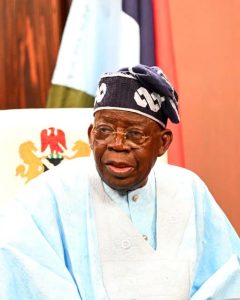
President Buhari and Vice President Osinbajo
 Islamist militant attacks, gasoline shortages, worsening violence over grazing land, simmering unrest in the southeast — the crises keep mounting for Nigerian President Muhammadu Buhari less than a year before general elections.
The most recent setback came on March 1 when suspected Boko Haram Islamist militants killed three United Nations aid workers and eight soldiers in an attack in the northeastern town of Rann, about two weeks after they kidnapped more than 100 schoolgirls aged 11-19 in the same region. The actions have undermined the government’s claim to have “technically defeated” the group.
“There will be consequences politically; it’s a huge blow to soldier morale,” said Cheta Nwanze, an analyst at Lagos-based SBM Intelligence risk advisory. “It just adds to Buhari’s woes.”
While Buhari, 75, hasn’t said whether he will run for re-election, his ruling All Progressives Congress has backed him to do so, and he remains popular in his political base in the mainly Muslim north. Yet he spent more than five months in London last year being treated for an undisclosed illness, and the coalition that brought him to power shows signs of fraying.
On Monday, Buhari started a visit to five states that have been gripped by violence in recent months, including Yobe, where the girls were kidnapped, his office said in an emailed statement.
Opposition Disarray
The government’s much-vaunted anti-graft war also suffered a blow when Berlin-based Transparency International’s latest global corruption-perception index released last month showed Nigeria had dropped 12 places under Buhari to 148 out of 172 countries.
In his plus column, the main opposition People’s Democratic Party hasn’t recovered from its loss in 2015 and is in disarray.
While gasoline shortages are causing havoc for motorists, the economy of Africa’s top oil producer is also looking brighter, with the Abuja-based National Bureau of Statistics saying it may expand 2.1 percent this year after growth of 0.8 percent last year and a contraction of 1.6 percent in 2016.
Probable Frontrunner
If Buhari decides to stand again, he’ll be the frontrunner, Amaka Anku, head of Eurasia Group’s Africa practice, said by phone from Washington. He would likely manage to keep intact the coalition of political groups that formed the APC and propelled him to victory over Goodluck Jonathan in 2015, she said.
“Neither security or corruption is worse now than it was under PDP,” she said. “It could have been even better than it is now, but it is better than it was under Jonathan.”
Yet the recent kidnapping has caught the headlines, and Boko Haram has played a decisive role in electoral politics before.
When the militants abducted 276 schoolgirls in an attack on the northeastern town of Chibok in April 2014, it saddled Jonathan with a public relations disaster from which he never recovered. The attack sparked a social media campaign known as #BringBackOurGirls championed by then-U.S. First Lady Michelle Obama. Buhari swept to victory in a vote the following year.
A former military ruler in the 1980s, Buhari pledged to stamp out Boko Haram within months of taking office. Under his orders, troops quickly made progress in pushing the insurgents out of territory they held, forcing them to return to guerrilla warfare. But their attacks have continued.
‘Perfect Timing’
“The timing and that of Chibok are too perfect, showing the insurgents’ understanding of politics,” said Idayat Hassan, executive director of Abuja-based Centre for Democracy and Development. “If the girls are not recovered, it will be injurious in an election year.”
Information Minister Lai Mohammed said during a visit to the school in Dapchi on Feb. 25 that the militants were out to “embarrass the government because they have been degraded.” The government said it’s mobilizing security forces to find the girls.
Elsewhere, Buhari is also facing problems. Former Nigerian President Olusegun Obasanjo, who supported him in 2015, wrote him an open letter in January urging him not to seek re-election and accused him of nepotism and incompetence in managing the economy.
In the central region, a key swing-vote area, public figures who supported Buhari are accusing him of backing his ethnic Fulani herders in their conflict with farming communities over grazing land. The southeast and the oil-rich Niger River delta remain opposition bastions.
While some politicians in the southwest, which largely backed Buhari three years ago, have criticized his administration, it’s most powerful figure, Bola Tinubu, hasn’t deserted the president.
“Let’s not let all the headlines lead us to believe that Buhari will be easy to beat,” Anku said. “He won’t be easy to beat.”