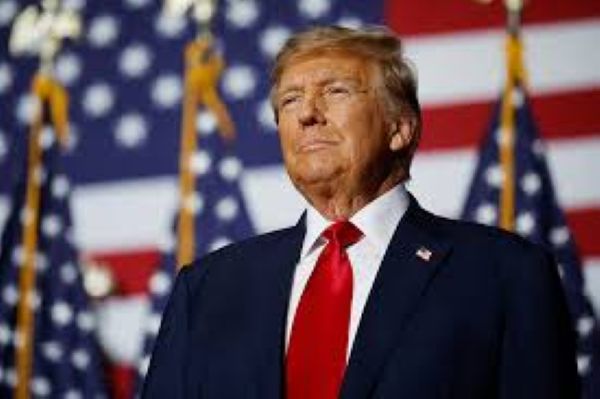
Donald Trump
July 10, 2025
It’s just a visa”… Not quite. Behind every visa stamp lies a complex framework of diplomatic negotiations, reciprocity, and sovereign power.
This past week, Nigerians found themselves directly affected by this reality when the U.S. Embassy in Lagos reduced most visitor visa durations to 3 months, single entry, down from the previous 5-year multiple entry visas many had grown accustomed to.
The change has generated significant discussion across Nigerian social media and business circles. Beyond the immediate inconvenience lies an important lesson in how international law, diplomacy, and power dynamics shape something as seemingly straightforward as a visa approval.
What Exactly Is a Visa Under International Law?
A visa is far more than a travel document — it’s a sovereign declaration. When a country issues you a visa, it’s exercising one of its most fundamental powers: the right to control who enters its territory.
Under international law, visas are:
Privileges, not rights. no country owes you entry
Sovereign decisions; each nation decides its own visa rules
Conditional permissions; they can be revoked, restricted, or denied at any time
In practical terms, a visa represents a country’s conditional permission: “We authorize your entry under these specific conditions for this specific duration.”
This authorization can be modified or withdrawn at any time.
There’s no international law requiring countries to issue visas to foreign nationals. The closest thing we have are bilateral agreements and diplomatic customs that encourage fair treatment — but these are based on negotiation, not obligation.
Understanding Reciprocity: The Legal Basis for Visa Restrictions
The U.S. State Department cited “lack of reciprocity” as the reason for this policy change. Nigeria does not offer equivalent visa privileges to American citizens, prompting the United States to adjust its approach accordingly.
This principle – reciprocity – is a fundamental concept in international relations. It operates on the premise that diplomatic courtesy should be mutual:
If Country A gives 5-year visas to Country B’s citizens, it expects Country B to do the same in return.
When this balance is absent, countries often conduct “reciprocity reviews” and adjust their policies accordingly. This is standard diplomatic practice, not a punitive measure.
Historical Precedent: The 2019-2020 Visa Fee Episode
This is not the first time the United States has employed reciprocity measures against Nigeria in visa matters.
In August 2019, the Trump administration imposed reciprocity fees ranging from $80 to $303 on Nigerian visa applicants, citing the fact that “the total cost for a US citizen to obtain a visa to Nigeria is currently higher than the total cost for a Nigerian to obtain a comparable visa to the United States.”
The US Consulate explained that while America charged Nigerians $160 for visa applications, its citizens seeking Nigerian visas were paying $110 extra.
The fees were implemented under Section 281 of America’s Immigration and Nationality Act following two years of failed negotiations with the Nigerian government.
However, this measure worked as intended. Nigeria responded by reducing visa application fees for US citizens, and in December 2020, the United States removed all reciprocity fees for Nigerian applicants.
The removal matched the Nigerian government’s elimination of additional fees on U.S. citizens applying for Nigerian visas.
The current visa duration reduction represents a similar diplomatic pressure point, demonstrating that reciprocity remains a consistent element of U.S.-Nigeria visa relations.
Sovereignty in Action: Why Countries Can Do This
The legal principle here is territorial sovereignty — one of the oldest concepts in international law. Every country has the absolute right to: Control its borders
Decide who enters Set duration and conditions of stay Refuse entry for any reason they deem valid
This power is so fundamental that even refugee law – which creates some of the strongest obligations to admit foreigners – still allows countries significant discretion in how they process and accommodate people.
When the U.S. Embassy announces “3 months, single entry” for Nigerians, they are exercising a power that has been recognized in international law for centuries. No justification to external parties is required.
What This Means for Nigerian Travelers
The Immediate Impact:
More frequent applications: Instead of one visa lasting 5 years, you might need to apply multiple times
Higher costs: More applications mean more fees
Increased uncertainty: Single-entry visas mean you can’t leave and return without a new visa
Planning challenges: Business people and frequent travelers will need to adjust their strategies
The Broader Implications:
Diplomatic pressure: This puts pressure on Nigeria to reciprocate with better terms for Americans
Economic impact: Reduced ease of travel could affect trade, investment, and remittances
Reputation effect: Other countries may follow suit if they see Nigeria as offering poor reciprocity
The Bottom Line
This visa change is a masterclass in how international law, diplomacy, and power work in practice.
For Nigerian travelers, this is a reminder that our passport’s power depends on our government’s relationships.
The visa game is complex, but the rules are clear: treat others as you want to be treated, and build relationships based on mutual benefit. Until Nigeria embraces this principle, our citizens will continue to face restrictions abroad.
Courtesy Lawpadi