Skip to content
August 24, 2026
  • Home
  • About us
  • Contact us
  • Newsletter
  • Privacy Policy
Political Economist

Political Economist

A liberal News reporting Politics, Sports, Business, Commentaries

  • Home
  • National News
    • Metro News
      • metro
    • Society
    • Crime and Justice
  • Special Reports
    • Investigation
    • Features
    • Interviews
  • Opinion
    • Commentaries
    • Perspectives
  • Press Releases
  • International News
  • Business & Economy
  • Politics
Watch Online
  • Home
  • Commentaries
  • The lost ticket: A metaphor for Babangida and the annulment of June 12 election, by Akin Ogunlade 
  • Commentaries

The lost ticket: A metaphor for Babangida and the annulment of June 12 election, by Akin Ogunlade 

Admin March 4, 2025
June 12

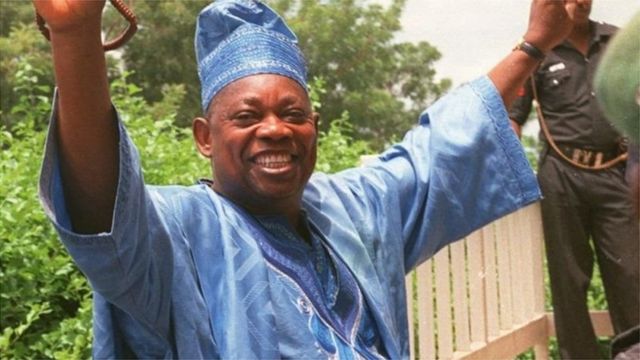
The late MKO Abiola

June 12
The late MKO Abiola

Imagine a man who, against all odds, wins the lottery, a jackpot that represents the hopes and dreams of millions. The air is thick with excitement, the promise of change palpable.

He holds in his hands the golden ticket, a tangible proof of victory. But instead of cashing in, he hesitates, then inexplicably discards it, leaving himself and everyone who had faith in him bewildered, betrayed, and lost. Such is the story of General Ibrahim Babangida and the annulment of Nigeria’s June 12, 1993, election.

The June 12 election was not just any election; it was a landmark moment in Nigeria’s democratic history. It was widely regarded as the freest and fairest election the country had ever witnessed. A nation long plagued by military rule had seen a glimmer of hope, a chance at a fresh start. Moshood Kashimawo Olawale (MKO) Abiola emerged as the presumptive winner, embodying the aspirations of the people. Yet, in an act akin to tossing a winning lottery ticket into the wind, Babangida annulled the results, plunging the country into political turmoil.

Like the man who won the lottery but lost his ticket, Babangida’s decision was one of self-sabotage and national betrayal. He had presided over a transition program that, despite delays and skepticism, had given Nigerians a reason to believe in democracy again. The annulment, therefore, was not just a political maneuver; it was a crushing blow to the nation’s collective psyche. It was an admission that the promises made were hollow, that the democratic future Nigerians had dared to envision was nothing more than a mirage.

For a man who held immense power, Babangida’s choice remains one of the greatest paradoxes of Nigeria’s history. Some argue that he succumbed to pressure from the military elite and political interests that feared the redistribution of power. Others suggest that his decision stemmed from a personal unwillingness to relinquish control. Whatever the reason, the outcome was catastrophic. The country was thrown into chaos, Abiola was denied his mandate, and Nigeria spiraled into years of uncertainty that culminated in further military rule.

In retrospect, the annulment of the June 12 election was a lost opportunity of historic proportions. Like a lottery winner who never claims his prize, Babangida let go of a moment that could have enshrined his legacy as the leader who ushered Nigeria into a true democracy. Instead, he is remembered as the man who turned victory into defeat, progress into stagnation, and hope into despair. The echoes of that decision still reverberate through Nigeria’s political landscape, serving as a cautionary tale of what happens when leadership chooses fear over courage, control over progress, and self-interest over the will of the people.
  • Facebook
  • Share on X
  • LinkedIn
  • WhatsApp
  • Email
  • Copy Link
Tags: Akin Ogunlade ibrahim Babangida June 12 election MKO Abiola

Post navigation

Previous Oil spill: Bayelsa community decries neglect, pollution of Nun river
Next Gombe farmers relocate to farms over escalating hippo attacks on crops

Related Stories

Osun Polls: The days after and implications for 2027, by Tunde Rahman
  • Commentaries

Osun Polls: The days after and implications for 2027, by Tunde Rahman

August 24, 2026
National Ranching Policy: Whose Land, Whose Ranches, Whose Future? – By TOM CHIAHEMEN MACBAN
  • Commentaries

National Ranching Policy: Whose Land, Whose Ranches, Whose Future? – By TOM CHIAHEMEN

August 18, 2026
Osun 2026: When the people speak, politics must listen, by Muyiwa Akintunde
  • Commentaries

Osun 2026: When the people speak, politics must listen, by Muyiwa Akintunde

August 18, 2026
logo

Political Economist is a liberal news magazine with global affiliations.

At Political Economist, we promote free enterprise and act as a catalyst for the growth of knowledge economy. We are proudly pan-Nigeria yet richly spiced with African and global news. We offer a fair and balanced news reportage presented by our team of well-heeled professional journalists. <

About us

  • 5 Olutosin Ajayi Street, By CPM Church, Ajao Estate, Lagos State, Nigeria
  • +234 805 680 1124
  • info@politicaleconomistng.com

Follow

Subscribe to notifications

You may have missed

Police Nabs Terrorist Sponsors, Dislodge Arms Factory in Nationwide Crackdown Police
  • National News

Police Nabs Terrorist Sponsors, Dislodge Arms Factory in Nationwide Crackdown

August 24, 2026
Sanwo-Olu, Mohammed, Daniel, others to discuss 2027 elections, insecurity at 7th Freedom Online lecture
  • National News

Sanwo-Olu, Mohammed, Daniel, others to discuss 2027 elections, insecurity at 7th Freedom Online lecture

August 24, 2026
Shares, oil dip as US sanctions on Iran loom reserves crude oil
  • Business & Economy

Shares, oil dip as US sanctions on Iran loom

August 24, 2026
Military Intercepts Terrorist Leader Shehu Bagewaye’s Logistics Supplies in Zamfara Troops
  • National News

Military Intercepts Terrorist Leader Shehu Bagewaye’s Logistics Supplies in Zamfara

August 24, 2026
  • Home
  • About us
  • Contact us
  • Newsletter
  • Privacy Policy
Copyright © All rights reserved. | DarkNews by AF themes.