October 25, 2024
Sub-Saharan African nations that depend on commodity exports need to reform their economies to tackle patchy regional economic growth, International Monetary Fund Africa Director Abebe Aemro Selassie said.
The region is expected to grow by 3.6% this year, unchanged from last year and down from an April forecast of 3.8%, the IMF said in its latest World Economic Outlook released this week, with commodity economies lagging their diversified counterparts.
The commodity intensive countries are growing at about half the rate of the rest of the region, the IMF said in the report, with oil exporters struggling the most in what it described as “subdued and uneven” regional growth.
“South Sudan, Nigeria, Angola are all very much in that camp,” Abebe told Reuters.
While diversified economies such as Senegal and Tanzania are expected to grow at above the regional average, Nigeria will fall short, growing at 2.9%, according to the IMF’s regional economic outlook for Sub-Saharan Africa launched on Friday.
“They have had very large macroeconomic imbalances, financing challenges which have held back growth,” Abebe said.
He said the government in Nigeria needed to “squarely address” those challenges, since they had caused high inflation and put pressure on the cost of living.
President Bola Tinubu’s government has launched a series of reforms it says are aimed at lifting economic growth and attracting investment.
South Africa, whose growth has been curbed by crippling electricity blackouts, is expected to grow by 1.1% this year, the IMF said.
Armed conflicts are also weighing on growth, the IMF said, citing South Sudan’s oil exports blocked by conflict in neighbouring Sudan, which hosts the crude export pipeline.
“They (oil exporters) need to find new sources of growth, get more private sector investment – so working on reforms that will facilitate that is important,” Abebe said.
Other challenges facing African oil producers include the global transition to green fuels due to climate change, the report said.
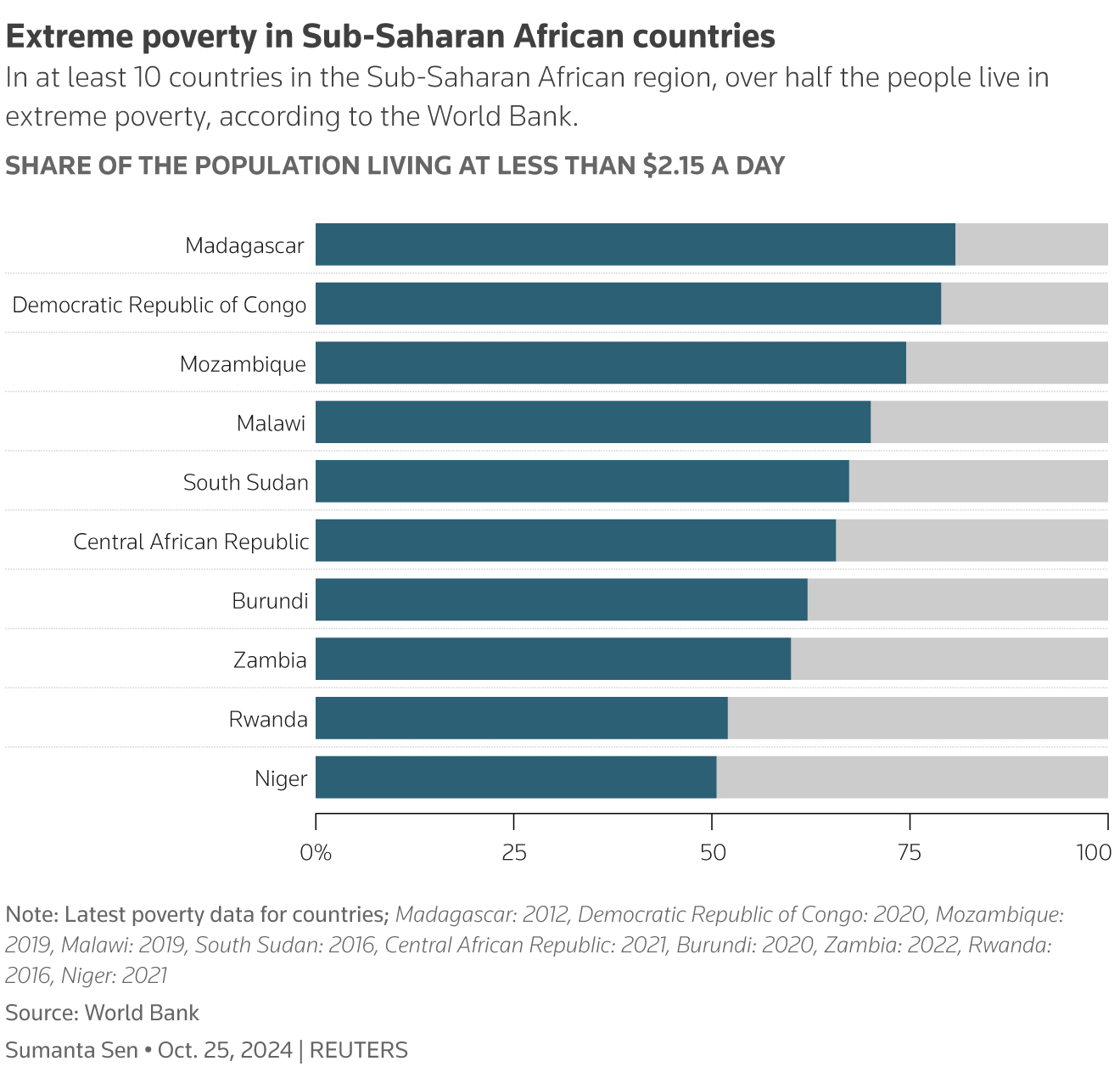
Chart: The stacked bar chart shows the 10 Sub-Saharan African with the highest share of people living in extreme poverty.
SMALL REBOUND
Sub-Saharan Africa’s economic growth is expected to improve slightly next year to 4.2%, the IMF report said.
The report found that nearly half of the 20 fastest growing economies in the world this year were in Sub-Saharan Africa, but cautioned that faster growth rates were required to reduce widespread poverty and inequalities.
One of the main obstacles to faster growth include a lack of access to affordable financing, the IMF said, as countries struggle with heavy debt loads and high debt servicing costs.
While some countries have been able to sell bonds on international capital markets this year following a two-year hiatus caused by geopolitical shocks and elevated interest rates in advanced economies such as the United States, the new funding came at a high cost.
“The old development finance architecture is not delivering, and, if anything, kind of is in the process of disintegrating,” Abebe said, citing “very problematic levels” of official bilateral funding for poor countries.
The solutions lay in ensuring that poor nations continue to access low-priced development financing from bilateral and multilateral lenders, Abebe said.
“We need also to find ways in which when countries are facing liquidity rather than solvency challenges, more financing can be made available for them to support reforms so they can move on to better times,” he said.
REUTERS