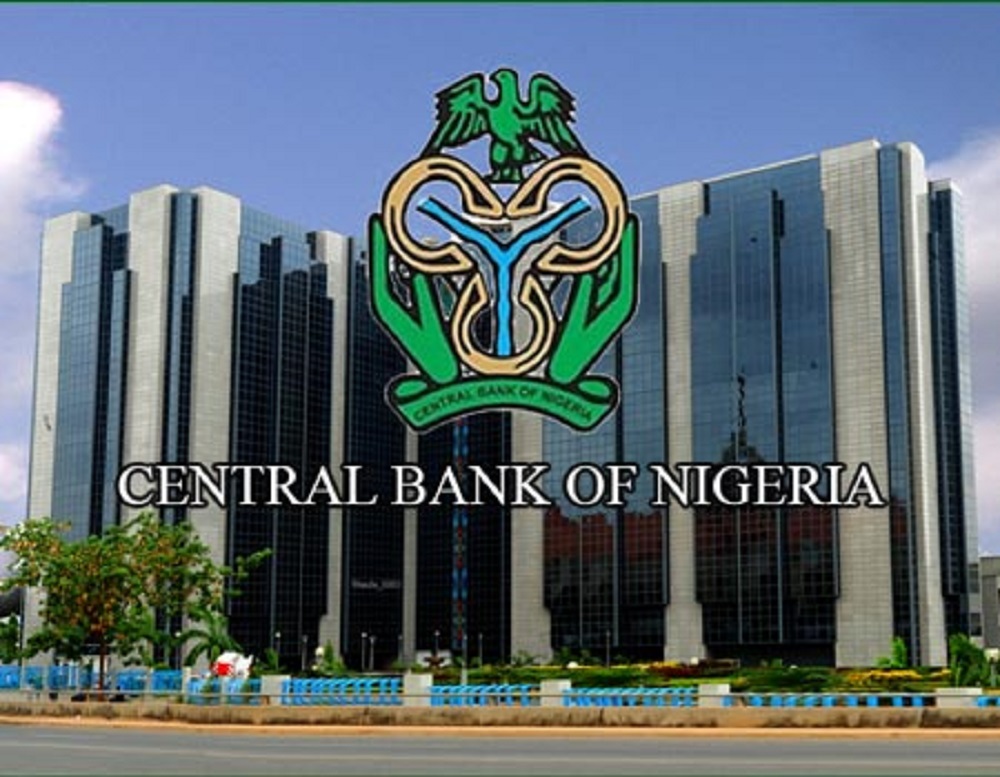
CBN head office

The challenges of Nigeria’s economy are checkered, stubborn and complicated but not insurmountable. Professor Doyin Salami had noted that ‘’Nigeria has an economic challenge that that is significant and potentially severe.
The federal and state governments alone lack the fire power and would need huge private investments to move the needle of the economy.’’
The Central Bank of Nigeria (CBN) is the supreme monetary authority which plays a major role in economic management through the formulation of monetary policies and in other ways. The Bank has been up to par, creative, dynamic and aggressive in evolving policies aimed at re-inventing the economy and deserves commendation and not condemnation.
But as i noted in a recent article entitled ‘’Central banks, Politicians and Vested Interests’’ which was published in Vanguard newspaper, Tuesday 27 December, 2022, the policies of central banks generally are often misunderstood especially by politicians and some other vested interests. It is therefore understandable why some people would misunderstand and misrepresent some of the policies of CBN which aim at healing the economy.
But the bottom line is that CBN has been dynamic and systematic with its policies though it may not have been easy to fully achieve the target objectives because of inherent aberrations in the economy which have made it to be stubborn and resistant to guidance and discipline, and has turned out to be probably one of the most sabotaged economy.
Firstly, to ensure a stable macro-economy, CBN had put financial system stability on the front burner. A resilient financial system is one in which there are well developed crisis management arrangements for handling distressed financial institutions in such a way that public confidence in the financial system will not be undermined.
A robust financial system ensures macro-economic stability in the face of a fast and complex systemic interactions in a globalized economy with changing perspectives. Two former CBN Governors- Professor Charles Soludo and Sanusi Lamido Sanusi (former Emir of Kano) strengthened the capital base of banks for solidity, and eliminated corporate rascality respectively, for a stronger banking industry, while the present Governor, Godwin Emefiele reinforced financial system stability by developing financial frameworks and tools for managing financial stability particularly macro-prudential and micro-prudential policies and crisis management conundrum.
Emefiele noted that his vision was to effectively manage potential threats to financial system stability and create a strong governance regime that would be conducive for financial intermediation, innovative finance and inclusiveness.
To further defend the financial system, CBN under Emefiele prohibited deposit money banks, non-banking institutions and other institutions from facilitating trading in crypto currency, Emefiele said that crypto currency had no place in our monetary system, and contravened an existing CBN Act (2007) which made CBN the issuer of legal tender in Nigeria. He further noted that if allowed, crypto currency would perpetuate illegal activities such as money laundering, terrorism financing, purchase of small arms and light weapons and tax evasion.
CBN has also been on the forefront of financial inclusion which is a mass-oriented concept and a key tool for poverty alleviation which helps to develop a saving habit, increase entrepreneurial spirit and national output. The components of financial inclusion are the availability of a wide range of innovative financial products and services, including payments, savings, credit, insurance and pension products and services within the reach of all groups, and designing of financial products according to the needs of target clients.
After the launch of the National Financial Inclusion Strategy in 2012, Emefiele hosted Queen Maxima Cerruti of the Netherlands who is the Honorary Patron of thr G20 Global Partnership for Financial Inclusion (GPFI). Going forward, CBN had reported that there had been more inclusion as adult exclusion rate reduced across all geographical zones in the country.
To boost production and generate employment, CBN also focused on development financing and prioritized the real sector. .Development financing is very important in the economy of developing nations. It is the use of public sector resources to facilitate private sector investment in low-and middle income countries where commercial or political risks are too high to attract purely private capital, and where investment is expected to have a positive change.
Development finance contributed to accelerating industrial growth in India and CBN had tended to move in the same direction by acting as a financial catalyst. The Bank initiated various creative policies and channeled funds to the real sector especially agriculture and manufacturing at single-digit interest rate.
The real sector is where goods and services are produced through the combined utilization of raw materials and other production factors such as labour, land and capital. Agriculture is basic for food security and is the starting chain for industrialization and a source of foreign exchange. Both agriculture and manufacturing are at the core of the real sector and provide more linkages in the economy. They have the capacity to generate high employment and income potential.
CBN has been firing from all cylinders in the effort to heal the economy and the Bank’s policies have stimulated greater credit flow to the manufacturing sector which hitherto was starved of credit by banks.
There are other notable policies by CBN which have impacted positively on some segments of the economy but which may not have been well understood or appreciated in some quarters either due to ignorance, mischief or improper analysis and assessment. If the momentum created by CBN is sustained, the economy would most probably take a turn for the better in the long run all things being equal.
Nwobu, a Chartered Stockbroker and Business Journalist wrote from Lagos.
Tel: 08033021230. arizenwobu@yahoo.com