Skip to content
July 18, 2026
  • Home
  • About us
  • Contact us
  • Newsletter
  • Privacy Policy
Political Economist

Political Economist

A liberal News reporting Politics, Sports, Business, Commentaries

  • Home
  • National News
    • Metro News
      • metro
    • Society
    • Crime and Justice
  • Special Reports
    • Investigation
    • Features
    • Interviews
  • Opinion
    • Commentaries
    • Perspectives
  • Press Releases
  • International News
  • Business & Economy
  • Politics
Watch Online
  • Home
  • National News
  • Scientific breakthrough: At last, a chemical that heals wounds twice as fast
  • National News

Scientific breakthrough: At last, a chemical that heals wounds twice as fast

Admin July 12, 2022
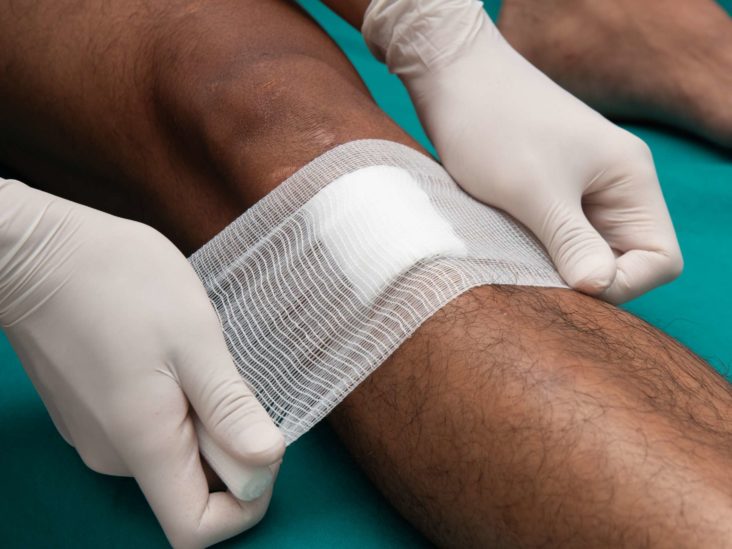
Treating a wound

Treating a wound PHOTO: Google

Treating a wound
Treating a wound
PHOTO: Google

Israeli scientists say they have used a natural chemical to make pigs’ wounds heal twice as fast as they otherwise would. They hope to be able to develop the substance for human use, and claim it could also become “an antibiotics alternative of the future.”

Diindolylmethane (DIM) is found in broccoli, cauliflower, and other vegetables. A Ben Gurion University research team studied its impact on bacteria in lab conditions, and found that it harms their ability to function.

The scientists took pigs, each with several wounds, and treated their wounds with either antibiotics or with a synthetic form of DIM. The wounds treated with antibiotics took 10 days to fully close on average, while the wounds treated with a DIM-based ointment took five days.

Prof. Ariel Kushmaro and his colleagues published their findings in the peer-reviewed journal Pharmaceutics, and are working on developing the chemical into an ointment for animals. They are also exploring whether it has health benefits as a food additive for animals.

“What we saw in our experiment was that wounds healed faster when treated with DIM,” Kushmaro told The Times of Israel.

“Antibiotics kill the layer of bacteria that’s on the wound. A layer of new tissue grows, but you also have dead tissue and dead bacteria. With DIM, as bacteria aren’t actually killed, there’s no layer of dead tissue and no dead bacteria, so closure is faster.”

The team’s long-term aim is to test DIM on human wounds, and help to launch a new approach in human medicine. Kushmaro said his research is exciting because of the mechanism it illustrates. “This is a game-changer, and a novel concept for antimicrobial treatment,” Kushmaro said.

He added that while the approach is totally different from antibiotics, it could become a staple of the fight against bacteria in the future, as antibiotics are today.

DIM interferes with communication between bacteria, akin to signal jammers that interfere with radio or cellphone communication. “Bacteria ‘talk’ to each other using chemical signals, and by blocking or jamming this communication you’re isolating each bacterium so it’s alone,” Kushmaro said.

“This communication prompts bacteria to express virulent genes, and when they’re not doing this they become less virulent and more vulnerable to antibiotics and to the immune system.”

There is growing interest internationally in the potential of inhibiting bacteria by harming communication, and Kushmaro said he is optimistic that his research will make a significant contribution.

Kushmaro and his colleagues, including Dr. Karina Golberg and Prof. Robert Marks, hope to have a product approved for animals within five years. DIM is already used in some cancer treatments, but a brand-new use will take time to develop and receive approval for, so Kushmaro believes it will take more than a decade before any product can be developed for humans.

In the long term, however, he is very optimistic about its potential.

“This idea of jamming the communication between bacteria in some way has more promise than antibiotics,” Kushmaro said. “This could be an antibiotics alternative of the future.”

  • Times of Israel
  • Facebook
  • Share on X
  • LinkedIn
  • WhatsApp
  • Email
  • Copy Link
Tags: Ben Gurion University broccoli cauliflower Diindolylmethane (DIM) Dr. Karina Golberg Israeli scientists Prof. Ariel Kushmaro Prof. Robert Marks Wound

Post navigation

Previous I’m eager to go, ruling Nigeria has been tough – Buhari; begs ASUU to call off strike
Next Presidency reacts to Daily Trust editorial, calls it ‘pure fantasy’

Related Stories

Court dismisses Bayelsa traditional ruler’s suit against SPDC FG vs ASUU
  • National News

Court dismisses Bayelsa traditional ruler’s suit against SPDC

July 17, 2026
LUTH awards research grants to 3 resident doctors treatment
  • National News

LUTH awards research grants to 3 resident doctors

July 17, 2026
Beyond 230 Million: FG Urges Local Pharma Manufacturers to Target West African Market via AMA Pact
  • National News

Beyond 230 Million: FG Urges Local Pharma Manufacturers to Target West African Market via AMA Pact

July 17, 2026
logo

Political Economist is a liberal news magazine with global affiliations.

At Political Economist, we promote free enterprise and act as a catalyst for the growth of knowledge economy. We are proudly pan-Nigeria yet richly spiced with African and global news. We offer a fair and balanced news reportage presented by our team of well-heeled professional journalists. <

About us

  • 5 Olutosin Ajayi Street, By CPM Church, Ajao Estate, Lagos State, Nigeria
  • +234 805 680 1124
  • info@politicaleconomistng.com

Follow

Subscribe to notifications

You may have missed

Oborevwori unveils digital advertising platform to boost Delta revenue
  • Business & Economy

Oborevwori unveils digital advertising platform to boost Delta revenue

July 18, 2026
Court sentences two to death for rape, murder of 17-yr-old Pastor jailed for rape
  • Crime and Justice

Court sentences two to death for rape, murder of 17-yr-old

July 18, 2026
Teacher flogs 12-year-old student to death, police launch manhunt Police
  • Crime and Justice

Teacher flogs 12-year-old student to death, police launch manhunt

July 18, 2026
₦941.9m IPPIS payroll scam: Court orders final forfeiture of money recovered by ICPC from 909 accounts in 14 banks
  • Crime and Justice

₦941.9m IPPIS payroll scam: Court orders final forfeiture of money recovered by ICPC from 909 accounts in 14 banks

July 18, 2026
  • Home
  • About us
  • Contact us
  • Newsletter
  • Privacy Policy
Copyright © All rights reserved. | DarkNews by AF themes.