
Skip to content
August 16, 2026
  • Home
  • About us
  • Contact us
  • Newsletter
  • Privacy Policy
Political Economist

Political Economist

A liberal News reporting Politics, Sports, Business, Commentaries

  • Home
  • National News
    • Metro News
      • metro
    • Society
    • Crime and Justice
  • Special Reports
    • Investigation
    • Features
    • Interviews
  • Opinion
    • Commentaries
    • Perspectives
  • Press Releases
  • International News
  • Business & Economy
  • Politics
Watch Online
  • Home
  • International News
  • Rising use of plastics to drive oil demand to 2050 – IEA
  • International News

Rising use of plastics to drive oil demand to 2050 – IEA

Admin October 5, 2018

Plastics and other petrochemical products will drive global oil demand to 2050, offsetting slower consumption of motor fuel, the International Energy Agency (IEA) said on Friday.

In spite of government efforts to cut pollution and carbon emissions from oil and gas, the Vienna-based agency said it expected the rapid growth of emerging economies.

Such growth would  propel India and China, to  demand for more petrochemical products.

Petrochemicals that are derived from oil and gas feedstocks form the building blocks for products that range from plastic bottles and beauty products to fertilisers and explosives.

Oil demand for transport is expected to slow by 2050 due to the rise of electric vehicles and more efficient combustion engines.

However, slow demand for transport fuel would be offset by rising demand for petrochemicals, the IEA said in a report.

“The petrochemical sector is one of the blind spots of the global energy debate.

”There is no question that it will be the key driver of oil demand growth for many years to come,” IEA Executive Director Fatih Birol told Reuters.

Petrochemicals are expected to account for more than a third of global oil demand growth by 2030 and nearly half of demand growth by 2050, according to the world’s energy watchdog.

Global demand for petrochemical feedstock accounted for 12 million barrels per day (bpd), or roughly 12 per cent of total demand for oil in 2017.

The figure is forecast to grow to almost 18 million bpd in 2050.

Most demand growth will take place in the Middle East and China where big petrochemical plants are being built.

Oil companies such as Exxon Mobil and Royal Dutch Shell plan to invest in new petrochemical plants in the coming decades, betting on the rising demand for plastics.

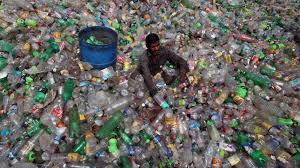
Plastics use has come under increased scrutiny as waste makes its way into the oceans.

It harms marine life, prompting several countries to ban, partly ban or tax single use plastic bags.

But the IEA report said government efforts to encourage recycling in order to curb carbon emissions would have only a minor impact on petrochemical growth.

“Substantial increases in recycling and efforts to curb single-use plastics is taking place, especially led by Europe, Japan and Korea. These efforts will be far outweighed by the sharp increase in developing economies of plastic consumption,” it said.

Under the IEA’s most aggressive scenario, recycling could hit around 5 percent of high-value chemical demand.

Petrochemical plants mainly run on light oil products such as naphtha and liquefied petroleum gas (LPG).

But natural gas is becoming an increasingly favoured feedstock, particularly in the United States where shale gas production has risen.

The report said that petrochemical projects would account for seven per cent of 850 billion cubic metres (bcm) in gas demand increase.

(Reuters/NAN)

  • Facebook
  • Share on X
  • LinkedIn
  • WhatsApp
  • Email
  • Copy Link
Tags: Exxon Mobil Fatih Birol International Energy Agency petrochemicals Royal Dutch Shell Vienna

Post navigation

Previous 1 in 3 Nigerian adult population hypertensive-NCS
Next Flooding: Nigeria may experience shortage in rice production – Ogbeh

Related Stories

32m West Africans risk displacement, $294bn needed to tackle climate crisis — ECOWAS regional heads
  • International News

32m West Africans risk displacement, $294bn needed to tackle climate crisis — ECOWAS

August 12, 2026
Global 2026 oil supply shortfall to deepen as Hormuz reopening remains elusive – IEA says IEA
  • International News

Global 2026 oil supply shortfall to deepen as Hormuz reopening remains elusive – IEA says

August 12, 2026
Oil rises as doubts over US-Iran deal heighten supply concerns reserves crude oil
  • International News

Oil rises as doubts over US-Iran deal heighten supply concerns

August 12, 2026
logo

Political Economist is a liberal news magazine with global affiliations.

At Political Economist, we promote free enterprise and act as a catalyst for the growth of knowledge economy. We are proudly pan-Nigeria yet richly spiced with African and global news. We offer a fair and balanced news reportage presented by our team of well-heeled professional journalists. <

About us

  • 5 Olutosin Ajayi Street, By CPM Church, Ajao Estate, Lagos State, Nigeria
  • +234 805 680 1124
  • info@politicaleconomistng.com

Follow

Subscribe to notifications

You may have missed

Osun 2026: Osun Assembly Member, 146 Suspected Political Thugs Arrested Over Alleged Electoral Subversio Police
  • National News

Osun 2026: Osun Assembly Member, 146 Suspected Political Thugs Arrested Over Alleged Electoral Subversio

August 15, 2026
Police nabs 10 suspected human parts merchants in Oyo Police
  • National News

Police nabs 10 suspected human parts merchants in Oyo

August 15, 2026
Military eliminates 65 terrorists, rescues 34 kidnap victims in 1 week onyeuko
  • National News

Military eliminates 65 terrorists, rescues 34 kidnap victims in 1 week

August 15, 2026
NPFL–Murphy Ben International Deal: Meet The YouTube Powerhouse Behind The Partnership
  • Sports

NPFL–Murphy Ben International Deal: Meet The YouTube Powerhouse Behind The Partnership

August 15, 2026
  • Home
  • About us
  • Contact us
  • Newsletter
  • Privacy Policy
Copyright © All rights reserved. | DarkNews by AF themes.