 Photo credit: Mark Pickthall
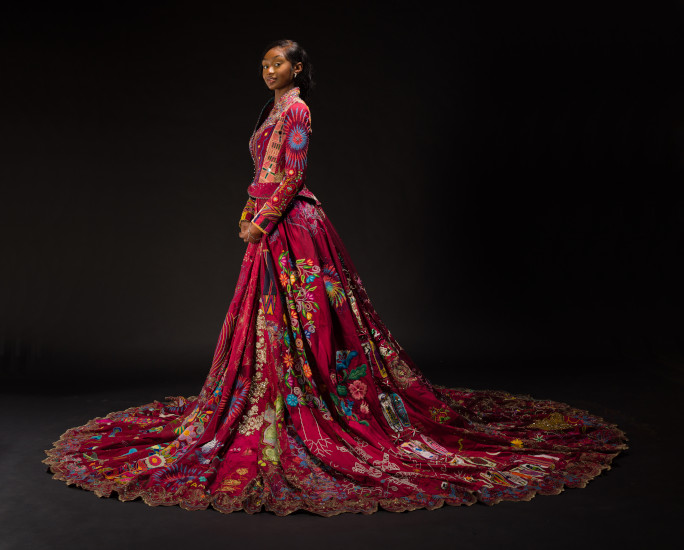
The work itself is a marvel – weighing 14 lbs 15 oz (6.8 kg), this majestic dress is fit for a queen, accented with 1 – 1.5 billion stitches and hundreds of tiny beads and sparkles that draw the eye to the chest and back of the garment.
Yet arguably the most incredible feature of the dress is the hands that helped assemble it.
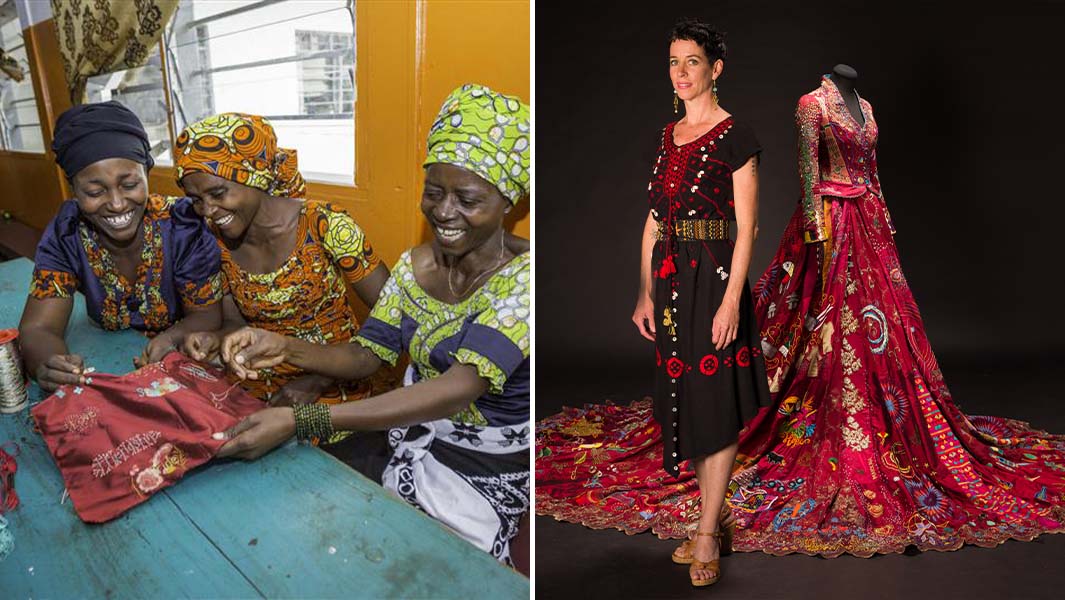
After British artist Kirstie Macleod conceived the idea in 2009, 380 individuals – mostly women and girls, but also men, boys, and non-binary artists – from 51 different countries spent 14 years designing and stitching their art on to the piece, making the Red Dress the largest collaborative embroidery project on Earth.
And as part of our 2026 edition of Guinness World Records, we took a close look at this record-breaking dress, the stories of its embroiderers, and the inspiration behind this beautiful work, to learn more about the fantastic individuals that are turning their passion for fashion into life-changing opportunities.
Back in 2009, textile artist Kirstie Mcleod was sitting in a cafe and absentmindedly sketching a dress on to the back of a napkin.
She was thinking of a regal garment, recalling the figures of powerful queens and brave women throughout history, but with a modern style – and most importantly, with a modern ethos: that the ethically-made garment highlight the skills of the craftswomen worldwide who so often go underappreciated and underpaid for their talented work.
Born to a family of knitters and craftspeople, Kirstie had been working as an artist for 20 years, when she took a trip to southern India and she spent ages stitching a single jacket with a group of Karnatakan Lambani women. Although she couldn’t communicate with the women through a shared language, they bonded closely over the process of making a garment together, and she was taken by the idea that art could create lasting connections.
But she never expected that years later, that very drawing she sketched on to a napkin would turn into a project that would unite a portion of the world with a single dress.
“I’m over the moon,” she said, sharing a post on Instagram with her new copy of the Guinness World Records book. “And of course, thank you so much to all the embroiderers, the 380 embroiderers from the 51 countries who have helped to create the Red Dress and make her what she is today.”
Many times, Kirstie would escort the dress herself, or would make connections between craftspeople in different countries so they could work on parts of the silk at the same time.
She even included pieces of Lambani embroidery that she gathered during her travels in southern India, as an everlasting tribute to the women who initially shared their culture with her in 2002.
United by these threads, trained embroiderers would teach new generations how to express themselves using a needle, and the garment soon took on a life of its own as it travelled around the world.
Speaking to Grazia India, Kirstie said she initially chose embroidery as her medium because “… it’s accessible and inclusive, most people have access to a needle and thread, and have some kind of experience with sewing whether functional or decorative.”
“I was also drawn to the slow, meditative act of embroidery as the ideal way of expressing your story. Every stitch has an intention and creating designs takes time, thought and consideration. Stitching in community can also be a connecting and healing experience.”
The textile artists that lent their skills to this project ranged from refugees and asylum seekers to professional studios and first-time embroiderers, and each of them used the dress as a platform to express and amplify issues important to them – as well as their specific culture and traditions.
Across the dress they scattered pieces of their life, such as: the Chinese character for red/women’s handiwork, depictions of proud Kenyan people, and white birds to symbolize migration.
Many of these needleworkers came from disadvantaged or marginalized communities, and of the 141 artists that were commissioned and paid for their work, all of them receive a portion of all ongoing exhibition fees and merchandise sales, so they can market their skills while obtaining a regular income.
As such, this is one of the most impactful pieces of clothing made in recent years, that is able to connect artists worldwide with a professional outlet for their skills and their stories.
And the international community certainly agrees. Since the completion of the project, the Red Dress has continued to move across galleries and exhibitions, demonstrating to others the power of collective art.
The dress was first exhibited as an uncompleted project in 2009 at Art Dubai, and has also been to Europe, Mexico City, Kosovo, Egypt, Bosnia and Herzegovina, the U.S., South Africa, and dozens of other countries. In the upcoming years, Kirstie also plans to take the dress to the Netherlands, Australia, and Rwanda, so look out for exhibitions that may feature the dress nearby you.
She also published a book on the subject, titled The Red Dress: Conversations in Stitch, for those interested in reading more about the project and its embroiderers.
And even if the Red Dress isn’t set to make an appearance near your hometown anytime soon, it’s undeniable that the garment made a major difference in the lives of its creators – inspiring the next generation of craftspeople and embroiderers that their work is important on an international stage.
“I feel the energy of the women who embroidered on this fabric before me. Mothers, grandmothers, daughters, inhabitants of different countries and continents. They touched this garment and left something in it. Now I feel it on my skin.”