June 16, 2021
The World Health Organisation (WHO) has called for binding action by exporters, importers and governments to ensure environmentally sound disposal of e-waste and the health and safety of workers and communities.
WHO raised the alert on Tuesday in a landmark new report on the toxic threat, entitled: “Children and Digital Dumpsites’’
The call has become urgent as the health of children, adolescents and expectant mothers worldwide is at risk from the illegal processing of old electrical or electronic devices.
In a statement coinciding with the launch of the report, WHO Director-General, Tedros Ghebreyesus, warned that the health threat was growing, in line with the “mounting tsunami of e-waste’”.
“In the same way the world has rallied to protect the seas and their ecosystems from plastic and microplastic pollution, we need to rally to protect our most valuable resource – the health of our children – from the growing threat of e-waste,” he added.
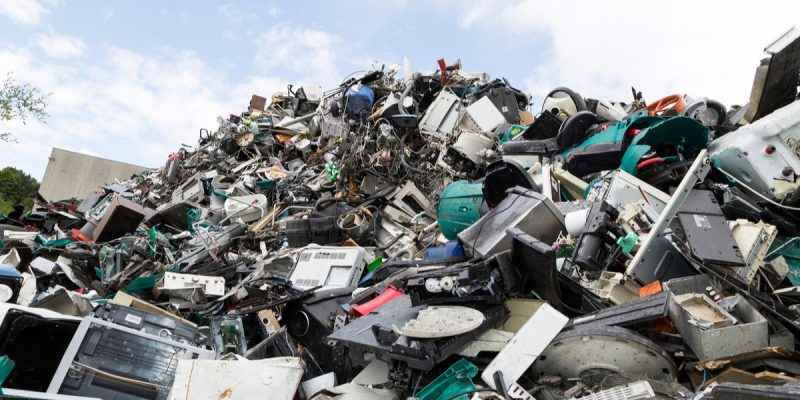
Discarded electronic devices or e-waste has become the fastest growing domestic waste category in the world, according to the UN health agency.
The Global E-waste Statistics Partnership (GESP) said that of the 53.6 million tonnes produced worldwide in 2019, only 17.4 per cent was recorded as collected and appropriately recycled.
While the fate of the remaining e-waste is unknown, it is unlikely to have been managed and recycled in an environmentally-sound manner.
While some e-waste ends up in landfills, significant amounts are often illegally shipped to low and middle-income countries where informal workers, including children and adolescents, pick through, dismantle, or use acid baths to extract valuable metals and materials from the discarded items.
WHO said that an estimated 12.9 million women who work in the informal waste sector were potentially exposing themselves and their unborn children to toxic residue.
“Additionally, more than 18 million youngsters globally and some as young as five – are said to be “actively engaged” in the wider industrial sector, of which e-waste processing is a small part.
“Informal methods of removing materials from e-waste have been linked to a range of health effects, especially in children.

“Recycling e-waste particularly impacts those in vital stages of physical and neurological development, with children, adolescents and pregnant women most vulnerable.
“Children are more susceptible to the toxic chemicals because they absorb pollutants relative to their size and, with not-fully-developed organs, are less able than adults to eradicate harmful substances,’’ it said.
According to WHO lead author, Marie-Noel Drisse, improper e-waste management is a rising issue that many countries do not recognise yet as a health problem.
Drisse warned that if action is not taken now, “its impacts will have a devastating health effect on children and lay a heavy burden on the health sector in the years to come”.
The Children and Digital Dumpsites report delves into the multiple dimensions of the problem, to practical action that the health sector and others concerned, can take to confront the insidious health risk.
The health sector is also being asked to reduce adverse effects from e-waste by building up capacity to diagnose, monitor and prevent toxic exposure, and to advocate for better data and health research on risks faced by informal e-waste workers.
“Children and adolescents have the right to grow and learn in a healthy environment, and exposure to electrical and electronic waste and its many toxic components unquestionably impacts that right.
“The health sector can play a role by providing leadership and advocacy, conducting research, influencing policy-makers and engaging communities.
“It can also play a role by reaching out to other sectors to demand that health concerns be made central to e-waste policies,” said Maria Neira, WHO Director, Department of Environment, Climate Change and Health.